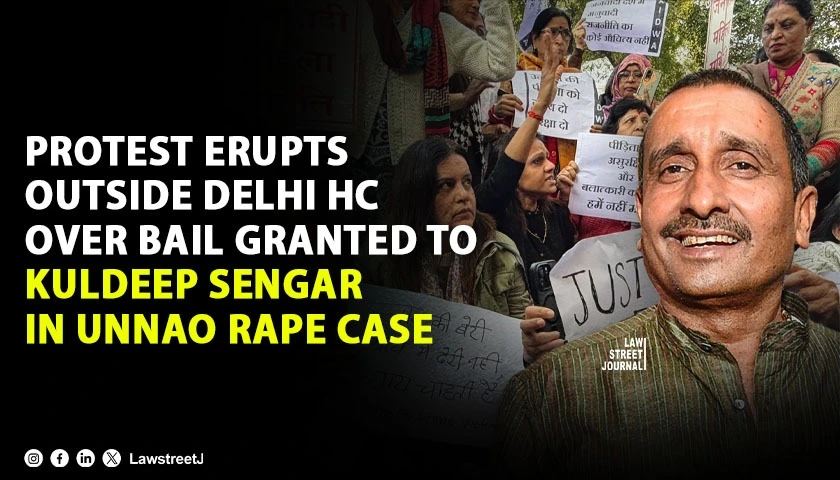
New Delhi: A large group of demonstrators, including women’s rights activists and the mother of the Unnao rape survivor, staged a protest outside the Delhi High Court on Friday following the court’s decision to suspend the life sentence of former BJP MLA Kuldeep Singh Sengar. The protest was organized in response to the bail granted to Sengar on December 23, 2025, pending the outcome of his appeal against his 2019 conviction.
Conviction and Bail Order:
Kuldeep Singh Sengar was convicted in December 2019 by a Delhi trial court for the rape of a minor girl in Unnao, Uttar Pradesh, in June 2017. The conviction was based on a Central Bureau of Investigation (CBI) inquiry and included charges under Section 376 of the Indian Penal Code and the Protection of Children from Sexual Offences (POCSO) Act. Sengar was sentenced to life imprisonment.
On December 23, 2025, a Division Bench of the Delhi High Court comprising Justices Subramonium Prasad and Harish Vaidyanathan Shankar suspended Sengar’s sentence and granted him bail. The court cited the prolonged delay in the disposal of his appeal and noted that Sengar had served over six years in custody. Bail was granted on a personal bond of ₹15 lakh with three sureties of the same amount.
The bail conditions include:
- Sengar must not enter within a five-kilometre radius of the survivor’s residence.
- He must not contact or threaten the survivor or her family.
- Any violation will result in cancellation of bail.
The court clarified that the suspension of sentence does not amount to acquittal and is subject to the final decision on the appeal.
Voices of Resistance:
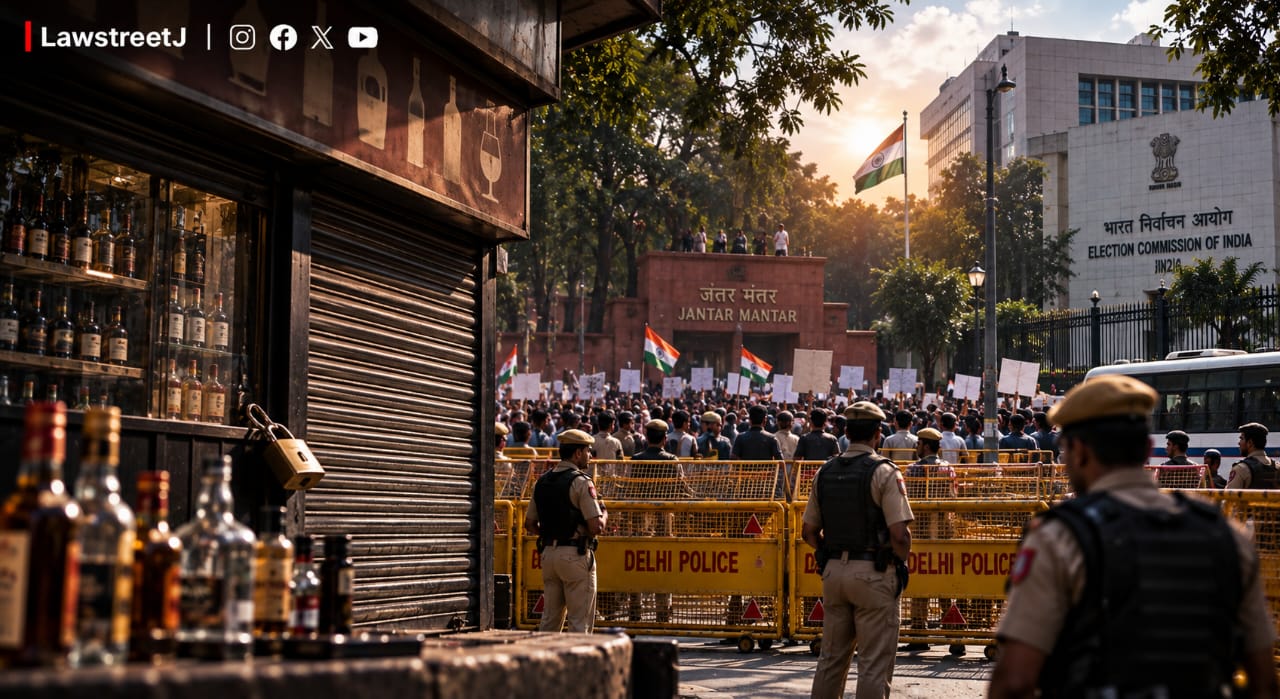
On December 26, 2025, scores of protesters gathered outside the Delhi High Court to express their opposition to the bail order. The demonstration was led by members of the All India Democratic Women’s Association (AIDWA), activist Yogita Bhayana, and the mother of the Unnao rape survivor. Protesters held placards with slogans such as “Balatkariyo ko sanrakshan dena band kro” (Stop protecting rapists) and demanded the revocation of Sengar’s bail.
The protest remained peaceful but emotionally charged, with participants expressing concern over the implications of the bail order for survivor safety and judicial accountability.
The survivor’s mother addressed the media, stating:
- “My daughter has suffered immensely. The judges who gave justice earlier have now been replaced, and the accused has been granted bail. We will approach the Supreme Court.”
Activist Yogita Bhayana emphasized the need for judicial sensitivity in cases involving sexual violence and urged the judiciary to consider the survivor’s trauma and safety.
Legal observers noted that while bail is a procedural right under Section 389 of the Criminal Procedure Code (CrPC), courts must exercise caution in cases involving serious offences, especially where the survivor’s security is at stake. The protest has reignited debate over judicial discretion in granting bail in cases of sexual violence. Legal experts point out that the Delhi High Court’s decision, though procedurally valid, must be weighed against the potential risk to the survivor and the broader message it sends about justice for victims.
The survivor’s legal team is expected to file a petition before the Supreme Court of India under Article 136 of the Constitution, seeking cancellation of bail and reinstatement of the sentence. The Supreme Court’s response will be pivotal in determining the future course of the case.
The protest outside the Delhi High Court underscores the continuing struggle for justice and survivor protection in India’s legal system. It also highlights the role of civil society in holding institutions accountable and advocating for victim-centric jurisprudence.
![Delhi High Court Sets Aside Arbitral Tribunal's Award Against NHAI in Highway Project Delay Case [Read Judgment]](/secure/uploads/2023/07/lj_9605_23374c2e-392c-4491-a2fe-f2f12fc5272f.jpg)
![Delhi Court Rejects Stay Request in Defamation Case Against Rajasthan CM Ashok Gehlot [Read Order]](/secure/uploads/2023/08/lj_5208_80de1ddc-d76a-4f7f-b180-408e3ae14fb4.jpg)