Indore: A severe public health crisis has unfolded in Indore’s Bhagirathpura locality following the contamination of drinking water, resulting in 14 confirmed deaths and over 1,400 reported infections as of January 2, 2026. The outbreak, primarily linked to diarrhoeal illness, has been attributed to leakages in the municipal water pipeline that allowed sewage to mix with potable water. The Madhya Pradesh Health Department confirmed that 212 patients required hospitalization, while others were treated at home or discharged after receiving medical care.
The incident has prompted a multi-agency response. The Indore Municipal Corporation (IMC) initiated emergency measures, including water sample testing, chlorination, and the distribution of packaged drinking water. The Urban Administration and Development Department, led by Cabinet Minister Kailash Vijayvargiya, announced that 60% of the damaged pipeline has been replaced, and tenders have been issued for the remaining 40%. Help desks have been set up in the affected area to assist residents with medical and logistical support.
Legal provisions under the Water (Prevention and Control of Pollution) Act, 1974, and Sections 269 and 270 of the Indian Penal Code, which deal with negligent acts likely to spread infection, may be invoked if investigations reveal administrative lapses. No FIRs have been registered as of January 3, 2026, but the Indore Collectorate has confirmed that a judicial inquiry is underway to determine accountability.
Minister’s Remarks Spark Controversy and Opposition Demand for Resignation
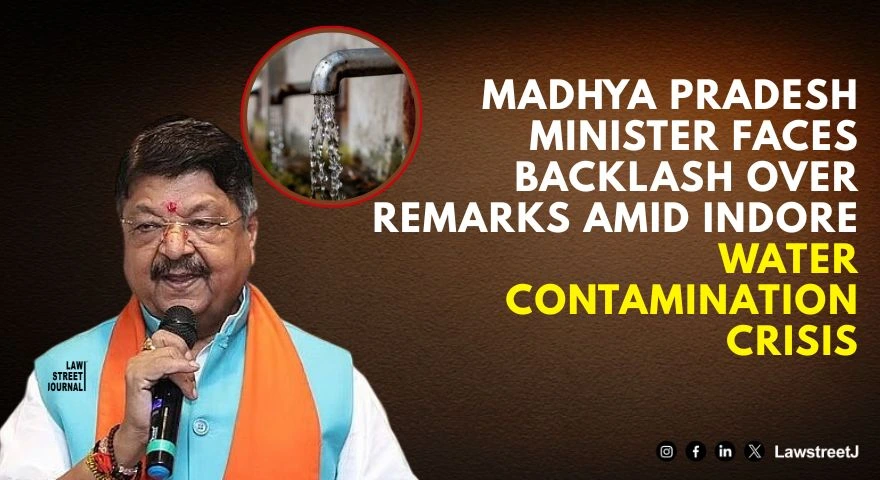
During a media interaction on January 1, 2026, Minister Kailash Vijayvargiya, who represents the Indore-1 Assembly constituency, was confronted by journalists regarding the lack of refunds for patients treated at private hospitals and the delay in restoring safe drinking water. Initially responding calmly, Vijayvargiya lost his temper and used an objectionable word on camera, prompting widespread criticism. The incident was captured on video and circulated widely on social media platforms, leading to public outrage and political backlash.
The Opposition Congress Party condemned the remarks, accusing the BJP-led state government of insensitivity and arrogance. Senior Congress leaders demanded Vijayvargiya’s immediate resignation, citing a breach of public conduct and failure to uphold ministerial responsibility.
In response, Vijayvargiya issued a formal statement expressing regret, stating:
“My team and I have been working continuously in the affected area for the past two days without sleep. My people are suffering due to contaminated water, and some have lost their lives. In this state of deep grief, my words came out wrong. I express my regret for this. However, I will not rest until my people are completely safe and healthy.”
Legal experts have noted that while the minister’s remarks may not constitute a criminal offence, they could be reviewed under the Code of Conduct for Public Representatives, as outlined by the Election Commission of India and the Madhya Pradesh Legislative Assembly Ethics Committee. No formal disciplinary proceedings have been initiated yet.
Administrative Response and Legal Oversight Intensify
Following the escalation of the crisis, the Madhya Pradesh Chief Minister’s Office directed the Public Health Engineering Department (PHED) to conduct a technical audit of water infrastructure in Bhagirathpura and surrounding areas. Preliminary findings indicate that ageing pipelines and poor maintenance were contributing factors. The State Pollution Control Board has also been tasked with assessing long-term environmental risks.
The Indore Bench of the Madhya Pradesh High Court has taken suo motu cognisance of the matter, based on media reports and a public interest litigation filed by local residents. The court has sought a status report from the state government by January 10, 2026, detailing remedial actions, compensation mechanisms, and accountability measures.
Under Article 21 of the Indian Constitution, which guarantees the right to life, the judiciary may examine whether the state failed to ensure safe drinking water, a basic human right. Legal scholars have cited precedents such as Vellore Citizens Welfare Forum v. Union of India (1996) and Subhash Kumar v. State of Bihar (1991), which affirm the state’s duty to prevent environmental and public health hazards.
Meanwhile, the Indore District Legal Services Authority (DLSA) has initiated outreach programmes to inform affected residents about their rights to compensation and legal recourse. The State Human Rights Commission has also sought a report on the incident, citing potential violations of health and sanitation standards.