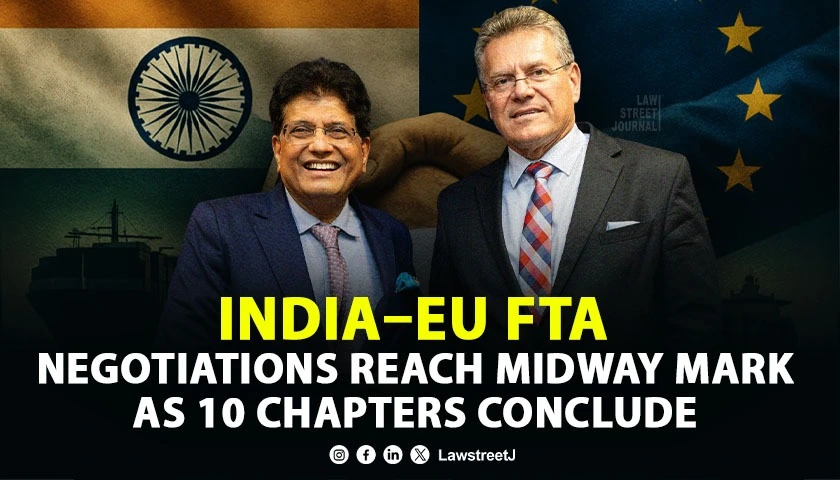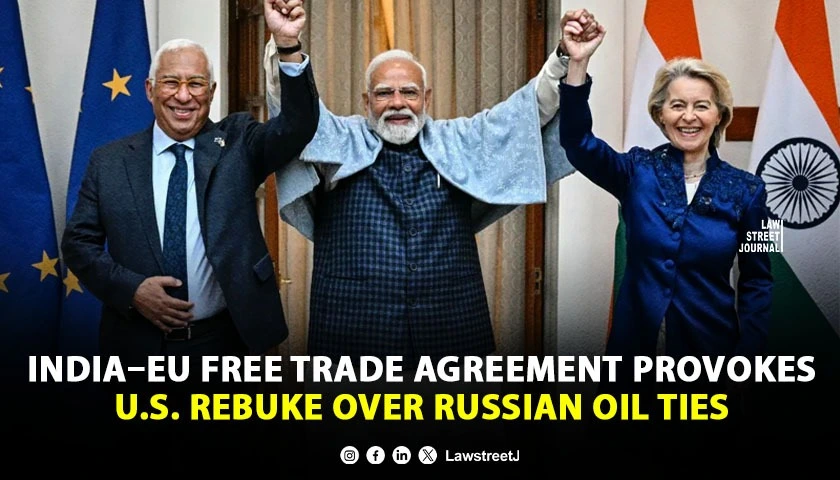
New Delhi: India and the European Union have concluded a historic Free Trade Agreement (FTA) after nearly 20 years of intermittent negotiations. The deal was signed in New Delhi by Prime Minister Narendra Modi, European Council President António Costa, and European Commission President Ursula von der Leyen. The agreement covers market access, tariff reductions, technology cooperation, and defence collaboration, and is projected to impact over 1.9 billion people and nearly 25% of global GDP.
Key provisions include:
- Tariff elimination on 92% of goods traded between India and the EU
- Enhanced mobility for skilled labour and professionals
- Joint initiatives in green technology, cybersecurity, and defence manufacturing
- Legal review and ratification expected by mid-2026, with implementation slated for early 2027
The FTA is widely seen as a strategic hedge against volatile U.S. trade policies, particularly under the administration of President Donald Trump, who has repeatedly threatened tariffs on both India and the EU.
U.S. Reaction: Accusations of Hypocrisy and Strategic Misalignment
The U.S. response was swift and pointed. Treasury Secretary Scott Bessent criticised the EU for “indirectly financing a war against themselves” by engaging in trade with India, which continues to import discounted Russian crude oil. The U.S. has imposed tariffs of up to 25% on Indian goods linked to energy imports from Russia.
U.S. Trade Representative Jamieson Greer further escalated the rhetoric, stating that:
- “India came out on top” in the negotiations
- The EU was “importing low-cost labour” from India, while the U.S. maintained strict immigration controls
- The deal undermines U.S. efforts to economically isolate Russia
These remarks reflect growing frustration in Washington over shifting global alliances and the erosion of U.S. influence in multilateral trade frameworks.
Legal and Geopolitical Implications
From a legal standpoint, the India–EU FTA adheres to World Trade Organization (WTO) norms and includes dispute-resolution mechanisms, intellectual property protections, and environmental safeguards. The agreement is undergoing legal scrubbing before ratification by the European Parliament and India’s Union Cabinet, ensuring compliance with domestic and international trade laws.
Geopolitically, the pact signals:
- A pivot away from U.S.-centric trade dependencies
- The strengthening of India’s role as a manufacturing and technology hub
- A potential realignment of defence supply chains between India and Europe
Social media reactions in both India and Europe have criticised the U.S. stance as hypocritical, citing continued U.S. purchases of strategic resources from other sanctioned nations. The debate underscores the complexity of enforcing economic sanctions in a multipolar world.
The India–EU Free Trade Agreement marks a significant shift in global trade dynamics, carrying legal, economic, and strategic consequences. While the U.S. has responded with criticism and tariff threats, the deal is poised to deepen bilateral cooperation between India and the EU across multiple sectors. As ratification proceeds, the international community will closely monitor its implementation and broader impact on global trade alignments.