38.6c New Delhi, India, Sunday, February 15, 2026
Top Stories Supreme Court
Political NEWS Legislative Corner Celebstreet International Videos
Subscribe Contact Us
close
Judiciary

Child Born Out Of Live-In-Relationship Not Entitled To Claim Inheritance In Ancestral Property, But Can Claim A Share In Self Acquired Property: SC

By LawStreet News Network      07 October, 2019 02:12 AM      0 Comments
Child Born Out Of Live-In-Relationship Not Entitled To Claim Inheritance In Ancestral Property, But Can Claim A Share In Self Acquired Property: SC

The Supreme Court on May 17, 2010, in the case of Bharatha Matha & Anr. v. R. Vijaya Renganathan & Ors., has held that child born out of live-in-relationship is not entitled to claim inheritance in Hindu ancestral joint family property but can only claim a share in parents self-acquired property.

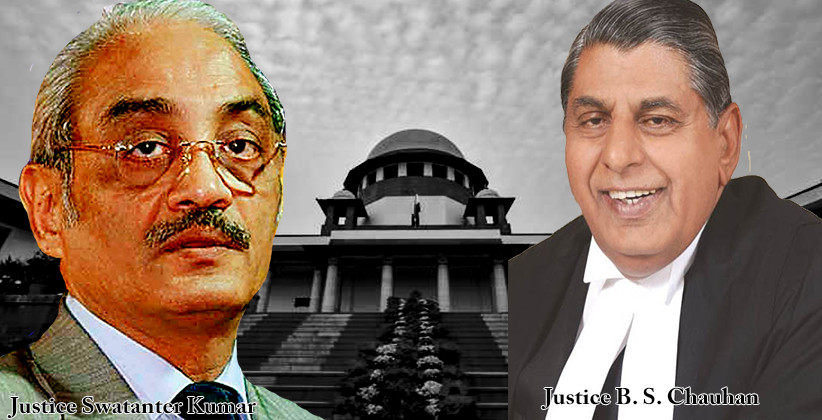
The ruling was passed by a Division Bench comprising of Justices B. S. Chauhan and Swatanter Kumar while quashing a Madras High Court judgment, which took the view that children born out of live-in relationships were entitled to a share in ancestral property.

In this case, a dispute arose whether the two children of Rangammal, born on account of a live-in relationship with a bachelor Muthu Reddiar, were entitled to a share in the latter's ancestral property after his death.

The respondents (claimants) had not pleaded at any stage that the suit land was a self-acquired property of Muthu Reddiar, the Bench said.

"It is evident from the record that Muthu Reddiar did not partition his joint family properties and died issueless/intestate in 1974. Therefore, the question of inheritance of coparcenary property by the illegitimate children, who were born out of the live-in relationship, could not arise," it said.

The appellants had contended that Rangammal was already married to one Alagarswami Reddiar and hence the purported live-in-relationship was void and neither she nor her children could stake claim for a share in the property.

A Trial Court and the first appellate court both ruled in favour of the appellants on the ground that Rangammal was already married to Alagarswami and hence her illegitimate children were not entitled to any share in ancestral property.

However, the Madras High Court took the view that a live-in relationship between two parties would lead to the presumption of marriage and ruled in favour of Rangammal.

Referring to the Hindu Marriage Act, 1955, the apex court said Section 16 recognised the right of a child to inherit properties of their illegitimate parents, provided it was self-acquired.

In view of the legal fiction contained in Section 16, the illegitimate children for all practical purposes, including succession to the properties of their parents, have to be treated as legitimate. But they cannot succeed to the properties of any other relation on the basis of this rule, which in its operation, is limited to the properties of the parents, the court held.

[Read Judgment]


Share this article:

User Avatar
About:


Leave a feedback about this
TRENDING NEWS


TOP STORIES

resignation-on-medical-grounds-attracts-forfeiture-of-pension-service-madras-hc-full-bench
Trending Judiciary
Resignation on Medical Grounds Attracts Forfeiture of Pension Service: Madras HC Full Bench [Read Order]

Madras High Court Full Bench rules resignation on medical grounds leads to forfeiture of past service under Tamil Nadu Pension Rules, 1978.

09 February, 2026 12:16 PM
madras-hc-clarifies-section-37-of-ndps-act-not-applicable-to-acceptance-of-bond-for-appearance
Trending Judiciary
Madras HC Clarifies: Section 37 of NDPS Act Not Applicable to Acceptance of Bond for Appearance [Read Order]

Madras High Court says Section 37 NDPS Act doesn’t apply to acceptance of bond for appearance on summons, as it is distinct from grant of bail.

09 February, 2026 12:20 PM
sc-refers-matter-to-larger-bench-to-resolve-conflicting-judgments-on-third-partys-right-under-under-order-ix-rule-13-cpc
Trending Judiciary
SC Refers Matter To Larger Bench To Resolve Conflicting Judgments On Third Party’s Right Under Under Order IX Rule 13 CPC [Read Order]

Supreme Court refers the issue of third party rights under Order IX Rule 13 CPC to a larger bench to resolve conflicting judgments on ex parte decrees.

09 February, 2026 12:35 PM
bombay-sessions-court-grants-bail-in-193-crore-cyber-fraud-case-reaffirms-bail-is-rule-jail-is-exception
Trending Judiciary
Bombay Sessions Court Grants Bail in ₹1.93 Crore Cyber Fraud Case, Reaffirms ‘Bail Is Rule, Jail Is Exception’ [Read Order]

Bombay Sessions Court grants bail in ₹1.93 crore cyber fraud case, citing right to liberty as investigation is complete and accused not direct beneficiary.

09 February, 2026 04:17 PM

ADVERTISEMENT


Join Group

Signup for Our Newsletter

Get Exclusive access to members only content by email