38.6c New Delhi, India, Tuesday, January 20, 2026
Top Stories Supreme Court
Political NEWS Legislative Corner Celebstreet International Videos
Subscribe Contact Us
close
Judiciary

Dangerous for political parties to invoke caste, regional sentiments: SC

By Jhanak Sharma      15 July, 2025 08:10 PM      0 Comments
Dangerous for political parties to invoke caste regional sentiments SC

NEW DELHI: The Supreme Court on Tuesday said it is dangerous for the political parties to invoke caste and regional sentiments, while declining to entertain a plea seeking directions to the Election Commission to deregister All India Majlis-e-Ittehadul Musalimeen (AIMIM), led by MP Asaduddin Owaisi.

A bench of Justices Surya Kant and Justice Joymala Bagchi said it is not keen to consider the petition, which contended that AIMIM sought to raise the issue of Muslims only.

“Let us not confine ourselves to the question of communal party…there are some regional parties, and they also indulge in raising regional sentiments. Is it appropriate or in the interest of national integration? There are some political parties which rely on caste consideration, that is equally dangerous,” the bench said.

The bench suggested that it will be appropriate to focus on a larger and wider perspective, and asked the petitioner file a petition on the larger issue of political parties invoking communal statements.

A plea was filed by Shiv Sena’s Telangana wing, Tirupati Narasimha Murari, against an order of the Delhi High Court, which dismissed the petition challenging the registration of AIMIM as a political party by the ECI.

Advocate Vishnu Shankar Jain argued the petitioner before the court.

During the hearing, the bench said, “suppose a particular religious law is protected under the Constitution and a political party says it will teach that law, they will teach because it is protected".

The bench said it will be a great thing if political parties also invest in education, and they can establish colleges, schools, engineering and medical colleges.

Referring to the party’s constitution, advocate Jain contended that clause 1 says that they strive for unity among the Muslims, and asked “why only Muslims and why not all of us".

The bench asked the counsel to read clause 1 in conjunction with clause 8, and also clause 9, and pointed at the undertaking they had given as a political party in 1989, saying that it takes care of everything.

“In practical life, suppose in an election you find a candidate of this political party invoking communal sentiments…there you are right. Any political party indulging, we will invoke the law," the bench said.

Jain, relying upon the apex court’s judgment in Abhiram Singh (1996), said the strict mandate was that no political party or candidate would ask for votes in the name of religion, and asked the court to see how this mandate is getting violated.

“Throughout the election, if you are asking for votes in the name of religion, the question is whether the judgment delivered in the Abhiram Singh case is being effectively implemented,” Jain asked.

The bench said that this judgment will be relied upon in an election petition, “where you find a candidate of a political party is indulging in arousing the religious sentiments to get votes, and therefore, such an act will fall within a mischievous practice”.

Seeking a mandate from the apex court against communal politics, Jain said there is a vacuum.

“You may be right, there is some vacuum or grey area, which needs to be filled in,” the bench said.

Jain insisted that votes are being sought in the name of religion and caste, and asked if the only remedy is to file an election petition.

“Perhaps a neutral petition and not accusing any (political party)…which accuses each and every one,” the bench said.

Jain pointed out that in 2021, a similar petition was filed before this court, and the notice was issued on it, but that petition was withdrawn.

The bench asked Jain to withdraw the present petition, and the court will give him liberty to raise larger issues seeking reforms in respect of political parties. 



Share this article:

About:

Jhanak is a lawyer by profession and legal journalist by passion. She graduated at the top of her cl...Read more

Follow:
FacebookTwitterLinkedinInstagram


Leave a feedback about this
Related Posts
View All

Another CBI Officer Investigating Rakesh Asthana Moves SC Against Transfer, Makes Startling Revelations Another CBI Officer Investigating Rakesh Asthana Moves SC Against Transfer, Makes Startling Revelations

After A.K. Bassi, another CBI officer who was investigating corruption allegations against Special Director Rakesh Asthana moved the Supreme Court.

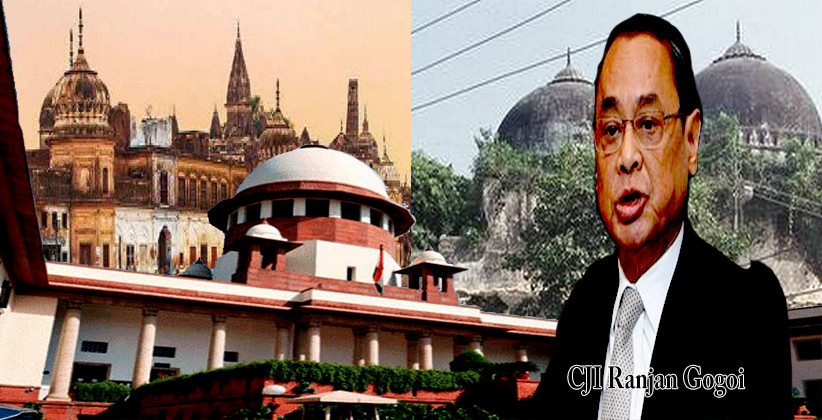
Ayodhya verdict: SC rules in favour of Ram Lalla, Sunni Waqf Board gets alternate land Ayodhya verdict: SC rules in favour of Ram Lalla, Sunni Waqf Board gets alternate land

SC bench led by CJI Ranjan Gogoi has allotted the dispute site to Ram Janmabhoomi Nyas, while directing the government to allot an alternate 5 acre land within Ayodhya to Sunni Waqf Board to build a mosque.

Supreme Court: Money Spent On Judiciary Less Than 1% In All States Except Delhi Supreme Court: Money Spent On Judiciary Less Than 1% In All States Except Delhi

The court guided all states to document their response to the commission's report within four weeks. If any of the states fail to file a response, it will be presumed that they have no objections to the recommendations made by the commission, the court said.

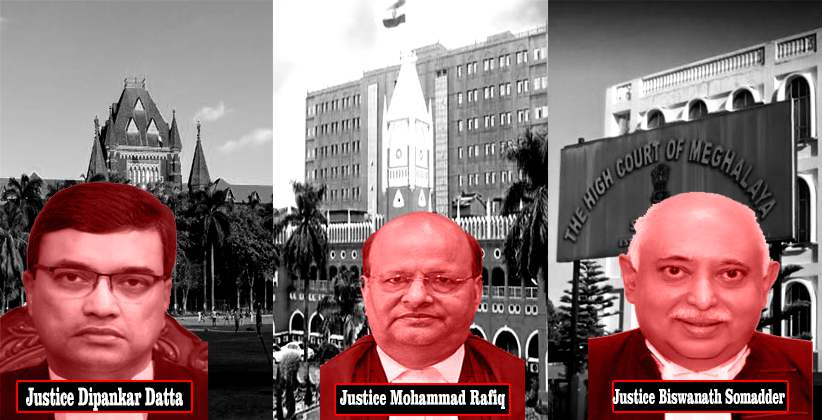
Supreme Court Top Panel Names Chief Justices for Bombay, Orissa and Meghalaya High Courts Supreme Court Top Panel Names Chief Justices for Bombay, Orissa and Meghalaya High Courts

On April 18, 2020, the Supreme Court Collegium recommended new Chief Justices for three High Courts. Justice Dipankar Datta was proposed as Chief Justice of the Bombay High Court, succeeding Justice B.P. Dharmadhikari. Justice Biswanath Somadder was nominated as Chief Justice of Meghalaya High Court, while Justice Mohammad Rafiq was recommended for transfer as Chief Justice of Orissa High Court.

TRENDING NEWS

accused-need-not-appear-on-every-date-after-bail-in-appeals-sc
Trending Judiciary
Accused Need Not Appear on Every Date After Bail in Appeals: SC [Read Order]

Supreme Court rules accused on bail after suspension of sentence need not appear on every hearing date in appellate or revisional courts.

19 January, 2026 12:47 PM
delhi-hc-upholds-press-councils-rejection-of-editors-guilds-claim-in-15th-press-council-constitution
Trending Judiciary
Delhi HC Upholds Press Council’s Rejection of Editors Guild’s Claim in 15th Press Council Constitution [Read Judgment]

Delhi High Court upheld Press Council of India’s rejection of Editors Guild’s claim, citing delay and non-compliance, and declined to interfere in 15th Press Council constitution.

19 January, 2026 01:39 PM

TOP STORIES

madras-hc-seeks-larger-bench-to-reconsider-bar-on-enrolment-of-law-graduates-with-pending-criminal-cases
Trending Judiciary
Madras HC Seeks Larger Bench To Reconsider Bar On Enrolment Of Law Graduates With Pending Criminal Cases [Read Order]

Madras High Court refers to larger bench to reconsider bar on enrolment of law graduates with pending criminal cases under Advocates Act.

15 January, 2026 05:28 PM
madras-hc-state-organizes-jallikattu-at-avaniyapuram-private-committees-cannot-claim-independent-right
Trending Judiciary
Madras HC: State Organizes Jallikattu at Avaniyapuram; Private Committees Cannot Claim Independent Right [Read Order]

Madras High Court rules that only the State can organize Jallikattu at Avaniyapuram; private committees have no independent right to conduct the event.

15 January, 2026 05:52 PM
sc-delivers-split-verdict-on-section-17a-of-prevention-of-corruption-act-refers-matter-to-larger-bench
Trending Judiciary
SC Delivers Split Verdict on Section 17A of Prevention of Corruption Act, Refers Matter to Larger Bench [Read Judgment]

Supreme Court delivers a split verdict on Section 17A of the Prevention of Corruption Act, with judges differing on its validity and referring the issue to a larger bench.

15 January, 2026 08:04 PM
daughter-in-law-widowed-after-father-in-laws-death-entitled-to-maintenance-from-his-estate-sc
Trending Judiciary
Daughter-in-Law Widowed After Father-in-Law’s Death Entitled to Maintenance from His Estate: SC [Read Judgment]

Supreme Court rules that a daughter-in-law widowed after her father-in-law’s death can claim maintenance from his estate under Hindu law.

15 January, 2026 09:03 PM

ADVERTISEMENT


Join Group

Signup for Our Newsletter

Get Exclusive access to members only content by email