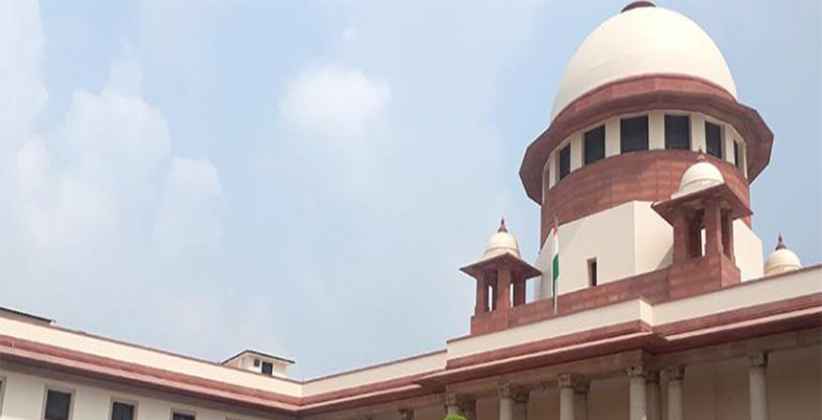
New Delhi: In a watershed moment for Indian environmental jurisprudence, the Supreme Court of India delivered a verdict on November 20, 2025, which fundamentally alters the legal identity of one of the world’s oldest geological features, the Aravalli Range. The Bench, led by Chief Justice B.R. Gavai, accepted a uniform definition proposed by the Ministry of Environment, Forest and Climate Change (MoEFCC), which establishes that only landforms rising 100 metres or more above their local relief will now legally qualify as “Aravalli Hills”. While the judiciary aimed to resolve decades of regulatory ambiguity across Gujarat, Rajasthan, Haryana, and Delhi, the ruling has ignited a fierce debate, with experts terming the decision a potential “death warrant” for the region’s ecological future. The judgment arrives in the context of the Aravallis serving as a critical “Green Wall” that checks the eastward expansion of the Thar Desert, a natural barrier now at risk of administrative amputation.
The core of the judgment rests on a new, quantitative criterion for conservation, where a hill is defined by its vertical prominence rather than its ecological function. Under the accepted definition, elevation is measured from the lowest contour line encircling the landform to its peak, and only those exceeding the 100-metre threshold retain the “Aravalli” tag for mining regulation purposes. Furthermore, a cluster is defined as an “Aravalli Range” only if two or more such qualifying hills are situated within 500 metres of one another. This definition replaces earlier, broader classifications used by the Forest Survey of India (FSI), which utilised a 3-degree slope rule that offered protection to a much wider area of the landscape. Legal critiques suggest that this redefinition constitutes “scientific reductionism,” simplifying a complex geological entity into a single numerical parameter, which may undermine the scientific basis for environmental protection.
To understand the gravity of this judicial redefinition, one must recognise the deep geological lineage of the Aravallis, which stand as one of the oldest fold mountain systems on Earth, originating in the Proterozoic era roughly between 2.5 and over 3 billion years ago. Predating the Himalayas by billions of years, these hills are the weathered remnants of a massive ancient collision between the pre-Indian subcontinent and the mainland Eurasian Plate. Over millennia, natural processes have eroded what were once towering peaks into the stable, residual hills and ridges visible today, a geological evolution that defies simple classification by vertical height alone. Beyond their geological antiquity, the ranges hold deep historical significance, having served as a cradle of spirituality and a natural fortress for historic citadels like Chittorgarh and Ranthambore. Furthermore, the region has a long legacy of resource interaction, with carbon dating evidence indicating that copper and other metals were mined in these ranges as early as the 5th century BC.
The immediate fallout of this definition is the potential declassification of vast tracts of the mountain range. Internal assessments by the FSI indicate that applying the 100-metre rule could exclude nearly 90% of the Aravalli hills from legal protection, leaving them vulnerable to commercial exploitation. For instance, in Rajasthan alone, only 1,048 out of over 12,000 mapped hills meet this height threshold, meaning the vast majority of the range could theoretically be opened to mining and real estate development. Environmental advocates argue that low-lying ridges, some merely 20 metres high, perform critical ecological services such as checking wind velocity to prevent dust storms and acting as wildlife corridors—functions that are ignored by a rigid height-based metric. This exclusion is particularly alarming given that the Aravallis act as a recharge zone for groundwater, with the potential to recharge 2 million litres of water per hectare, a vital service for the water-stressed National Capital Region.
Despite the criticism, the Court’s order does not impose a blanket ban on mining, citing the risk of fuelling illegal syndicates and the economic necessity of development. Instead, the Court has ordered a moratorium on the grant of new mining leases until a comprehensive Management Plan for Sustainable Mining (MPSM) is finalised by the MoEFCC and the Indian Council of Forestry Research and Education (ICFRE). This plan aims to identify zones suitable for sustainable mining while strictly prohibiting activity in “inviolate” areas, which include National Parks, Tiger Reserves, tiger corridors, and a 1-kilometre buffer around Protected Areas. Current legal mining operations are permitted to continue but must strictly adhere to enhanced environmental safeguards and recommendations provided by the Central Empowered Committee (CEC).
The scepticism regarding this “sustainable mining” regime stems from a history of rampant illegal activity and administrative apathy, particularly in Haryana and Rajasthan. Citizens’ reports highlight that despite previous bans, such as the 2009 Supreme Court ban in Haryana, illegal mining has flourished in districts like Nuh and Mahendergarh, where entire hillocks have been razed to the ground. For example, in Rawa village in Nuh, illegal mining reportedly wiped out a hillock in December 2024, exposing the administration’s failure to enforce existing protections. Furthermore, the judgment arrives in the context of the 2023 amendment to the Forest Conservation Act, which critics argue has already diluted protections for unclassified “deemed forests,” making it easier for corporate entities to acquire common lands that historically functioned as community resources.
Legal experts argue that the redefinition may violate the Precautionary Principle and the Public Trust Doctrine, tenets deeply embedded in Indian environmental jurisprudence. By narrowing the scope of protection, the state may be abdicating its duty under Article 48A and Article 21 of the Constitution, which guarantee the right to a healthy environment. The Aravallis support a rich biodiversity, including leopards, hyenas, and over 200 bird species, and their fragmentation threatens to sever wildlife corridors, isolating animal populations in shrinking forest patches. As the MoEFCC and ICFRE draft the MPSM, the future of North India’s ecological security hangs in the balance, dependent on whether the forthcoming plan can aggressively protect the low-lying, ecologically vital ridges that fail the Supreme Court’s new “100-metre test”.
Disclaimer: This content is produced and published by LawStreet Journal Media for informational purposes only and does not constitute legal advice. The views expressed are independent of any legal practice of the individuals involved.