38.6c New Delhi, India, Monday, January 19, 2026
Top Stories Supreme Court
Political NEWS Legislative Corner Celebstreet International Videos
Subscribe Contact Us
close
Judiciary

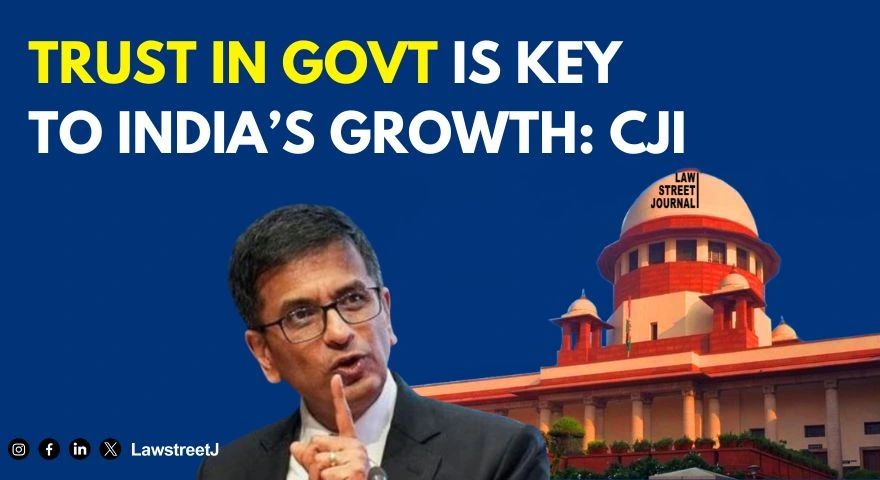
SC by majority highlights 'Economic democracy’, trust on wisdom of elected government as backbone of high-growth rate of India’s economy [Read Judgment]

By Jhanak Sharma      06 November, 2024 03:23 PM      0 Comments
SC by majority highlights Economic democracy trust on wisdom of elected government as backbone of high growth rate of Indias economy

NEW DELHI: The Supreme Court has said that the vision of the framers while drafting the Constitution was not to lay down a particular form of social structure or economic policy for future governments, while it held by a majority view of 7:2 that all privately owned properties cannot be regarded as material resources of the community to be acquired by the state for public good.

In its historic verdict, the nine judge bench led by Chief Justice of India D Y Chandrachud said to scuttle this constitutional vision by imposing a single economic theory, which views the acquisition of private property by the state as the ultimate goal, would undermine the very fabric and principles of our constitutional framework.

SC: Economic Policy Should Reflect People’s Choice, Not a Fixed Ideology

The judgment authored by CJI Chandrachud said the Constitution was framed in broad terms to allow succeeding governments to experiment with and adopt a structure for economic governance which would subserve the policies for which it owes accountability to the electorate.

The bench said, according to Dr B R Ambedkar, if the Constitution laid down a particular form of economic and social organisation, it would amount to taking away the liberty of people to decide the social organisation in which they wish to live. He opined on several occasions that economic democracy is not tied to one economic structure, such as socialism or capitalism, but to the aspiration for a ‘welfare state’.

"Thus, the role of this court is not to lay down economic policy, but to facilitate this intent of the framers to lay down the foundation for an ‘economic democracy'," the bench said.

Trust in Government Vital for High-Growth, Says CJI in Landmark Ruling

The court noted both Justice Krishna Iyer (in Ranganatha Reddy and Bhimsinghji judgments) and Justice Chinappa Reddy (in Sanjeev Coke judgment) consistently referred to the vision of the framers as the basis to advance this economic ideology as the guiding principle of the provision.

In Bhim Singhji, Justice Krishna Iyer cited Karl Marx in his judgment to observe that taking over large conglomerations of land is necessary to make Article 39 a “constitutional reality”. Interestingly, in the same decision, Justice Krishna Iyer also expressed his view about the nature of the economy and observed that our economy was “in the transitional stage … undergoing a fabian transformation”, the bench pointed out.

"Today, the Indian economy has transitioned from the dominance of public investment to the co-existence of public and private investment. The doctrinal error in the Krishna Iyer approach was, postulating a rigid economic theory, which advocates for greater state control over private resources, as the exclusive basis for constitutional governance," the CJI said.

He further said India’s economic trajectory indicates that the Constitution and the custodians of the Constitution – the electorate – have routinely rejected one economic dogma as being the exclusive repository of truth.

"As participants in a vibrant multi-party ‘economic democracy’, the ‘People of India’ have voted to power governments which have adopted varied economic and social policies, based on the country's evolving development priorities and challenges. The foresighted vision of our framers to establish an ‘economic democracy’ and trust the wisdom of  the elected government, has been the backbone of the high-growth rate of India’s economy, making it one of the fastest-growing economies in the world," the CJI said.

 

 [Read Judgment]


Share this article:

About:

Jhanak is a lawyer by profession and legal journalist by passion. She graduated at the top of her cl...Read more

Follow:
FacebookTwitterLinkedinInstagram


Leave a feedback about this
Related Posts
View All

Another CBI Officer Investigating Rakesh Asthana Moves SC Against Transfer, Makes Startling Revelations Another CBI Officer Investigating Rakesh Asthana Moves SC Against Transfer, Makes Startling Revelations

After A.K. Bassi, another CBI officer who was investigating corruption allegations against Special Director Rakesh Asthana moved the Supreme Court.

Ayodhya verdict: SC rules in favour of Ram Lalla, Sunni Waqf Board gets alternate land Ayodhya verdict: SC rules in favour of Ram Lalla, Sunni Waqf Board gets alternate land

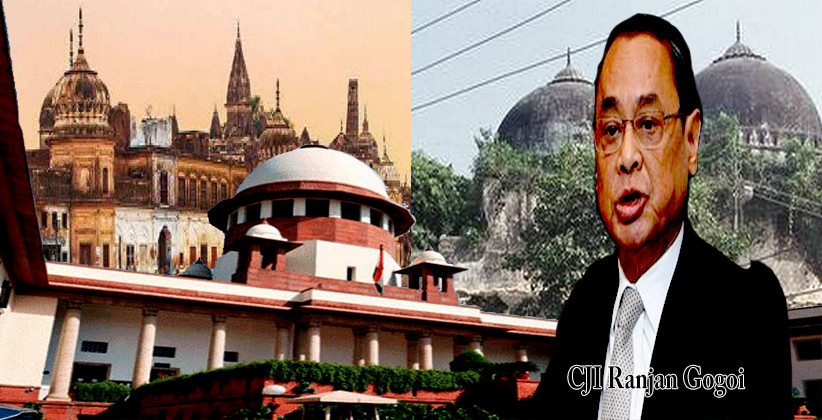
SC bench led by CJI Ranjan Gogoi has allotted the dispute site to Ram Janmabhoomi Nyas, while directing the government to allot an alternate 5 acre land within Ayodhya to Sunni Waqf Board to build a mosque.

Supreme Court: Money Spent On Judiciary Less Than 1% In All States Except Delhi Supreme Court: Money Spent On Judiciary Less Than 1% In All States Except Delhi

The court guided all states to document their response to the commission's report within four weeks. If any of the states fail to file a response, it will be presumed that they have no objections to the recommendations made by the commission, the court said.

Supreme Court Top Panel Names Chief Justices for Bombay, Orissa and Meghalaya High Courts Supreme Court Top Panel Names Chief Justices for Bombay, Orissa and Meghalaya High Courts

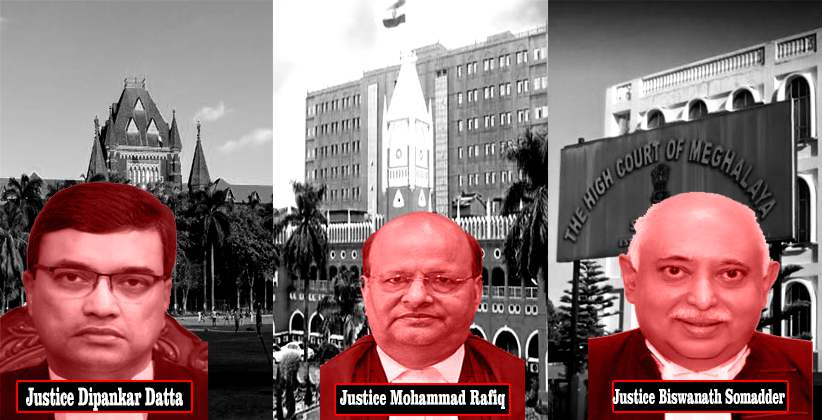
On April 18, 2020, the Supreme Court Collegium recommended new Chief Justices for three High Courts. Justice Dipankar Datta was proposed as Chief Justice of the Bombay High Court, succeeding Justice B.P. Dharmadhikari. Justice Biswanath Somadder was nominated as Chief Justice of Meghalaya High Court, while Justice Mohammad Rafiq was recommended for transfer as Chief Justice of Orissa High Court.

TRENDING NEWS


TOP STORIES

madras-hc-seeks-larger-bench-to-reconsider-bar-on-enrolment-of-law-graduates-with-pending-criminal-cases
Trending Judiciary
Madras HC Seeks Larger Bench To Reconsider Bar On Enrolment Of Law Graduates With Pending Criminal Cases [Read Order]

Madras High Court refers to larger bench to reconsider bar on enrolment of law graduates with pending criminal cases under Advocates Act.

15 January, 2026 05:28 PM
madras-hc-state-organizes-jallikattu-at-avaniyapuram-private-committees-cannot-claim-independent-right
Trending Judiciary
Madras HC: State Organizes Jallikattu at Avaniyapuram; Private Committees Cannot Claim Independent Right [Read Order]

Madras High Court rules that only the State can organize Jallikattu at Avaniyapuram; private committees have no independent right to conduct the event.

15 January, 2026 05:52 PM
sc-delivers-split-verdict-on-section-17a-of-prevention-of-corruption-act-refers-matter-to-larger-bench
Trending Judiciary
SC Delivers Split Verdict on Section 17A of Prevention of Corruption Act, Refers Matter to Larger Bench [Read Judgment]

Supreme Court delivers a split verdict on Section 17A of the Prevention of Corruption Act, with judges differing on its validity and referring the issue to a larger bench.

15 January, 2026 08:04 PM
daughter-in-law-widowed-after-father-in-laws-death-entitled-to-maintenance-from-his-estate-sc
Trending Judiciary
Daughter-in-Law Widowed After Father-in-Law’s Death Entitled to Maintenance from His Estate: SC [Read Judgment]

Supreme Court rules that a daughter-in-law widowed after her father-in-law’s death can claim maintenance from his estate under Hindu law.

15 January, 2026 09:03 PM

ADVERTISEMENT


Join Group

Signup for Our Newsletter

Get Exclusive access to members only content by email