New Delhi: The Supreme Court of India, on December 02, 2025, allowed the appeal of Tuhin Kumar Biswas @ Bumba and set aside the judgment of the Calcutta High Court, thereby discharging the appellant-accused from the criminal proceedings arising out of FIR No. 50/2020 lodged at Bidhannagar North Police Station. The judgment, delivered by Justice Manmohan, emphasized that strong suspicion must be founded on legally tenable material or evidence to justify the continuation of a criminal trial, particularly when a civil dispute between the parties is already pending.
The case originated from a complaint/FIR filed on March 19, 2020, by Ms. Mamta Agarwal, an alleged tenant of one of the co-owners of a property in Kolkata. She alleged offences under Sections 3k41, 354C, and 506 of the Indian Penal Code (IPC), claiming that the appellant-accused intimidated and restrained her from entering the property and outraged her modesty by clicking her pictures and making videos without consent.
The appellant, the son of one of the co-owners, contended that the FIR was a retaliatory action in the backdrop of an ongoing civil dispute concerning the property, in which an injunction order dated November 29, 2018, directed the parties to maintain joint possession and restrained the creation of any third-party interests. He argued that the complainant was not a tenant and was attempting to enter the property in violation of the injunction order.
Upon review, the Supreme Court concluded that the allegations in the FIR and the material on record did not disclose the ingredients of offences under Section 354C (Voyeurism) and Section 506 (Criminal Intimidation) of the IPC. The Court observed:
“Upon a perusal of the FIR and chargesheet on record, this Court is unable to conclude that the same disclose an offence under Section 354C of the IPC, since there is no allegation in the FIR or chargesheet that the complainant was watched or captured by the Appellant-accused while she was engaging in a ‘private act’.”
Regarding the charge of criminal intimidation, the Court noted:
“Except for the bald allegation that the Appellant-accused intimidated the complainant by clicking her photographs, the FIR and chargesheet are completely silent about the manner in which the complainant was threatened with any injury to her person or property.”
In relation to the offence of wrongful restraint under Section 341 IPC, the Court observed that the complainant’s claimed right to enter the property as a tenant was unsupported by material on record. It was noted that co-owner Amalendu Biswas had stated that the complainant had only come “to see the property,” indicating she was merely a prospective tenant. The Court concluded that the appellant-accused’s actions were an attempt “to enforce what he bona fide thought was his lawful right over the property in terms of the injunction order passed by the Trial Court.”
Criticising the proceedings, the Supreme Court cautioned against burdening the judicial system unnecessarily, observing:
“The tendency of filing chargesheets in matters where no strong suspicion is made out clogs the judicial system.”
The Court further remarked that where a civil dispute is pending, an injunction order exists, and the complainant has refused to make a judicial statement, strong suspicion founded on legally tenable material or evidence is absent.
The appeal was accordingly allowed, and the appellant-accused was discharged from the G.R. Case.
Case Details:
Case Name: Tuhin Kumar Biswas @ Bumba v. State of West Bengal
Citation: 2025 INSC 1373
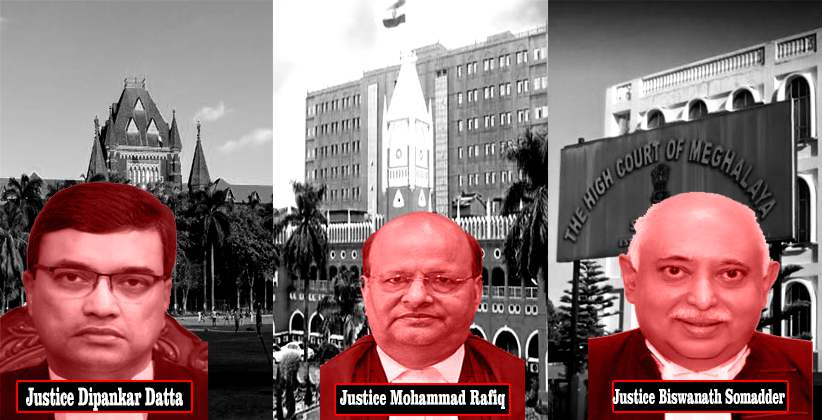
Bench: Justice Manmohan and Justice Nongmeikapam Kotiswar Singh
Appellant’s Counsel: Learned counsel for the Appellant-accused
Respondent’s Counsel: Learned counsel appearing for the State