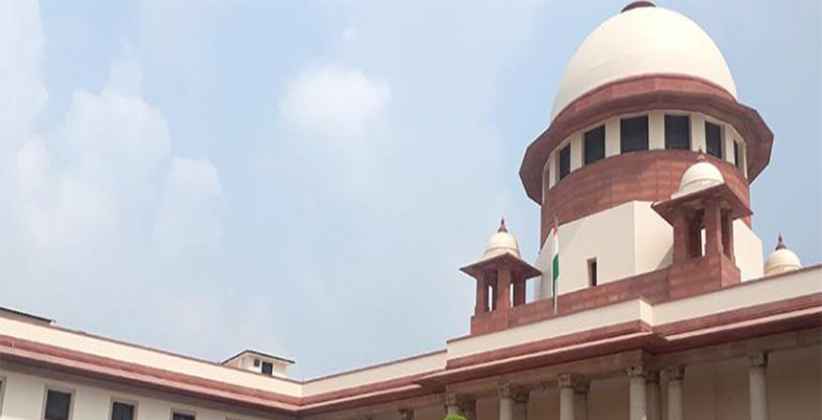
New Delhi: The Supreme Court of India has held that disputes cannot be referred to arbitration, nor can an arbitrator be appointed, when the very existence of the arbitration agreement is seriously disputed on allegations of forgery and fabrication. The Court clarified that arbitration is founded on consent, and where such consent itself is in serious doubt, the matter falls outside the domain of arbitral adjudication.
The ruling was delivered in a batch of appeals arising out of long-standing disputes relating to an alleged deed of admission and retirement dated 17 April 2007 concerning a partnership firm named M/s RDDHI Gold. The appeals were decided by a Bench comprising Justices Pamidighantam Sri Narasimha and Alok Aradhe, with the judgment pronounced on 2 February 2026.
The dispute originated from conflicting claims over the induction of Rajia Begum as a partner in the firm and the retirement of the other partners. Barnali Mukherjee, one of the original partners, consistently denied the execution of the alleged Admission Deed and asserted that the document was forged and fabricated. According to her, the partnership business was later absorbed into a private limited company through a separate absorption deed executed in 2011, and the respondent had no legitimate stake in the firm.
On the basis of the disputed Admission Deed, Rajia Begum initiated multiple proceedings seeking interim protection under Section 9 of the Arbitration and Conciliation Act, 1996, reference of disputes to arbitration under Section 8, and appointment of an arbitrator under Section 11. The Trial Court and the First Appellate Court declined to refer the dispute to arbitration, noting that serious allegations of fraud surrounded the very foundation of the arbitration agreement and that the original Admission Deed had not even been produced.
In proceedings under Section 9, the High Court had earlier refused interim relief, holding that the existence and execution of the Admission Deed were themselves doubtful. That decision attained finality after the Supreme Court dismissed the special leave petition challenging it. Despite this, the High Court later exercised supervisory jurisdiction under Article 227 of the Constitution and directed reference of the civil suit to arbitration under Section 8, while in a parallel proceeding declined to appoint an arbitrator under Section 11 on the ground that the existence of an arbitration agreement was uncertain.
Resolving this apparent inconsistency, the Supreme Court reaffirmed the settled legal position that allegations of serious fraud affecting the arbitration agreement itself render the dispute non-arbitrable. The Court relied on its earlier jurisprudence, including A. Ayyasamy v. A. Paramasivam, Rashid Raza v. Sadaf Akhtar, and Avitel Post Studioz Limited v. HSBC PI Holdings (Mauritius) Ltd., to reiterate that where a plea goes to the root of the arbitration clause and raises a credible case of non-existence of consent, courts must first adjudicate that issue.
Applying these principles, the Bench found substantial and cogent material casting serious doubt on the genuineness of the Admission Deed. It noted inconsistencies between the document and the conduct of the parties, including the continued participation of the respondent’s husband as a partner years after his alleged retirement and the absence of any contemporaneous records recognising the respondent as a partner. The Court held that the arbitration clause, being embedded in a document whose existence was itself disputed, could not be acted upon.
The Supreme Court consequently set aside the High Court’s order referring the civil suit to arbitration under Section 8, while upholding the High Court’s refusal to appoint an arbitrator under Section 11. The Court emphasised that supervisory jurisdiction under Article 227 cannot be used to overturn concurrent findings of fact or to compel arbitration where the statutory prerequisites are not met.
The judgment reinforces the distinction between arbitrable disputes involving allegations of fraud simpliciter and cases where fraud strikes at the very existence of the arbitration agreement. It underscores that in such cases, civil courts must adjudicate the dispute, and arbitral jurisdiction cannot be assumed by default.
Case Details:
- Case Name: Barnali Mukherjee v. Rajia Begum & Others
- Citation: 2026 INSC 106
- Court: Supreme Court of India
- Bench: Justice Pamidighantam Sri Narasimha, Justice Alok Aradhe
- Date of Judgment: 2 February 2026
- Connected Matters: SLP (C) No. 6013 of 2021 and SLP (C) No. 20262 of 2021
For the Petitioner(s):
Mr. Siddhartha Dave, Sr. Adv.; Mr. Shailesh Madiyal, Sr. Adv.; Mr. Aakash Sirohi, AOR; Mr. Indra Lal, Adv.; Mr. Subhojit Seal, Adv.; Mr. Sunando Raha, Adv.; Mr. Sk Sayan Uddin, Adv.; Ms. Manishitha Bhattacharjee, Adv.; Mr. Aviral Saxena, AOR
For the Respondent(s):
Mr. Subhojit Seal, Adv.; Mr. Sunando Raha, Adv.; Mr. Aviral Saxena, AOR; Mr. Siddhartha Dave, Sr. Adv.; Mr. Shailesh Madiyal, Sr. Adv.; Mr. Aakash Sirohi, AOR; Mr. Indra Lal, Adv.