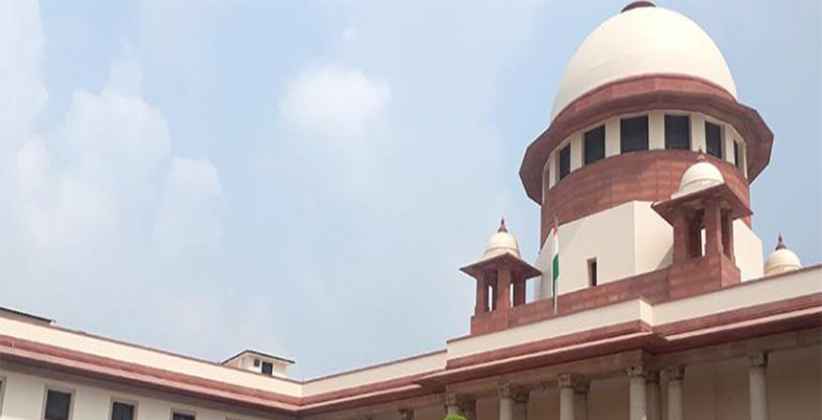
New Delhi: In a significant development following widespread protests and environmental concerns, the Supreme Court of India on Monday stayed its recent ruling on the Aravalli Hills and announced the constitution of an expert committee to study the environmental impact of earlier recommendations. The Court acknowledged that certain clarifications were necessary regarding the definitions it had recently approved for the Aravalli Hills, particularly concerning the classification of hills and ranges for the purpose of regulating mining activities.
The order was passed by a Bench comprising the Hon’ble Chief Justice of India Surya Kant, Hon’ble Mr. Justice J.K. Maheshwari, and Hon’ble Mr. Justice A.G. Masih, during the hearing of a suo motu case initiated amid concerns over potential threats to the ecologically sensitive mountain range.
The stay order came less than six weeks after a previous Bench had approved an elevation-linked definition for classifying landforms as part of the Aravalli Hills. According to reports, that definition would have excluded more than 90 percent of the Aravallis from mining restrictions, triggering widespread environmental concern and public protests.
The suo motu case was initiated following the Supreme Court’s earlier decision in November 2025 to accept a committee’s recommendations on defining the mountain range. The Aravalli range, which spans across Delhi, Haryana, Rajasthan, and Gujarat, has been at the centre of debates over environmental protection versus regulated mining activities.
During the proceedings, Tushar Mehta, appearing for the Union government, acknowledged that there were misconceptions regarding the earlier orders and the government’s role. He informed the Court that an expert committee had already been constituted and that its report had been accepted by the previous Bench.
The Chief Justice emphasized that an independent expert opinion was required to resolve ambiguities and to provide definitive guidance on issues concerning the Aravallis, particularly regarding the definitions of hills and ranges. The Court observed:
“An analysis of whether sustainable mining or regulated mining within the newly demarcated Aravalli area, notwithstanding regulatory oversight, would result in any adverse ecological consequences… that aspect can be examined.”
The Bench clarified its decision to stay the previous ruling, stating:
“We direct that the recommendations of the committee and the findings of the Supreme Court shall remain in abeyance till then.”
The Court also indicated that there was no immediate need to examine whether the restrictive demarcation approved last month would broaden the scope of areas where activities such as mining could be permitted, but emphasized the necessity of expert-led environmental assessment.
Background of the Controversy
In November 2025, a Bench comprising then Chief Justice of India B.R. Gavai, Justice K. Vinod Chandran, and Justice N.V. Anjaria had accepted recommendations made by a bureaucrat-dominated committee concerning the definitions of the Aravalli Hills and the prohibition of mining in core or inviolate areas. The committee had suggested that any landform in the Aravalli districts having an elevation of 100 metres or more from the local relief should be termed an Aravalli Hill.
The committee further defined the Aravalli Range as “two or more Aravalli Hills located within a proximity of 500 metres from each other, measured from the outermost point on the boundary of the lowest contour line on either side.”
The November 2025 judgment had also declined to impose a complete ban on mining activities in the Aravallis, observing that such prohibitions often lead to illegal mining, the rise of mafias, and criminalisation. However, this approach sparked significant controversy and environmental concerns.
The matter originated in May 2024, when the Court, while hearing a case relating to illegal mining in the Aravallis, called for a uniform definition of the mountain range after noting that different States had adopted varying definitions for “Aravalli Hills/Ranges.”
New Expert Committee to Be Constituted
The Court announced that a new committee of experts would be constituted to study the environmental impact of the recommendations made by the earlier committee, signalling a shift towards greater reliance on specialised environmental expertise.
Notice was issued to the Union government as well as to the State governments of Delhi, Haryana, Rajasthan, and Gujarat. In the interim, the Court directed that the earlier court directions and the previous committee’s recommendations shall remain in abeyance.
The matter has been listed for further hearing on January 21, 2026.
Case Details
Coram:
Hon’ble The Chief Justice of India Surya Kant
Hon’ble Mr. Justice J.K. Maheshwari
Hon’ble Mr. Justice A.G. Masih
Date of Order: 29 December 2025
Advocate Appearing:
Mr. Tushar Mehta, Solicitor General of India (for the Union of India)