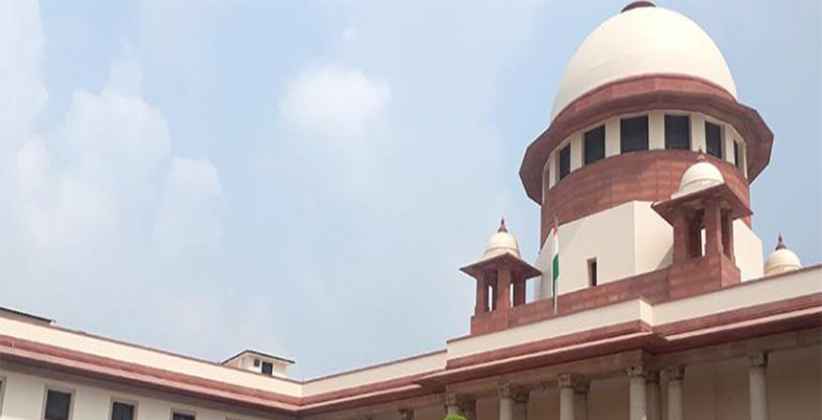
New Delhi: The Supreme Court of India has initiated a suo motu public interest matter concerning the legal definition and preservation of the Aravalli Range and has listed the case for hearing before a Vacation Bench on December 29, 2025. The Court’s action underscores mounting judicial concern over environmental degradation, ambiguous demarcation of forest boundaries, and compliance with environmental protection norms in the Aravalli region, a critical ecological zone in North India.
The suo motu case was taken up following reports highlighting disputes and conflicting interpretations regarding the legal scope of the Aravalli Range, which have significant implications for land use, mining operations, and environmental conservation across parts of Haryana, Rajasthan, Delhi, and adjoining areas. Amid rising litigation and administrative confusion over how the term “Aravalli Range” is defined for regulatory purposes, the Court observed that clarity was essential to forestall further environmental harm and to ensure consistent enforcement of conservation statutes.
The matter was listed before a Bench led by the Chief Justice of India and Justice Sanjiv Khanna, sitting as a Vacation Bench. The Court noted that the issue raised considerable public interest, given the Aravalli ecosystem’s role in groundwater recharge, air quality maintenance, biodiversity support, and protection against desertification. It emphasised that the judiciary has a continuing obligation to address environmental concerns that affect fundamental rights and sustainable development.
Quoting the Court’s registry order, the initiation of the suo motu matter reflects the Court’s recognition that “the parameters for defining the Aravalli Range, for the purposes of environmental regulation and protection, require judicial examination to ensure legal certainty and ecological preservation.” The Supreme Court’s notice for December 29, 2025 signals the urgency with which it views the matter, notwithstanding the ongoing winter vacation of the Court.
The development follows a series of high-profile cases in which courts have ruled on environmental compliance, mining restrictions, and encroachment issues pertaining to the Aravalli Hills and forests. Litigation in various High Courts and tribunals has raised questions regarding the delineation of protected forest areas vis-à-vis revenue land, permissible activities under the Forest Conservation Act, and the need for systematic scientific demarcation of the Aravalli belt. The Supreme Court’s suo motu initiative seeks to consolidate these themes and provide definitive legal guidance.
During the hearing, the Court is expected to hear submissions on the need for an authoritative definition of the Aravalli Range for application in environmental impact assessments, forest clearance processes, and planning permissions. It is likely to consider whether the absence of a uniform definition has contributed to inconsistent enforcement and environmental degradation, as well as the scope of judicial oversight in environmental governance.
Legal experts note that the Supreme Court’s engagement with the Aravalli issue reflects broader trends in environmental jurisprudence, wherein the judiciary increasingly addresses systemic ecological challenges through proactive litigation mechanisms. The case also dovetails with public concerns regarding urban expansion, mining pressure, and groundwater depletion in and around the ecologically fragile Aravalli belt.
The Court has directed that the matter be taken up on December 29, 2025, before a Bench comprising the Chief Justice of India and Justice Sanjiv Khanna, for preliminary hearing and for framing issues for comprehensive adjudication during the regular roster.
Case Details:
Suo Motu Writ Petition concerning the definition and preservation of the Aravalli Range, listed before the Supreme Court of India, Vacation Bench comprising the Chief Justice of India and Justice Sanjiv Khanna, on December 29, 2025.