38.6c New Delhi, India, Monday, December 15, 2025
Top Stories Supreme Court
Political NEWS Legislative Corner Celebstreet International Videos
Subscribe Contact Us
close
Judiciary

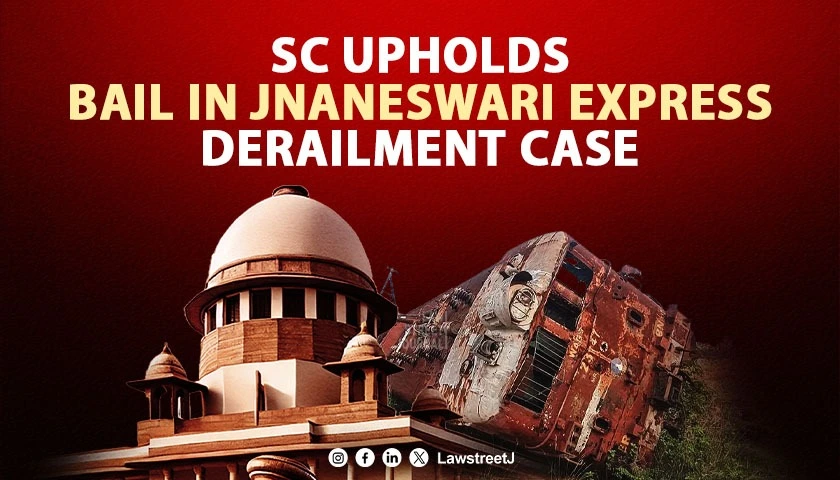
SC Upholds Bail in 2010 Jnaneswari Express Derailment Case, Issues Directions on Speedy Trials Under UAPA [Read Judgment]

By Samriddhi Ojha      14 December, 2025 02:39 AM      0 Comments
SC Upholds Bail in 2010 Jnaneswari Express Derailment Case Issues Directions on Speedy Trials Under UAPA

New Delhi: The Supreme Court of India, on December 11, 2025, delivered a landmark judgment in Central Bureau of Investigation v. Dayamoy Mahato & Ors., arising from the tragic 2010 derailment of the Jnaneswari Express. While acknowledging that the High Court had erred in granting bail, the Apex Court refused to interfere with the liberty already granted to the accused, considering their prolonged incarceration spanning over a dozen years and the prosecution’s failure to demonstrate any misuse of bail during the past three years.

The Bench, comprising Justice Sanjay Karol and Justice Nongmeikapam Kotiswar Singh, addressed four critical issues, including the applicability of Section 436-A of the Criminal Procedure Code (CrPC) and the balancing of Article 21 rights against national security concerns in cases involving the Unlawful Activities (Prevention) Act, 1967 (UAPA).

The Court definitively ruled that Section 436-A of the CrPC—which provides for release on bail after half the maximum sentence is served—does not apply to the accused in the present case. The judgment noted that the accused are being tried for offences including Section 302 IPC and Section 16 of the UAPA, where “one of the possible punishments prescribed is death. That, in and of itself, excludes these offences from the ambit of Section 436-A CrPC.” Consequently, the Court held that the High Court’s reliance on this provision was flawed and set aside the impugned judgments “to that extent.”

On the core constitutional question of liberty under Article 21, the Supreme Court observed that individual rights are subservient to the nation’s interest in grave cases. The Bench noted, “In view of the discussion made above that the rights of an individual are always subservient to the nation’s interest, the High Court fell in error in granting bail.” The Court acknowledged the “grave and serious impact” of the offence, stating that it “strike[s] at the nation’s security and are an effort to undermine its sovereign authority.” However, the Court ultimately declined to cancel the bail, holding that interference “would not be justified” at this stage, particularly as the accused had “already been in prison for a dozen years.”

The judgment placed strong emphasis on the systemic challenges posed by statutes such as the UAPA, which impose a reverse burden of proof. The Court explained that “a terrorist act is an act done with intent or likely intent to threaten the unity, integrity, security, economic security or sovereignty of India.” Such acts—especially those involving explosives, causing death, or disrupting monetary stability—qualify as terrorist acts and mandate a reverse burden of proof on the accused under Section 43-E of the UAPA.

Addressing the inherent difficulty in defending such cases, the Court highlighted the severe limitations faced by incarcerated accused persons in rebutting the presumption of guilt, observing: “An incarcerated accused would have severely limited access to evidence, witnesses and investigative material.” The Bench stressed the grave implications of procedural delay when combined with a reverse burden, stating that this doctrinal inversion “becomes all the more pernicious on account of procedural delays, and the very liberty of a person becomes hostage to clogged dockets, overworked judges, a lax prosecution, repeated adjournments by members of the Bar, and much more.”

The Court underscored the State’s corresponding obligation, holding: “If the State, in spite of all its might, presumes guilt, then the same State must also, with the employment of all the resources at its command, create pathways through which the accused can reclaim their innocence.” It concluded that “a constitutional democracy does not legitimise burdens by simply declaring them; it must ensure that those burdened are meaningfully equipped to bear them—even those accused of the gravest offences imaginable.”

To address systemic delays in UAPA and similar cases, the Court issued sweeping directions in rem to all High Courts and State Legal Services Authorities. The Chief Justices of all High Courts were requested “to examine the number of cases pending within their States under laws such as the UAPA, which impose a reverse burden of proof on the accused,” and “to ascertain the number of special courts designated to try such offences.” The Court further directed that in cases pending for more than five years, the concerned courts must “take stock of the situation… refrain from granting adjournments on routine requests and take up the matter on a day-to-day basis.”

In the present case (directions in personam), the Trial Court was directed to “take stock of the matter and record in its order the status thereof and the reasons for the trial having remained pending for many years,” and thereafter ensure that the matter “shall be taken up on a day-to-day basis,” strictly eschewing adjournments.

[Read Judgment]


Share this article:

About:

Samriddhi is a legal scholar currently pursuing her LL.M. in Constitutional Law at the National Law ...Read more


Leave a feedback about this
Related Posts
View All

Another CBI Officer Investigating Rakesh Asthana Moves SC Against Transfer, Makes Startling Revelations Another CBI Officer Investigating Rakesh Asthana Moves SC Against Transfer, Makes Startling Revelations

After A.K. Bassi, another CBI officer who was investigating corruption allegations against Special Director Rakesh Asthana moved the Supreme Court.

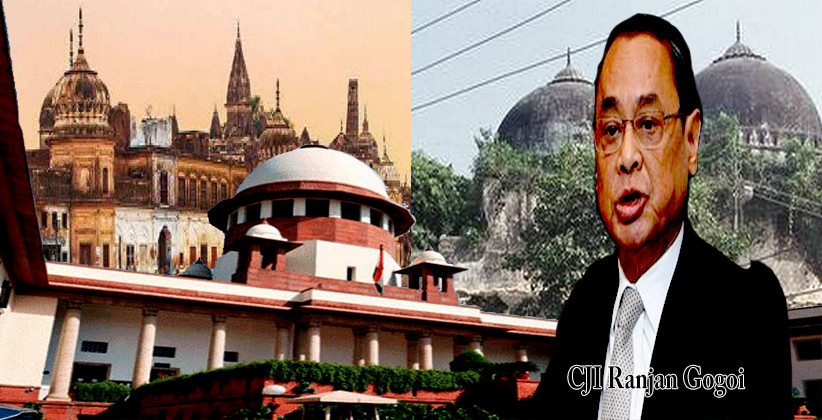
Ayodhya verdict: SC rules in favour of Ram Lalla, Sunni Waqf Board gets alternate land Ayodhya verdict: SC rules in favour of Ram Lalla, Sunni Waqf Board gets alternate land

SC bench led by CJI Ranjan Gogoi has allotted the dispute site to Ram Janmabhoomi Nyas, while directing the government to allot an alternate 5 acre land within Ayodhya to Sunni Waqf Board to build a mosque.

Supreme Court: Money Spent On Judiciary Less Than 1% In All States Except Delhi Supreme Court: Money Spent On Judiciary Less Than 1% In All States Except Delhi

The court guided all states to document their response to the commission's report within four weeks. If any of the states fail to file a response, it will be presumed that they have no objections to the recommendations made by the commission, the court said.

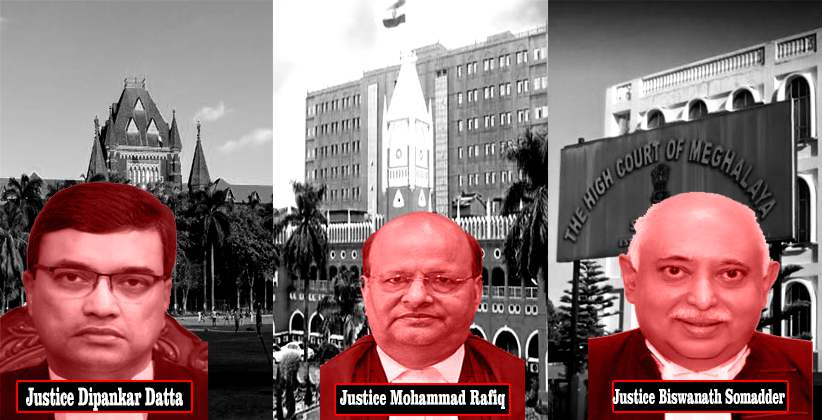
Supreme Court Top Panel Names Chief Justices for Bombay, Orissa and Meghalaya High Courts Supreme Court Top Panel Names Chief Justices for Bombay, Orissa and Meghalaya High Courts

On April 18, 2020, the Supreme Court Collegium recommended new Chief Justices for three High Courts. Justice Dipankar Datta was proposed as Chief Justice of the Bombay High Court, succeeding Justice B.P. Dharmadhikari. Justice Biswanath Somadder was nominated as Chief Justice of Meghalaya High Court, while Justice Mohammad Rafiq was recommended for transfer as Chief Justice of Orissa High Court.

TRENDING NEWS

ranveer-singhs-dhurandhar-barred-from-release-across-gulf-states-amid-content-sensitivity-concerns
Trending CelebStreet
Ranveer Singh’s Dhurandhar Barred from Release Across Gulf States Amid Content Sensitivity Concerns

Ranveer Singh’s Dhurandhar fails to secure release approval in six GCC countries amid concerns over politically sensitive content.

14 December, 2025 12:40 AM
sc-upholds-bail-in-2010-jnaneswari-express-derailment-case-issues-directions-on-speedy-trials-under-uapa
Trending Judiciary
SC Upholds Bail in 2010 Jnaneswari Express Derailment Case, Issues Directions on Speedy Trials Under UAPA [Read Judgment]

Supreme Court upholds bail in the 2010 Jnaneswari Express derailment case while issuing sweeping directions to ensure speedy trials in UAPA cases.

14 December, 2025 02:39 AM

TOP STORIES

scwla-hails-supreme-courts-historic-30-reservation-for-women-in-state-bar-councils-a-landmark-leap-for-gender-parity-in-the-legal-profession
Trending Legal Insiders
SCWLA Hails Supreme Court’s Historic 30% Reservation for Women in State Bar Councils: A Landmark Leap for Gender Parity in the Legal Profession [Read Press Release]

Supreme Court orders 30% reservation for women in State Bar Councils; SCWLA welcomes the landmark verdict as a major step toward gender equality in the legal profession.

09 December, 2025 04:45 PM
only-central-state-employees-fall-under-section-2e-gratuity-exclusion-kerala-hc
Trending Judiciary
Only Central, State Employees Fall Under Section 2(e) Gratuity Exclusion: Kerala HC [Read Judgment]

Kerala High Court rules KSBC retired abkari workers are entitled to gratuity, holding that Section 2(e) exclusion applies only to government employees.

09 December, 2025 08:28 PM
civic-bodies-have-authority-to-revise-property-tax-rates-courts-cannot-substitute-judgment-on-policy-decisions-sc
Trending Judiciary
Civic Bodies Have Authority to Revise Property Tax Rates; Courts Cannot Substitute Judgment on Policy Decisions: SC [Read Judgment]

Supreme Court upholds municipal autonomy to revise property tax rates, ruling that courts cannot interfere in policy decisions absent arbitrariness or illegality.

09 December, 2025 08:35 PM
hostile-witness-testimony-cannot-be-rejected-in-toto-supreme-court-reiterates-settled-legal-position
Trending Judiciary
Hostile Witness Testimony Cannot Be Rejected in Toto: Supreme Court Reiterates Settled Legal Position [Read Judgment]

Hostile witness testimony cannot be rejected entirely, the Supreme Court held, reaffirming that credible portions supporting prosecution or defence must still be considered.

09 December, 2025 08:44 PM

ADVERTISEMENT


Join Group

Signup for Our Newsletter

Get Exclusive access to members only content by email