38.6c New Delhi, India, Friday, January 23, 2026
Top Stories Supreme Court
Political NEWS Legislative Corner Celebstreet International Videos
Subscribe Contact Us
close
Judiciary

Stay on discharge in criminal cases only in rare, exceptional circumstances: SC [Read Judgment]

By Jhanak Sharma      03 March, 2025 05:24 PM      0 Comments
Stay on discharge in criminal cases only in rare exceptional circumstances SC

NEW DELHI: The Supreme Court has said the revisional court can stay the order of discharge only in rare and exceptional cases where the order of discharge is ex-facie perverse.

SC on Discharge Orders: Stay Allowed Only in Rare and Exceptional Cases

A bench of Justices Abhay S Oka and Ujjal Bhuyan said the order of discharge stood on a higher pedestal than the orders of acquittal and bail.

The court also pointed out the stay on discharge was an extreme and drastic order and came with grave consequences of curtailing liberty of the accused.

Supreme Court: Discharge Order Holds Higher Legal Standing Than Acquittal

The bench explained the legal concepts as it set aside the Delhi High Court's orders of October 21, 2023 and November 4, 2024 which stayed discharge of Sudershan Singh Wazir in a case of murder of National Conference MLC and Chairman of Jammu and Kashmir Gurudwara Prabandhak Committee.

Senior advocate Sidharth Luthra for the appellant submitted the High Court ought not to have stayed the order of discharge, as its consequence is that the trial will proceed against the appellant, though he has been discharged. He submitted that unless the order of discharge is set aside, the trial cannot proceed.

He submitted that the appellant has been discharged for the cogent reasons recorded and that the order cannot be nullified by granting a stay. He said that the stay to the discharge order would virtually amount to allowing the revision application without examining the merits or demerits of the discharge order.

Contesting the submission, Delhi police led by Additional Solicitor General Satya Darshi Sanjay, said a strong prima facie case was made out to proceed on the basis of the charge sheet filed against the appellant, yet the Sessions Judge has passed an order of discharge.

He pointed out that it is a very serious case of murder of a former Member of the Legislative Council of Jammu and Kashmir and the Chairman of Jammu and Kashmir Gurudwara Prabandhak Committee. He submitted that apart from the CCTV footage, there is evidence of CDR and eye-witnesses.

The court, however, said with the stay, the order of discharge ceases to operate, and the Sessions Court can proceed to frame charges against the accused and try him further. Thus, the stay of the discharge order has a grave consequences of depriving an accused of the liberty, the court said.

"If the trial against a discharged accused proceeds, even before the revision application against an order of discharge is decided, the final outcome of the revision will become fait accompli," the bench said, in its judgment on February 28, 2025.

The court also pointed out the position of a discharged accused is on a higher pedestal than that of an accused who is acquitted after a full trial.

"The reason is that a charge can be framed, and an accused can be tried only when there is sufficient material in the charge sheet to proceed against him. An order of discharge is passed when the charge sheet does not contain sufficient material to proceed against the accused," the bench said.

As the power of the court to stay the order granting bail can be exercised only in rare and exceptional cases, the bench said a discharged accused even stands on a still higher pedestal than an accused released on bail.

While exercising power under Section 390 of the CrPC, the normal rule is that the acquitted accused should not be committed to custody, and a direction should be issued to admit him to bail. This normal rule should apply all the more to cases where the challenge is to the order of discharge, as the order of discharge is on a higher pedestal than an order of acquittal, the bench said.

"Passing an order under Section 390 directing the discharged accused to admit to bail is sufficient to procure the presence of the discharged accused at the time of hearing of the revision application and for undergoing trial if the order of discharge is set aside," the court said.

The court relied upon Parvinder Singh Khurana Vs Directorate of Enforcement (2024), to point out the order of discharge stands on a higher pedestal than the order granting bail.

"By grant of bail, the status of the accused does not cease to be that of an accused, but when the order of discharge is passed, he ceases to be an accused. The power of the court to stay the order granting bail can be exercised only in rare and exceptional cases," it said.

 

[Read Judgment]


Share this article:

About:

Jhanak is a lawyer by profession and legal journalist by passion. She graduated at the top of her cl...Read more

Follow:
FacebookTwitterLinkedinInstagram


Leave a feedback about this
Related Posts
View All

Another CBI Officer Investigating Rakesh Asthana Moves SC Against Transfer, Makes Startling Revelations Another CBI Officer Investigating Rakesh Asthana Moves SC Against Transfer, Makes Startling Revelations

After A.K. Bassi, another CBI officer who was investigating corruption allegations against Special Director Rakesh Asthana moved the Supreme Court.

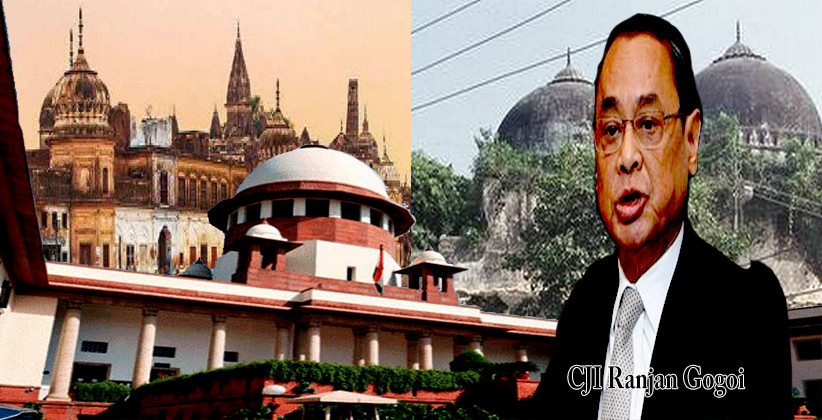
Ayodhya verdict: SC rules in favour of Ram Lalla, Sunni Waqf Board gets alternate land Ayodhya verdict: SC rules in favour of Ram Lalla, Sunni Waqf Board gets alternate land

SC bench led by CJI Ranjan Gogoi has allotted the dispute site to Ram Janmabhoomi Nyas, while directing the government to allot an alternate 5 acre land within Ayodhya to Sunni Waqf Board to build a mosque.

Supreme Court: Money Spent On Judiciary Less Than 1% In All States Except Delhi Supreme Court: Money Spent On Judiciary Less Than 1% In All States Except Delhi

The court guided all states to document their response to the commission's report within four weeks. If any of the states fail to file a response, it will be presumed that they have no objections to the recommendations made by the commission, the court said.

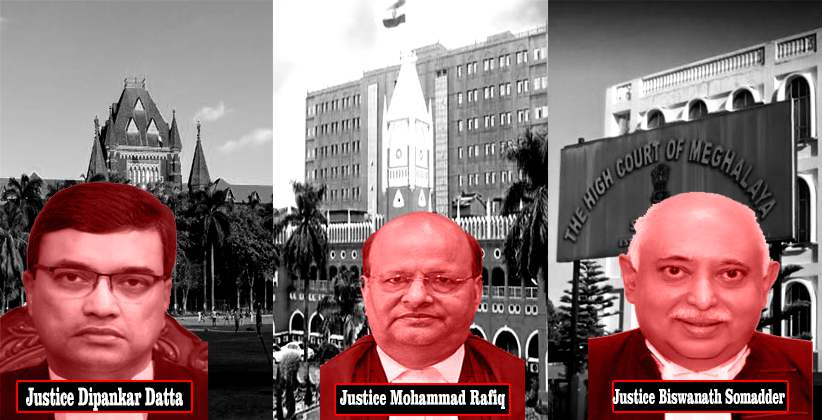
Supreme Court Top Panel Names Chief Justices for Bombay, Orissa and Meghalaya High Courts Supreme Court Top Panel Names Chief Justices for Bombay, Orissa and Meghalaya High Courts

On April 18, 2020, the Supreme Court Collegium recommended new Chief Justices for three High Courts. Justice Dipankar Datta was proposed as Chief Justice of the Bombay High Court, succeeding Justice B.P. Dharmadhikari. Justice Biswanath Somadder was nominated as Chief Justice of Meghalaya High Court, while Justice Mohammad Rafiq was recommended for transfer as Chief Justice of Orissa High Court.

TRENDING NEWS

national-green-tribunal-takes-suo-motu-cognisance-of-techies-drowning-in-waterlogged-trench
Trending Environment
National Green Tribunal Takes Suo Motu Cognisance Of Techie’s Drowning In Waterlogged Trench [Read Order]

National Green Tribunal takes suo motu cognisance of a techie’s drowning in a waterlogged trench in Noida, citing environmental lapses and violation of law.

23 January, 2026 03:20 PM

TOP STORIES

accused-need-not-appear-on-every-date-after-bail-in-appeals-sc
Trending Judiciary
Accused Need Not Appear on Every Date After Bail in Appeals: SC [Read Order]

Supreme Court rules accused on bail after suspension of sentence need not appear on every hearing date in appellate or revisional courts.

19 January, 2026 12:47 PM
delhi-hc-upholds-press-councils-rejection-of-editors-guilds-claim-in-15th-press-council-constitution
Trending Judiciary
Delhi HC Upholds Press Council’s Rejection of Editors Guild’s Claim in 15th Press Council Constitution [Read Judgment]

Delhi High Court upheld Press Council of India’s rejection of Editors Guild’s claim, citing delay and non-compliance, and declined to interfere in 15th Press Council constitution.

19 January, 2026 01:39 PM
kerala-hc-full-bench-holds-hindu-wife-entitled-to-maintenance-from-husbands-immovable-property
Trending Judiciary
Kerala HC Full Bench Holds Hindu Wife Entitled to Maintenance from Husband’s Immovable Property [Read Order]

Kerala High Court holds that a Hindu wife can claim maintenance from her husband’s immovable property, laying down a three-stage framework of rights.

19 January, 2026 02:00 PM
from-constitutional-promise-to-enforceable-right-how-the-supreme-court-gave-teeth-to-article-21a-and-the-rte-acts-25-quota
Trending Judiciary
From Constitutional Promise to Enforceable Right: How the Supreme Court Gave Teeth to Article 21A and the RTE Act’s 25% Quota [Read Order]

Supreme Court enforces Article 21A, mandates statutory rules for RTE Act’s 25% quota, and empowers NCPCR to monitor State compliance.

19 January, 2026 02:43 PM

ADVERTISEMENT


Join Group

Signup for Our Newsletter

Get Exclusive access to members only content by email