38.6c New Delhi, India, Wednesday, December 03, 2025
Top Stories Supreme Court
Political NEWS Legislative Corner Celebstreet International Videos
Subscribe Contact Us
close
Judiciary

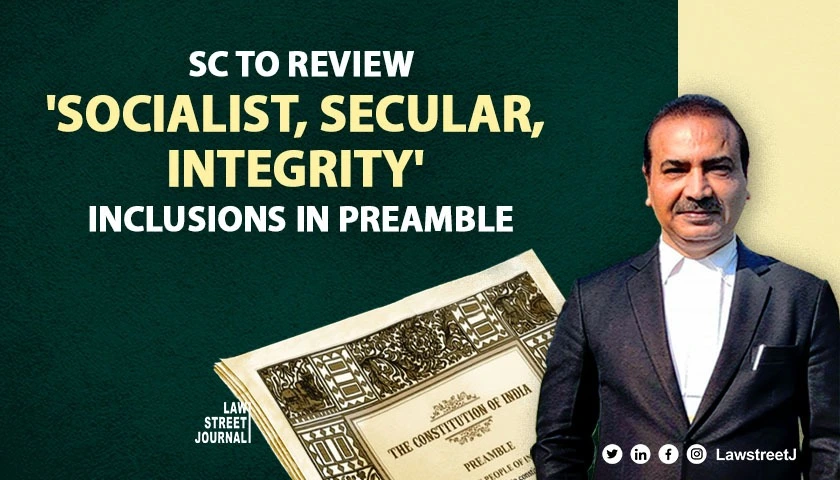
Supreme Court to assess legality of 'Socialist, Secular, Integrity' inclusions in 42nd Constitution Amendment

By Jhanak Sharma      01 May, 2024 01:55 PM      0 Comments
Supreme Court to Assess Legality of Socialist Secular Integrity inclusions in 42nd Constitution Amendment

New Delhi: In a recent legal development, a writ petition has been filed under Article 32 as a Public Interest Litigation (PIL) by Supreme Court advocate Ashwini Kumar Upadhyay challenging the legitimacy of the amendments made to the Preamble of the Indian Constitution through the 42nd Amendment in 1976. Petitioner Upadhyay asserts that the inclusion of the words "Socialist, Secular, and Integrity" during the Emergency period is unconstitutional, citing violations of Article 14 and the due process of law.

The 42nd Amendment, enacted during a time marked by political turmoil and the proclamation of Emergency by then Prime Minister Indira Gandhi, inserted the contested words without altering the original adoption date of the Constitution, November 26, 1949. The petition highlights that these amendments were made purportedly on behalf of the Constituent Assembly, which no longer existed at the time.

Legal experts point to the Kesavananda Bharati case of 1973, where the Supreme Court declared that while the Constitution could be amended, such amendments must respect the "basic structure" doctrine. The petitioner argues that the 42nd Amendment fails this test, as it was passed without proper representative mandate, under the extended tenure of a Lok Sabha whose original mandate had expired.

Further complicating the legality of the amendment, during the Emergency, significant opposition figures were detained, the press was censored, and fundamental rights were suspended, undermining the democratic process. The petitioner contends that the amendment was passed without an effective debate in Parliament, constituting a "fraud on the Constitution."

Historical debates from the Constituent Assembly also underline the contentious nature of the words "Socialist" and "Secular." Proposals to include these terms in earlier drafts of the Constitution were explicitly rejected, indicating that their later inclusion in 1976 contradicted the original intent of the framers.

The Supreme Court has been petitioned to declare Section 2 of the Constitution (42nd Amendment) Act, 1976, void and unconstitutional. This case not only challenges the procedural integrity of the amendment process but also questions the substantive changes made to the foundational text of the nation during a period of political crisis.

This PIL brings to the fore longstanding debates about the nature of constitutional amendments and their alignment with democratic principles. As the Supreme Court gears up to hear this case, it reopens discussions on the balance between amendability and the preservation of constitutional ideology in the world's largest democracy.

Constitutional Amendment of Preamble Under Legal Scrutiny Amid Historical Controversies

Historically, the framing of the Indian Constitution was a meticulous process, where concepts like socialism and secularism were hotly debated. Records from the Constituent Assembly debates indicate that attempts to explicitly include these terms in earlier drafts were repeatedly rejected. For instance, on November 15, 1948, and again on subsequent dates, amendments proposed by Prof. K.T. Shah to include 'Secular' and 'Socialist' were decisively negatived by the Assembly.

The legal challenge also draws heavily on the Supreme Court's landmark 1973 decision in the Kesavananda Bharati case, which introduced the "basic structure" doctrine. This doctrine asserts that the fundamental framework of the Constitution cannot be altered by any amendment. The petitioner argues that the 42nd Amendment, enacted under the shadow of emergency provisions, skirts this doctrine by altering the Preamble without genuine democratic endorsement.

The emergency period itself is noted for severe restrictions on civil liberties, including the jailing of opposition leaders, press censorship, and suspension of fundamental rights, which, according to the petitioner, stifled any semblance of a democratic process during the passage of the amendment. This backdrop casts a long shadow over the legitimacy of the amendments made during this period.

With the Supreme Court set to deliberate on this pivotal case, it not only revisits the procedural integrity of the 42nd Amendment but also re-examines the substantive alterations made to the Preamble against the original intentions of the Constitution's framers. This case could potentially reshape the narrative around the adaptability and sanctity of the foundational document of India.

Next hearing is scheduled in the first week of July.



Share this article:

About:

Jhanak is a lawyer by profession and legal journalist by passion. She graduated at the top of her cl...Read more

Follow:
FacebookTwitterLinkedinInstagram


Leave a feedback about this
Related Posts
View All

Another CBI Officer Investigating Rakesh Asthana Moves SC Against Transfer, Makes Startling Revelations Another CBI Officer Investigating Rakesh Asthana Moves SC Against Transfer, Makes Startling Revelations

After A.K. Bassi, another CBI officer who was investigating corruption allegations against Special Director Rakesh Asthana moved the Supreme Court.

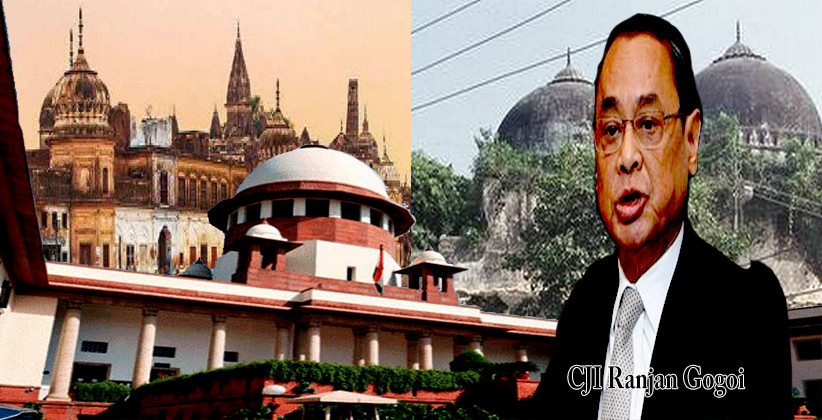
Ayodhya verdict: SC rules in favour of Ram Lalla, Sunni Waqf Board gets alternate land Ayodhya verdict: SC rules in favour of Ram Lalla, Sunni Waqf Board gets alternate land

SC bench led by CJI Ranjan Gogoi has allotted the dispute site to Ram Janmabhoomi Nyas, while directing the government to allot an alternate 5 acre land within Ayodhya to Sunni Waqf Board to build a mosque.

Supreme Court: Money Spent On Judiciary Less Than 1% In All States Except Delhi Supreme Court: Money Spent On Judiciary Less Than 1% In All States Except Delhi

The court guided all states to document their response to the commission's report within four weeks. If any of the states fail to file a response, it will be presumed that they have no objections to the recommendations made by the commission, the court said.

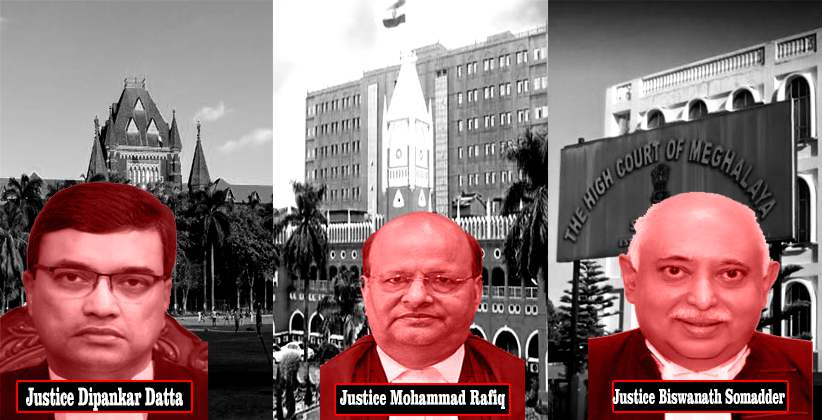
Supreme Court Top Panel Names Chief Justices for Bombay, Orissa and Meghalaya High Courts Supreme Court Top Panel Names Chief Justices for Bombay, Orissa and Meghalaya High Courts

On April 18, 2020, the Supreme Court Collegium recommended new Chief Justices for three High Courts. Justice Dipankar Datta was proposed as Chief Justice of the Bombay High Court, succeeding Justice B.P. Dharmadhikari. Justice Biswanath Somadder was nominated as Chief Justice of Meghalaya High Court, while Justice Mohammad Rafiq was recommended for transfer as Chief Justice of Orissa High Court.

TRENDING NEWS

allahabad-hc-condemns-police-for-taking-woman-into-possession-despite-stay-orders-immediate-release
Trending Judiciary
Allahabad HC Condemns Police for Taking Woman Into ‘Possession’ Despite Stay; Orders Immediate Release [Read Order]

Allahabad High Court slammed Muzaffarnagar Police for violating a stay order, declaring the detenue a major and ordering her immediate release.

02 December, 2025 09:27 PM
rera-orders-cannot-be-executed-through-civil-court-execution-petitions-karnataka-hc
Trending Judiciary
RERA Orders Cannot Be Executed Through Civil Court Execution Petitions: Karnataka HC [Read Order]

Karnataka High Court rules RERA orders cannot be executed through civil courts, holding that such orders are not decrees under the CPC.

02 December, 2025 10:19 PM

TOP STORIES

forklifts-and-cranes-used-inside-factory-are-motor-vehicles-registration-and-tax-mandatory-kerala-hc
Trending Judiciary
Forklifts And Cranes Used Inside Factory Are ‘Motor Vehicles’; Registration & Tax Mandatory: Kerala HC [Read Judgment]

Kerala High Court rules that forklifts and cranes used inside factories are ‘motor vehicles’, requiring mandatory registration and tax under motor vehicle laws.

27 November, 2025 10:29 AM
loading-of-mineral-constitutes-transportation-us-21-4-of-the-mmdra-kerala-hc
Trending Judiciary
Loading of Mineral Constitutes ‘Transportation’ U/S 21(4) Of The MMDRA: Kerala HC [Read Judgment]

Kerala HC rules that loading minerals into a vehicle amounts to transportation under Section 21(4) of the MMDRA, upholding seizure for illegal mineral movement.

27 November, 2025 10:43 AM
sc-upholds-himachal-pradeshs-cancellation-of-tender-loi-sets-aside-high-court-order
Trending Judiciary
SC Upholds Himachal Pradesh’s Cancellation of Tender LoI, Sets Aside High Court Order [Read Judgment]

Supreme Court upholds Himachal Pradesh’s cancellation of a PDS tender LoI, ruling it created no enforceable rights and overturning the High Court order.

27 November, 2025 10:57 AM
chhattisgarh-hc-quashes-pg-medical-admission-rules-for-violating-article-14-rejects-institutional-domicile-preference-upholds-merit
Trending Judiciary
Chhattisgarh HC Quashes PG Medical Admission Rules for Violating Article 14, Rejects Institutional/Domicile Preference, Upholds Merit [Read Order]

Chhattisgarh High Court quashes PG medical admission rules, holding institutional and domicile-based preferences unconstitutional and affirming merit.

27 November, 2025 11:16 AM

ADVERTISEMENT


Join Group

Signup for Our Newsletter

Get Exclusive access to members only content by email