38.6c New Delhi, India, Thursday, December 18, 2025
Top Stories Supreme Court
Political NEWS Legislative Corner Celebstreet International Videos
Subscribe Contact Us
close
Judiciary

'Words spreads faster than winds,' SC relies on testimony of neighbour; acquits woman in dowry harassment case [Read Judgment]

By Jhanak Sharma      30 August, 2025 05:54 PM      0 Comments
Words spreads faster than winds SC relies on testimony of neighbour acquits woman in dowry harassment case

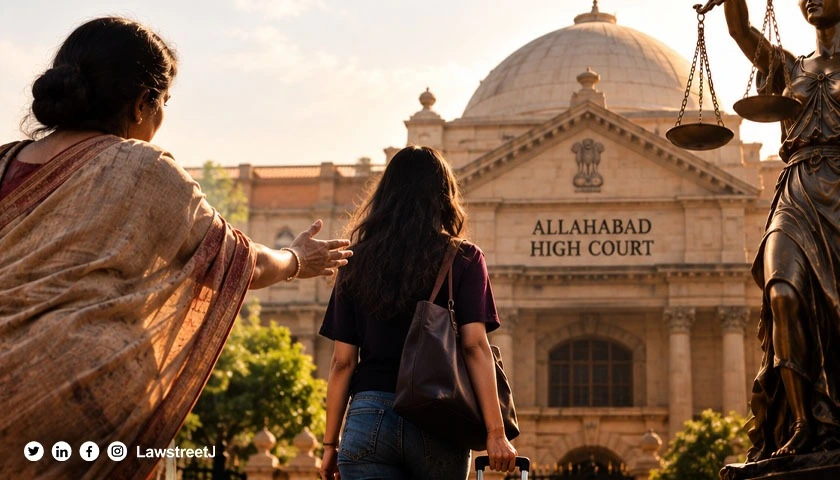
NEW DELHI: The Supreme Court has relied upon testimony of a woman's neighbour to acquit her in a case of dowry harassment of her daughter-in-law, who died by suicide in 2001.

A bench of Justices Aravind Kumar and N V Anjaria set aside the Uttarakhand High Court's judgment, which upheld the conviction and sentence of three years jail imposed on appellant Bhagwati Devi.

Finding the neighbour's version credit worthy, the court held that in such matters the word spreads faster than the wind about a daughter-in-law being harassed for the dowry by the parents in law.

The High Court had brushed aside testimony of the neighbour produced as defence witness.

It held the neighbour could not have deposed any fact with regard to the demand of dowry as it happened within the four walls.

Terming it "an erroneous finding", the bench said, particularly in such matters the word spreads faster than the wind about a daughter-in-law being harassed for the dowry by the parents in law.

"Such facts being conspicuously absent in the instant case, we have no hesitation in arriving at a conclusion that the conviction of the appellant for the offence punishable under Section 498-A and the sentence imposed on her cannot be sustained,'' the bench said.

The court recorded that the neighbour of the appellant deposed that she had never made any demand for dowry.

The neighbour also deposed that the deceased had informed her of not keeping well.

"She being neither the relative of the appellant nor belonging to the same community to which the appellant belongs would indicate that there was no interest in her to depose against the factual matrix or in favour of the appellant," the court felt.

Setting the appellant free, the court also noted testimony of the father of the deceased woman does not indicate of any such demand for dowry having been made or the deceased having been inflicted with cruelty so as to drive her to commit suicide.  

"A holistic look at the deposition of the mother of the deceased would also not inspire any confidence to any person of common prudence to arrive at a conclusion that on account of either harassment for dowry or on account of demand for dowry made by the appellant she had been perforced to commit suicide," the bench said.

The court said even the brother of the deceased admitted that there was no demand for dowry made before marriage and the marriage was solemnised happily and properly and only on the basis of doubt he was expressing that his sister might have been murdered.

"Thus, the cumulative effect of the evidence of these witnesses would drive us to the irresistible conclusion that the deceased had not committed suicide on account of either demand for dowry being made or cruelty being inflicted on her,'' the bench said.

In its decision, the court also placed reliance upon the case of Manju Ram Kalita Vs State of Assam (2009) wherein it was held cruelty for purpose of Section 498-A of IPC is to be established in that context as it may be different from other statutory provisions.

In other words, it has been held that it has to be established that the woman had been subjected to cruelty continuously/ persistently or atleast in close proximity of time of lodging of complaint, the bench said.

[Read Judgment]

Disclaimer: This content is produced and published by LawStreet Journal Media for informational purposes only and does not constitute legal advice. The views expressed are independent of any legal practice of the individuals involved.



Share this article:

About:

Jhanak is a lawyer by profession and legal journalist by passion. She graduated at the top of her cl...Read more

Follow:
FacebookTwitterLinkedinInstagram


Leave a feedback about this
Related Posts
View All

Another CBI Officer Investigating Rakesh Asthana Moves SC Against Transfer, Makes Startling Revelations Another CBI Officer Investigating Rakesh Asthana Moves SC Against Transfer, Makes Startling Revelations

After A.K. Bassi, another CBI officer who was investigating corruption allegations against Special Director Rakesh Asthana moved the Supreme Court.

Ayodhya verdict: SC rules in favour of Ram Lalla, Sunni Waqf Board gets alternate land Ayodhya verdict: SC rules in favour of Ram Lalla, Sunni Waqf Board gets alternate land

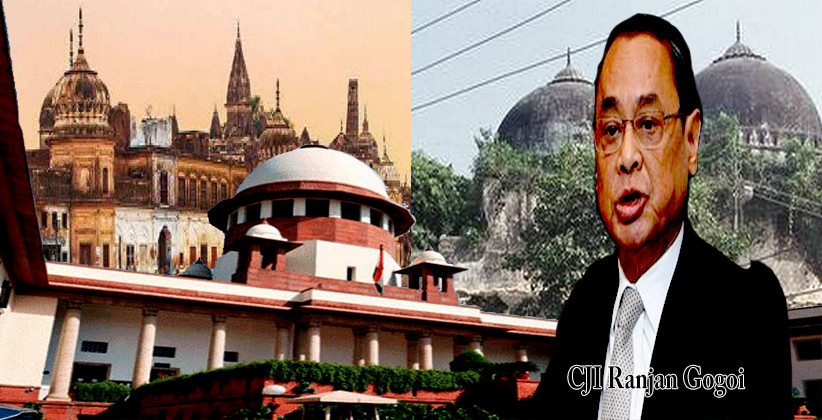
SC bench led by CJI Ranjan Gogoi has allotted the dispute site to Ram Janmabhoomi Nyas, while directing the government to allot an alternate 5 acre land within Ayodhya to Sunni Waqf Board to build a mosque.

Supreme Court: Money Spent On Judiciary Less Than 1% In All States Except Delhi Supreme Court: Money Spent On Judiciary Less Than 1% In All States Except Delhi

The court guided all states to document their response to the commission's report within four weeks. If any of the states fail to file a response, it will be presumed that they have no objections to the recommendations made by the commission, the court said.

Supreme Court Top Panel Names Chief Justices for Bombay, Orissa and Meghalaya High Courts Supreme Court Top Panel Names Chief Justices for Bombay, Orissa and Meghalaya High Courts

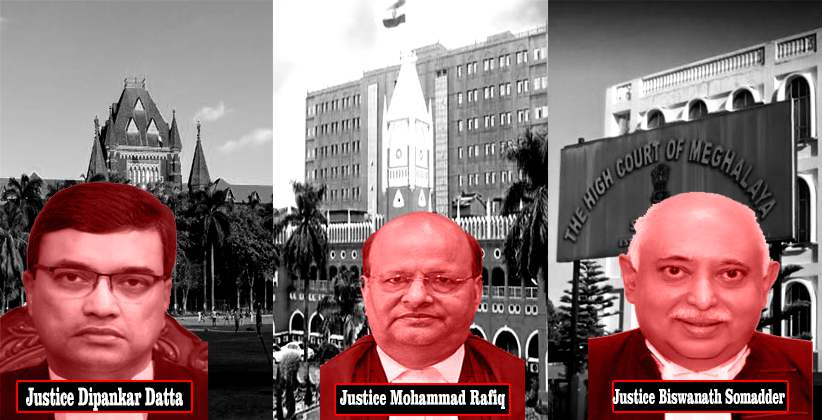
On April 18, 2020, the Supreme Court Collegium recommended new Chief Justices for three High Courts. Justice Dipankar Datta was proposed as Chief Justice of the Bombay High Court, succeeding Justice B.P. Dharmadhikari. Justice Biswanath Somadder was nominated as Chief Justice of Meghalaya High Court, while Justice Mohammad Rafiq was recommended for transfer as Chief Justice of Orissa High Court.

TRENDING NEWS

madras-hc-invokes-ancient-rajadharma-and-kautilyas-arthashastra-govt-has-constitutional-duty-to-provide-legal-aid-to-indian-citizens-abroad
Trending Judiciary
Madras HC Invokes Ancient ‘Rajadharma’ and Kautilya’s Arthashastra: Govt Has Constitutional Duty to Provide Legal Aid to Indian Citizens Abroad [Read Order]

Madras High Court invokes Rajadharma and Arthashastra, holds India has a constitutional duty to provide legal aid to citizens facing disputes abroad.

17 December, 2025 06:25 PM
sc-flags-exploitation-of-deity-criticises-paid-special-pujas-at-bankey-bihari-temple
Trending Judiciary
SC Flags ‘Exploitation’ of Deity, Criticises Paid ‘Special Pujas’ at Bankey Bihari Temple

Supreme Court flags exploitation of deity, questions paid special pujas at Bankey Bihari Temple, citing inequality and violation of sacred resting hours.

17 December, 2025 06:36 PM

TOP STORIES

sc-orders-aiims-to-form-secondary-medical-board-to-evaluate-passive-euthanasia-for-man-in-vegetative-state-for-13-years
Trending Judiciary
SC Orders AIIMS to Form Secondary Medical Board to Evaluate Passive Euthanasia for Man in Vegetative State for 13 Years [Read Order]

Supreme Court directs AIIMS to form a Secondary Medical Board to assess passive euthanasia for a man in a vegetative state for 13 years.

13 December, 2025 06:00 PM
endless-compassion-not-permissible-sc-bars-claims-for-higher-post-after-compassionate-appointment
Trending Judiciary
‘Endless Compassion Not Permissible’: SC Bars Claims for Higher Post After Compassionate Appointment [Read Judgment]

Supreme Court rules that employees cannot seek higher posts after accepting compassionate appointment, calling such claims “endless compassion.”

13 December, 2025 06:54 PM
property-tax-appeal-only-tax-amount-payable-penal-interest-not-mandatory-kerala-hc
Trending Judiciary
Property Tax Appeal: Only Tax Amount Payable, Penal Interest Not Mandatory: Kerala HC [Read Judgment]

Kerala High Court rules that municipalities cannot insist on penal interest for entertaining tax appeals; only the tax amount under Section 509(11) is required.

13 December, 2025 07:09 PM
sc-expands-ambit-of-posh-act-restrictive-interpretation-would-undermine-remedial-intent
Trending Judiciary
SC Expands Ambit of POSH Act: “Restrictive Interpretation Would Undermine Remedial Intent” [Read Judgment]

Supreme Court rules ICC at aggrieved woman’s workplace has jurisdiction under POSH Act, rejecting restrictive interpretation and reinforcing women’s right to safety.

13 December, 2025 07:13 PM

ADVERTISEMENT


Join Group

Signup for Our Newsletter

Get Exclusive access to members only content by email