

The Supreme Court issues contempt notices to insurance company heads over non-compliance with appearance directions, rejecting Navi General Insurance’s apology as “only cosmetic and not heartfelt.” It directs the integration of VAHAN, SARATHI, eDAR and IIB portals within four weeks and gives States a final opportunity to constitute Special Investigation Teams.
Read Full ArticleSupreme Court upholds New India Assurance’s repudiation of a ₹7.31-crore fire insurance claim, finding breaches of policy conditions through false declarations and manipulated accounts, and sets aside the NCDRC award.
From corruption prosecutions and corporate criminal liability to taxation, equal pay, vehicle repossession and arbitration, here are seven key Supreme Court rulings from the week.
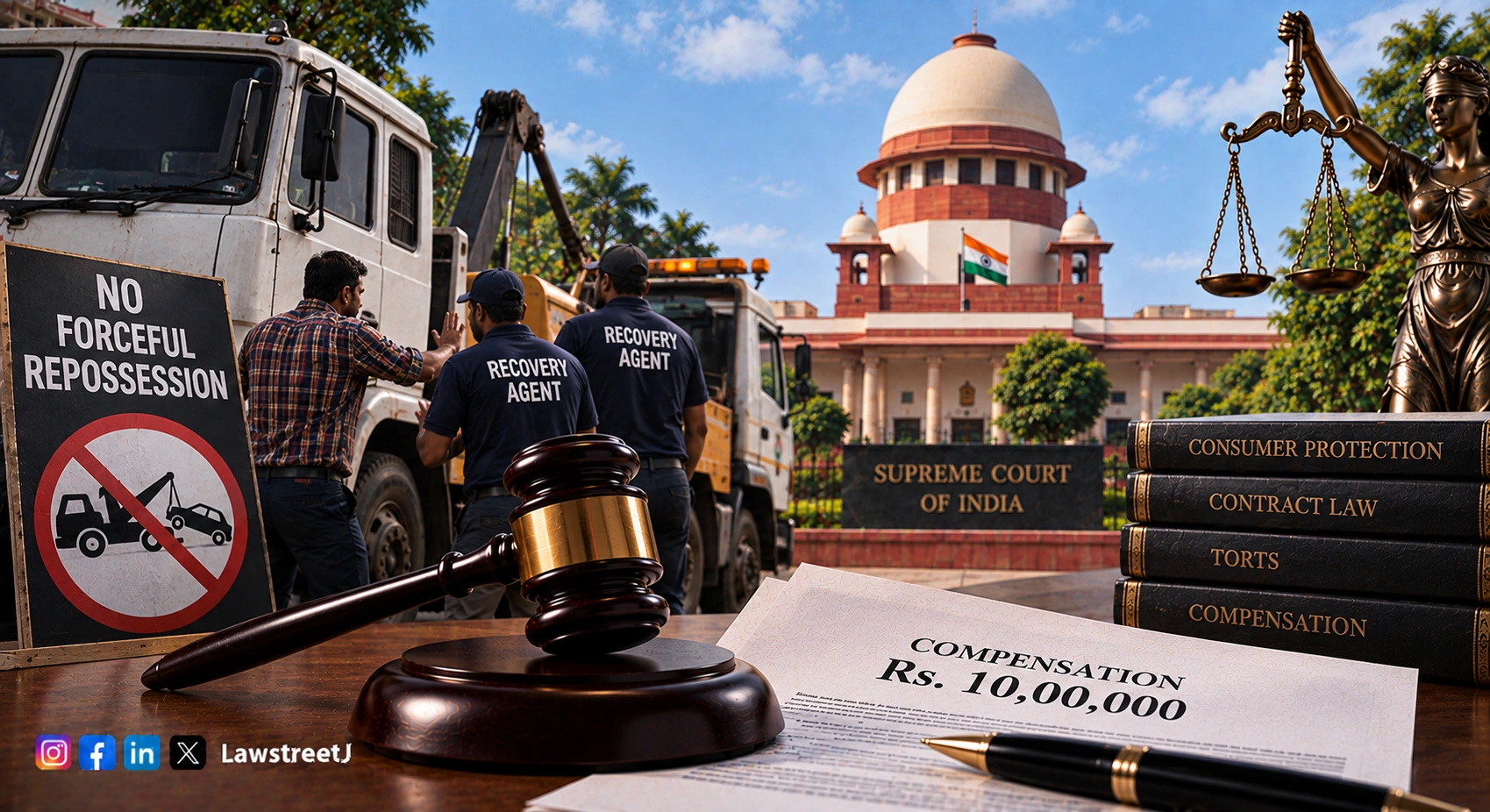
Supreme Court awards ₹10 lakh compensation to a truck owner whose vehicle was forcibly repossessed at 1 a.m., holding that lenders must follow contractual notice requirements and RBI recovery guidelines.
Karnataka High Court holds that a learner’s licence qualifies for insurance coverage only when its statutory conditions are complied with, directing the insurer to pay compensation and recover it from the vehicle owner.
Karnataka High Court upholds reimbursement of Zoladex and Xgeva injections, holding that lack of hospitalisation cannot defeat a genuine cancer treatment claim.
The Punjab and Haryana High Court held that a foreign driving licence without an international permit or Indian authorisation does not permit driving in India, upholding the insurer’s right to recov...
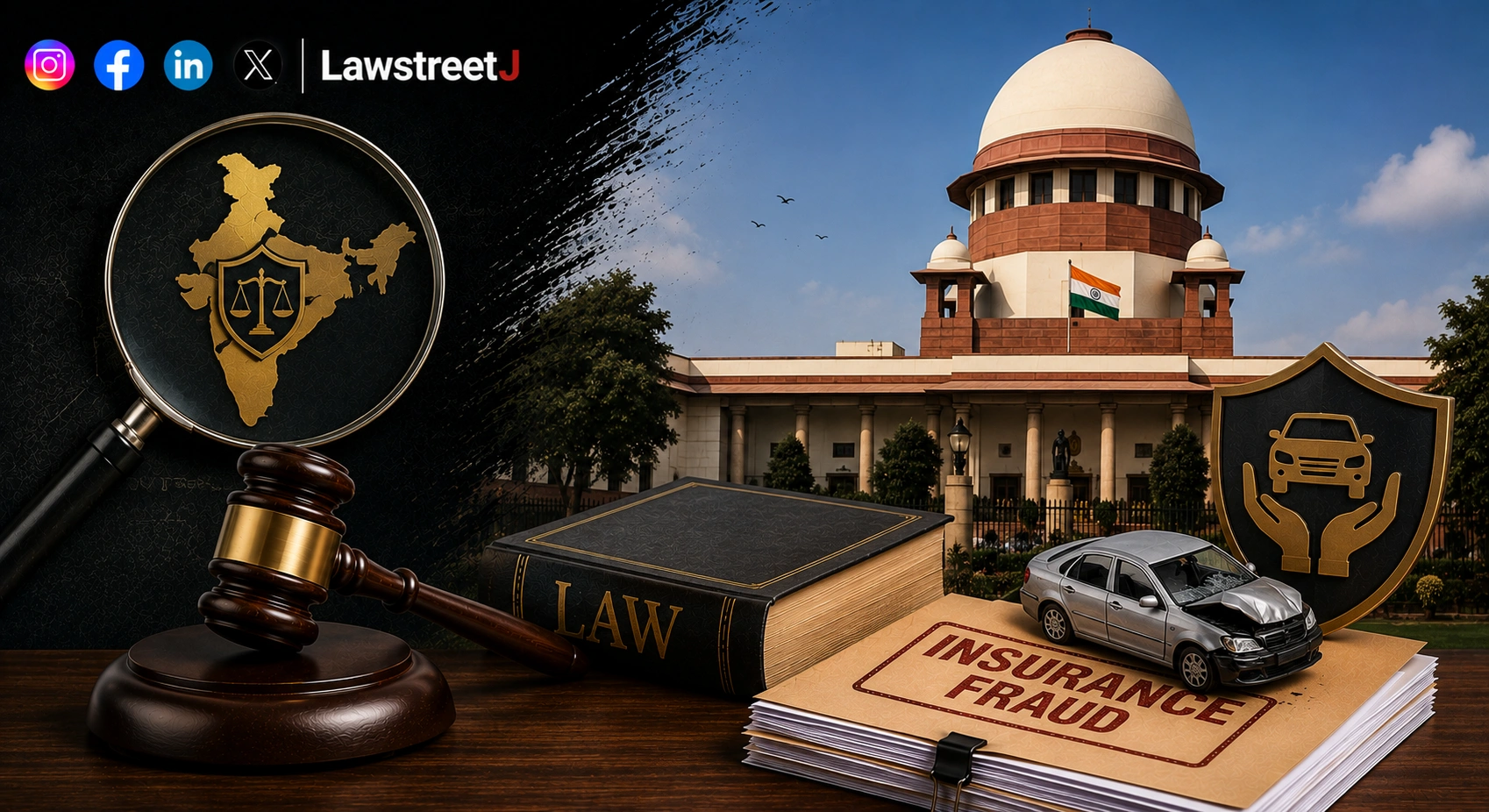
The Supreme Court has directed all States to constitute dedicated SITs to investigate fraudulent motor accident insurance claims and ordered insurers to report suspected fraud.
Karnataka High Court holds that a woman rendering services to her family can be treated as a homemaker irrespective of her educational qualifications or employment status.
Supreme Court holds that children are entitled to parental consortium in motor accident claims and awards consortium separately to the wife and each child.
The Supreme Court directed mandatory third-party insurance of four years for new cars and six years for new two-wheelers, while ordering technology-driven measures to identify and penalise uninsured v...
The Supreme Court enhanced compensation to ₹83.38 lakh for a child left permanently disabled in a road accident, stressing a humane approach to awarding just compensation under the Motor Vehicles Ac...
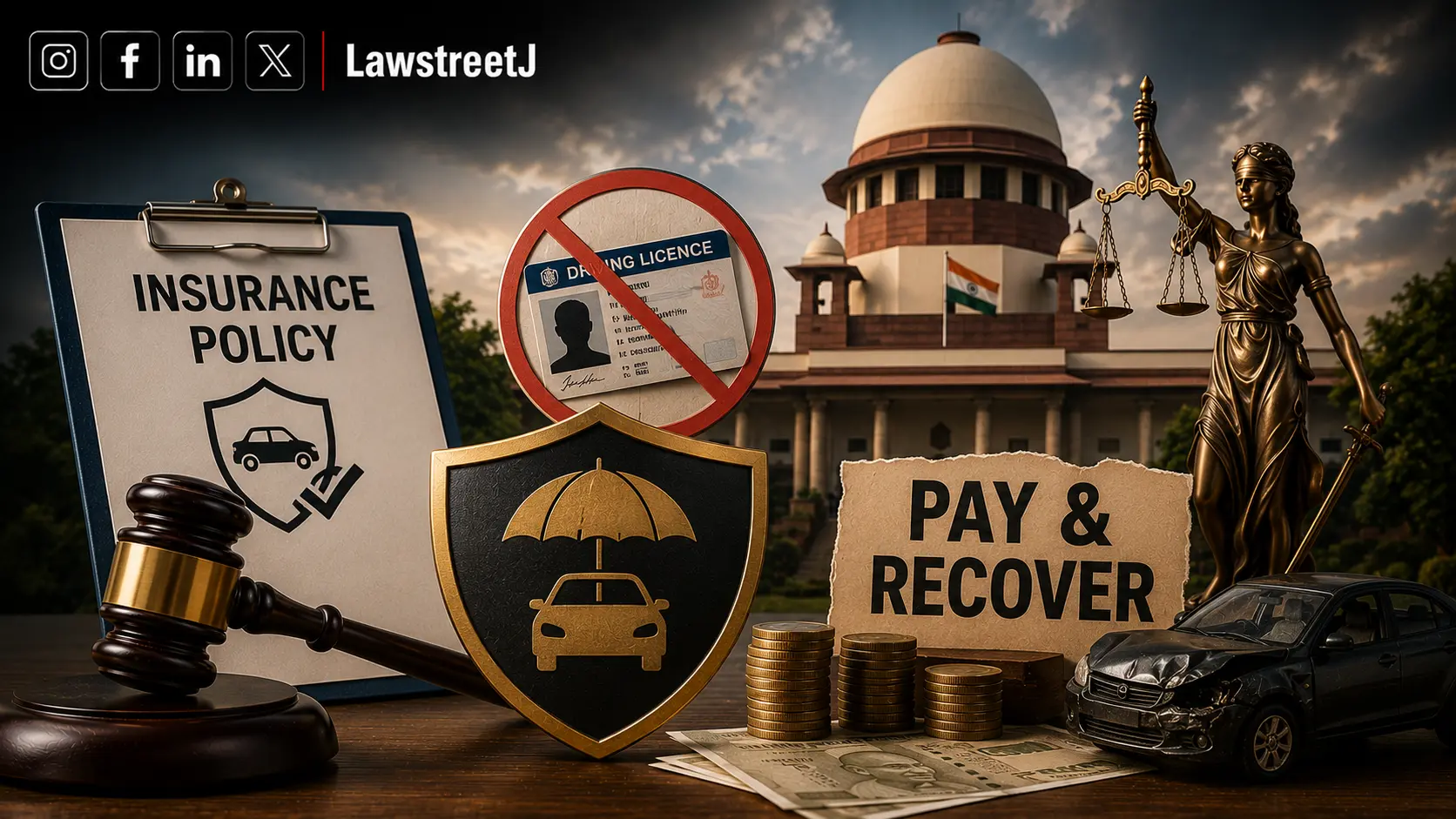
The Supreme Court held that an insurer cannot be held liable where the offending driver lacked a valid driving licence, applying the 'pay and recover' principle in a motor accident compensation case.
SC directs direct transfer of compensation to claimants’ bank accounts in MV Act cases, ensuring faster disbursal and reducing court process hassles.
SC rules that MACT can rely on police reports and other evidence to determine negligence and award compensation in accident cases under the Motor Vehicle Act.

The Senior Citizen Rights Handbook is a comprehensive guide designed to empower elderly citizens with clear and accessible knowledge of their legal and social rights in India.


![SC Directs Linking Of VAHAN, SARATHI, eDAR And IIB Portals Within Four Weeks [Read Order]](/secure/uploads/2026/10/lj_1619_Supreme_Court_Insurance_Fraud_Portal_Illustration.webp)
![Insurer Can Repudiate Fire Claim Where Insured Makes False Declarations, Manipulates Accounts: SC [Read Judgment]](/secure/uploads/2026/09/lj_4154_ChatGPT_Image_Sep_23,_2026,_01_48_29_AM.webp)
![Learner’s Licence Valid For Insurance Cover Only If Its Conditions Are Followed: Karnataka HC [Read Judgment]](/secure/uploads/2026/09/lj_1713_ChatGPT_Image_Sep_16,_2026,_12_57_13_PM.webp)
![Insurer Cannot Deny Treatment Claim Merely For Lack Of Hospitalisation: Karnataka HC [Read Order]](/secure/uploads/2026/09/lj_4142_Insurer_Cannot_Deny.webp)
![Foreign Driving Licence Alone Cannot Shield Driver From Insurer’s Recovery Claim: Punjab & Haryana HC [Read Order]](/secure/uploads/2026/09/lj_6698_ChatGPT_Image_Sep_10,_2026,_02_19_03_AM.webp)
![Woman Rendering Services To Family Is Homemaker Regardless Of Qualification: Karnataka HC [Read Judgment]](/secure/uploads/2026/08/lj_3293_ChatGPT_Image_Aug_21,_2026,_01_47_51_AM.webp)
![Children Entitled to Parental Consortium Along With Spousal Consortium in Motor Accident Claims : SC [Read Judgment]](/secure/uploads/2026/08/lj_3671_ChatGPT_Image_Aug_17,_2026,_02_52_51_AM.webp)
![SC Extends Mandatory Third-Party Insurance to 4 Years for Cars, 6 for Two-Wheelers [Read Judgment]](/secure/uploads/2026/08/lj_7774_SC_Extends_Mandatory_Third.webp)
![SC Enhances Compensation for Child Left Permanently Disabled in Road Accident [Read Judgment]](/secure/uploads/2026/08/lj_4039_Supreme_Court_Enhances_Compensation.webp)
![SC pitches for directly transferring compensation sum in claimants' bank accounts in MV Act cases [Read Judgment]](/secure/uploads/2025/03/lj_9235_SC_pitches_for_directly_transferring.webp)
![MACT can rely upon police reports to determine negligence: SC [Read Judgment]](/secure/uploads/2025/01/lj_5376_MACT.webp)
