Vanshika Garg, Legal Scholar, Amity Law School Noida, Uttar Pradesh
Prof. (Dr.) Devendra Singh, Amity University, Noida
Introduction
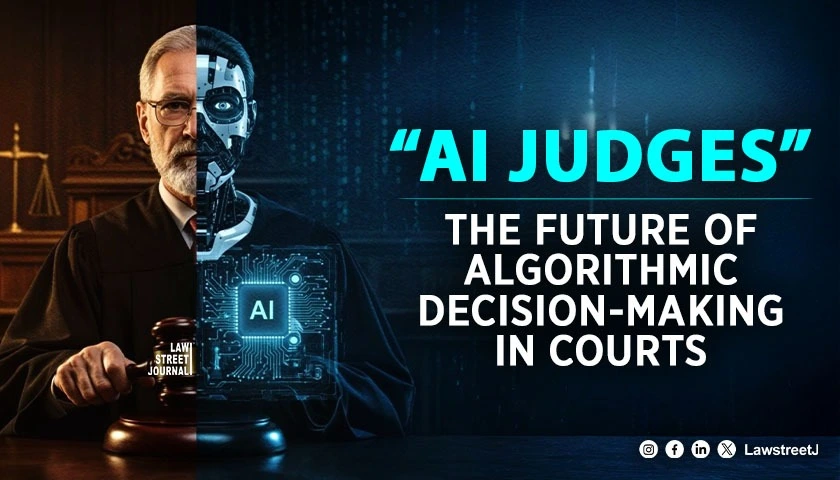
For centuries, judicial decision-making has been a human-centred process, rooted in the interpretive application of laws, evaluation of factual complexities, and a conscious balancing of equity and justice. In India, the judiciary is not merely an adjudicatory forum but a constitutional sentinel entrusted with upholding the rule of law and fundamental rights. Yet, the Indian judicial system faces a crisis of volume: as of 2024, over 50 million cases are pending across various courts, with delays sometimes stretching into decades. This persistent backlog has prompted urgent discussions on the adoption of technology to enhance efficiency.
Artificial intelligence has already begun to permeate the Indian judiciary in modest but notable ways. The Supreme Court’s AI initiatives including “SUPACE” (Supreme Court Portal for Assistance in Court Efficiency) and machine translation tools demonstrate the willingness to experiment with AI in case research and administrative management. However, these applications are advisory in nature. The conceptual leap from assistance to adjudication is monumental, raising questions about constitutional propriety, ethical legitimacy, and public trust.
Globally, AI adjudication is no longer speculative. China’s internet courts in Hangzhou, Beijing, and Guangzhou use AI avatars to preside over e- commerce disputes, delivering judgments within minutes. Estonia’s pilot program for small claims disputes assigns certain cases to algorithmic systems, with human judges reviewing appeals. In the United States, AI tools such as COMPAS (Correctional Offender Management Profiling for Alternative Sanctions) have been used in parole and sentencing decisions, though their proprietary algorithms and potential racial bias have drawn criticism, notably in State v. Loomis (2016). The European Union’s Artificial Intelligence Act classifies AI in judicial decision-making as a “high-risk” application, requiring strict transparency, human oversight, and accountability mechanisms.
In the Indian context, however, constitutional provisions such as Articles 124–147 (governing the judiciary), Article 50 (ensuring separation of the judiciary from the executive), and the expansive interpretations of Articles 14 and 21 pose substantial challenges to any move towards AI-led adjudication. Indian jurisprudence has consistently stressed that justice must not only be done but be seen to be done, and that fairness, transparency, and reasoned decision-making are indispensable to judicial legitimacy. The replacement or even partial displacement of human judges by algorithms therefore necessitates rigorous scrutiny.
Literature Review
Academic engagement with AI in the legal domain spans multiple disciplines. Surden (2019) identifies AI’s potential to enhance efficiency but underscores the challenge of explainability in machine learning models. Wischmeyer and Rademacher (2020) propose regulatory safeguards for AI in governance, highlighting that judicial contexts demand the highest standards of accountability. Binns (2018) draws from political philosophy to critique algorithmic bias, cautioning that historical datasets may encode structural inequalities.
In the Indian scholarly landscape, the discourse has so far concentrated on digitisation, e-courts, and legal informatics rather than full-fledged algorithmic adjudication. However, works emerging post-2020 have begun to engage with the constitutional implications of AI judges, particularly in relation to Articles 14 and 21, natural justice, and the doctrine of reasoned decisions.
Internationally, legal philosophers such as Fuller have emphasised the “inner morality of law,” requiring clarity, consistency, and transparency in adjudication qualities potentially threatened by opaque algorithms. Rawlsian conceptions of justice as fairness also find resonance in concerns about algorithmic inequality, particularly where training data reflects systemic bias. These philosophical foundations frame the ethical dimension of AI judges as not merely a technical problem but a question of preserving the normative essence of justice.
Technological Landscape of AI in Judicial Systems
The functional architecture of AI judges rests on several technological pillars. Natural language processing enables the parsing and interpretation of statutory text, precedents, and evidentiary materials. Machine learning models identify correlations and patterns from historical judgments, which can inform predictions about likely case outcomes. Predictive analytics is already used in some jurisdictions to estimate sentencing ranges or damages. Blockchain technology offers secure, tamper-proof recordkeeping, which could theoretically enhance evidentiary integrity.
In India, SUPACE uses AI to sift through vast volumes of case law and generate briefs for judges, thereby reducing the time spent on legal research. The e-Courts project has digitised millions of case records and facilitated online hearings, particularly during the COVID-19 pandemic. Yet, these technologies stop short of rendering judgments. The leap to AI adjudication would require systems capable of synthesising factual analysis, legal reasoning, and equitable discretion functions currently inseparable from human judgment.
China’s internet courts demonstrate the operational feasibility of algorithmic adjudication, but they operate within a judicial culture where political oversight is pronounced. Estonia’s small claims AI judge, by contrast, is confined to low-stakes disputes and is subject to human appellate review, offering a model of cautious integration. In the United States, COMPAS has been criticised for lack of transparency and alleged racial bias, as highlighted in State v. Loomis, where the Wisconsin Supreme Court upheld its use but warned against over-reliance without human scrutiny. The European Union, through its AI Act, has sought to preemptively regulate such systems, requiring explainability, bias testing, and human oversight.
Legal Feasibility and Constitutional Concerns in India
The constitutional framework in India vests judicial power in courts composed of human judges. Article 50 reinforces the separation of the judiciary from the executive, ensuring independence in decision-making. The potential deployment of AI judges must therefore be examined through the lens of judicial independence, equality before the law, and due process.
Article 14 prohibits arbitrariness in state action. In E.P. Royappa v. State of Tamil Nadu (1974), the Supreme Court held that equality is antithetical to arbitrariness. Any AI system whose decision-making logic is opaque or influenced by biased datasets could fall foul of this constitutional mandate. Article 21, as interpreted in Maneka Gandhi v. Union of India (1978), requires that any procedure affecting life or liberty must be fair, just, and reasonable. The opacity of many AI algorithms challenges this requirement, as parties may be unable to understand or contest the reasoning behind decisions.
The principles of natural justice, embedded in Indian jurisprudence, further complicate AI adjudication. In A.K. Kraipak v. Union of India (1969), the Court underscored that these principles apply to all decision-making, administrative or judicial. Union of India v. Mohan Lal Capoor (1973) established that reasoned decisions are integral to fairness, a standard difficult to achieve with black-box AI models. Moreover, S.P. Gupta v. Union of India (1981) reaffirmed that judicial independence is part of the basic structure of the Constitution, making any external influence including technological subject to strict scrutiny.
Ethical and Philosophical Considerations
The ethical challenges of AI judges revolve around accountability, bias, transparency, and the erosion of empathy in adjudication. If an AI system delivers an erroneous judgment, determining liability among developers, data providers, and judicial administrators becomes problematic. This “accountability gap” undermines both remedies for wrongful decisions and public trust in the judiciary.
Bias remains a critical concern. AI trained on historical case data risks inheriting past prejudices, leading to discriminatory outcomes. The United States’ experience with COMPAS illustrates how algorithmic bias can disproportionately affect marginalised communities. Transparency is equally crucial: the Indian Supreme Court has repeatedly held that reasoned decisions are essential to the rule of law, as in Kranti Associates v. Masood Ahmed Khan (2010). Yet, many AI models cannot easily provide human-readable explanations for their outputs.
Finally, the absence of empathy in AI decision-making is not merely a sentimental concern but a substantive one. Cases involving family law, criminal sentencing, or constitutional rights often require sensitivity to context, cultural norms, and individual circumstances dimensions that algorithms cannot fully capture.
Global Developments and Comparative Insights
China’s experiment with internet courts most notably in Hangzhou, Beijing, and Guangzhou has demonstrated the potential for technology to radically streamline judicial processes. These courts, which operate primarily online, have processed tens of thousands of e-commerce disputes, often delivering judgments within days rather than months. By leveraging automated document review, AI-assisted legal reasoning, and fully virtual hearings, they have significantly reduced procedural delays and litigation costs. However, their apparent efficiency cannot be divorced from the broader institutional environment in which they function. The Chinese judiciary operates within a political framework that prioritizes state control, and judicial independence is constitutionally subordinate to the authority of the Communist Party. This raises an important cautionary note for democratic systems: efficiency gains achieved in such a centralized model may come at the cost of autonomy, impartiality, and due process safeguards values that are non-negotiable in constitutional democracies like India.
In contrast, Estonia’s pilot project for an AI judge illustrates a more restrained and procedural application of algorithmic adjudication. The Estonian initiative is designed to handle low-value disputes often under €7,000 as well as administrative matters such as small claims and traffic violations. Crucially, the AI system’s outputs are subject to human review, ensuring that the final decision rests with a human judge. This hybrid model seeks to harness the efficiency benefits of automation without eroding judicial discretion or the perception of fairness. For India, with its enormous backlog of minor civil and criminal cases, such a targeted, low-stakes deployment could serve as a practical and politically acceptable entry point into the realm of
AI-assisted adjudication.
The United States offers another instructive example, though in a markedly different context. Its use of algorithmic tools has largely been in the realm of criminal justice, particularly for risk assessment in bail, sentencing, and parole decisions. While these tools such as COMPAS were initially heralded for their promise of objective decision-making, they have drawn sustained criticism for reinforcing racial and socio-economic disparities. Independent audits have revealed opaque methodologies, with proprietary algorithms shielded from public scrutiny, making it difficult to identify or correct embedded biases. This experience underscores the critical importance of transparency, accountability, and bias mitigation mechanisms before integrating AI into any core judicial function.
Meanwhile, the European Union has approached the question of AI in governance through a proactive regulatory lens. The proposed AI Act classifies AI systems used in judicial contexts as “high-risk,” subjecting them to stringent requirements for human oversight, risk assessment, and explainability. The emphasis on explainable outputs is particularly relevant, as it directly addresses the need for litigants to understand the reasoning behind a decision an essential element of the right to a fair trial. For India, where judicial reasoning is deeply rooted in precedent and reasoned orders, the EU’s emphasis on transparency could serve as a valuable template for embedding safeguards into any future AI judicial framework.
Opportunities and Advantages
AI adjudication, if designed and deployed with precision, holds considerable promise for transforming India’s chronically overburdened judicial system. The pendency crisis characterized by millions of unresolved cases across various levels of courts has long been recognized as one of the most pressing threats to access to justice. A carefully calibrated integration of AI could play a pivotal role in alleviating this backlog, particularly by taking
over the resolution of routine, repetitive, or low-value disputes that currently consume disproportionate judicial resources. Matters such as small contractual claims, minor traffic violations, and certain uncontested civil applications could be efficiently processed through AIassisted adjudicatory systems without compromising due process, especially if human oversight remains integral to the process.
Beyond sheer efficiency, AI adjudication could promote greater consistency in the application of legal principles. One persistent critique of traditional adjudication is the variability in judicial reasoning and outcomes, even in factually similar cases, due to differences in interpretive style, workload pressures, or subjective biases of individual judges. An AI system trained on a robust and representative corpus of precedent could apply statutory provisions and judicial interpretations with a high degree of uniformity. Such algorithmic consistency might enhance the predictability of the legal system, fostering greater public confidence in judicial impartiality and reliability.
The utility of AI is not confined to the decision-making bench; it also extends to the broader legal ecosystem. Predictive analytics tools powered by historical case data and sophisticated statistical models could assist lawyers in providing clients with informed advice on likely case outcomes. This could have a filtering effect on the docket, as litigants presented with a highprobability prediction of losing might be dissuaded from pursuing frivolous or weak claims, thereby reducing the volume of unnecessary litigation. Moreover, such predictive tools could empower litigants particularly those from marginalized or economically disadvantaged backgrounds to make better-informed decisions about whether to settle, mediate, or proceed with formal litigation.
In a society where access to legal resources is uneven, the democratization of predictive legal insights through AI could represent a quiet revolution in legal empowerment. However, this vision must be approached with careful regulatory oversight, ensuring that AI-generated predictions and decisions are explainable, free from discriminatory bias, and adaptable to evolving interpretations of law. In this way, AI adjudication could become not merely a
technological upgrade to India’s courts, but a structural reform that simultaneously advances efficiency, equity, and trust in the justice system.
Risks and Challenges
The risks, however, are neither hypothetical nor trivial; they are substantial and potentially transformative in ways that may undermine the very foundations of the rule of law. One of the most pressing concerns is the entrenchment of algorithmic bias. Artificial intelligence systems
learn from historical datasets, and if these datasets are themselves products of flawed legal practices, societal prejudices, or discriminatory enforcement patterns, the resulting algorithms may not only replicate but also magnify such inequities. This means that patterns of injustice
which, in a human courtroom, might eventually be corrected through appeal, judicial review, or evolving social norms, could instead become rigidly embedded in a machine’s decisionmaking logic, making them far harder to detect and dismantle.
Equally troubling is the possibility of over-reliance on AI to the point where core judicial skills such as nuanced statutory interpretation, empathetic engagement with litigants, and the careful weighing of mitigating circumstances may atrophy over time. Judges are not mere processors of evidence; they are custodians of justice whose discretion is shaped by lived experience, moral reasoning, and an awareness of societal context. If courts were to default excessively to machine-generated outputs, there is a real danger that this human dimension of adjudication could erode, leaving the judicial process reduced to a mechanistic exercise devoid of interpretative richness.
Furthermore, the specter of executive control over AI judicial systems raises profound constitutional concerns, particularly in democracies where the separation of powers is the bedrock of governance. If the software architecture, algorithmic parameters, or data inputs of an AI judge were subject to influence directly or indirectly by the executive branch, this could amount to an unprecedented encroachment on judicial independence. Even the perception of such control could delegitimize the judiciary in the eyes of the public, breeding cynicism and weakening institutional trust.
Perhaps most critically, the symbolic and psychological dimensions of justice cannot be discounted. Public trust in the judiciary rests not only on the substantive fairness of its decisions but also on the perception that justice is being dispensed by a human mind capable of moral reflection and compassion. If litigants, especially those from vulnerable or marginalized backgrounds, come to feel that they are being judged by impersonal machines incapable of empathy, this could generate a profound alienation from the legal system. In such a scenario, even the most statistically accurate AI decision-making might fail to command legitimacy, because legitimacy in law is as much about human connection and perceived fairness as it is
about procedural correctness.
Regulatory and Policy Recommendations
A hybrid model appears most suitable for India, where AI serves as an assistant rather than a replacement for human judges. Legislation should require AI systems to be explainable, subject to regular bias audits, and operated under judicial control. Appeals from AI-assisted decisions should always lie to human judges. An independent AI ethics committee within the judiciary could oversee implementation, drawing lessons from the EU’s AI Act.
Conclusion
AI has the capacity to transform judicial efficiency in India, but its integration into adjudication must be approached with caution. The constitutional guarantees of equality, fairness, and judicial independence demand that AI be used as a tool to assist human judges rather than as a substitute. A hybrid, human-AI “centaur” model, blending computational efficiency with human judgment, offers the most balanced path forward.
Ends///
Author Profile: Prof. (Dr.) Devendra Singh has an impressive and diverse academic and professional background. He has an extensive and diverse educational background, including doctorate degrees in law and management & commerce, and his first Ph.D. was awarded in finance & management, and he has done a second Ph.D. in law (banking and AI laws).
He has around 25 years of vast experience in teaching, academic administration, industry, consulting, and research, with an emphasis on AI and banking regulation laws, finance, and management. He has held various positions in different institutions and has made significant contributions to the field through his research, publications, and chairing many conferences.
His educational qualifications, including multiple degrees such as B. Com (Hons.), M. Com, LL. B (Hons.), LL.M., MBA (FIN), and Ph.D., demonstrate his commitment to continuous learning and expertise in various disciplines. His work as a professor and domain head of business law & finance at Amity University
Disclaimer: The views and opinions expressed in this article are solely those of the authors — Vanshika Garg, Legal Scholar, Amity Law School Noida, Uttar Pradesh, and Prof. (Dr.) Devendra Singh, Amity University, Noida. The views expressed do not necessarily reflect those of LawStreet Journal, its editorial board, or any affiliated institution. The article is intended for academic and informational purposes only.