The Enforcement Directorate on Tuesday issued its sixth provisional attachment order in the Reliance Communications bank fraud case, freezing assets valued at ₹3,034.90 crore linked to the Reliance Anil Ambani Group. The action, taken under Section 5 of the Prevention of Money Laundering Act (PMLA), 2002, is part of ongoing investigations into alleged diversion and laundering of public and bank funds, being carried out by a Special Investigation Team constituted on the directions of the Supreme Court. With this latest move, the total value of attached assets across all Reliance Anil Ambani Group cases has risen to over ₹19,344 crore.
The case has evolved into one of the most closely watched financial fraud investigations in India, involving multiple central agencies, the country's highest court, and some of the largest public sector banks and financial institutions.
The Assets Attached and What They Represent
The newly attached assets under the Prevention of Money Laundering Act include a luxury flat in Mumbai's Usha Kiran Building, a farmhouse in Khandala in Pune district, and a land parcel in Sanand, Ahmedabad. In addition, 7.71 crore shares of Reliance Infrastructure Ltd, held by M/s RiseE Infinity Pvt Ltd, were also attached. RiseE Infinity is a group entity of Anil Ambani under the RiseE Trust umbrella, which is a private family trust of the members of Anil Ambani's family.
The ED's statement shed light on the purpose of this trust structure. The RiseE Trust was set up to ensure wealth preservation and resource generation by aggregation of properties, and to shield those assets from the personal liabilities of Anil Ambani in the form of personal guarantees extended by him to lender banks against the loans sanctioned to RCom. According to the agency, the properties were intended to be beneficially used and owned by the Anil Ambani family and not for the distressed public banks whose loans turned into Non-Performing Assets (NPAs).
In response, the Ambani family issued a statement clarifying that the flat in the Usha Kiran building and the Khandala property are legacy assets that were acquired over four decades ago. The family also noted that MICA, referenced in the ED's broader investigation, is an AICTE-recognised charitable educational institution that has been operating independently since 1991.
The Scale of the Fraud and the Lenders Involved
The case stems from multiple CBI FIRs filed on complaints by major financial institutions including State Bank of India, Punjab National Bank, Bank of Baroda, and Life Insurance Corporation of India against Reliance Communications, Anil D. Ambani, and others.
According to a petition filed before the Supreme Court by former civil servant EAS Sarma, RCom and its subsidiaries, Reliance Infratel and Reliance Telecom, received loans amounting to ₹31,580 crore between 2013 and 2017 from a consortium of banks led by the State Bank of India. As per the same petition, a forensic audit commissioned by SBI revealed substantial diversion of funds, including thousands of crores used to repay unrelated loans, transfers to related parties, investments in mutual funds and fixed deposits that were immediately liquidated, and complex circular routing of money to disguise loan evergreening.
RCom and its group companies availed loans from domestic and foreign lenders, of which a total outstanding amount of ₹40,185 crore remains unpaid. Against this figure, the total amount frozen through provisional attachment orders stands at ₹19,344 crore, approximately 48 per cent of the outstanding dues.
Under Section 8 of the PMLA, the ED has stated that it intends to restore the confiscated property to the victim banks and legitimate claimants. The attachment serves to preserve the value of the assets throughout the legal process, ensuring that public money can eventually be recovered.
The Supreme Court's Role and the SIT Investigation
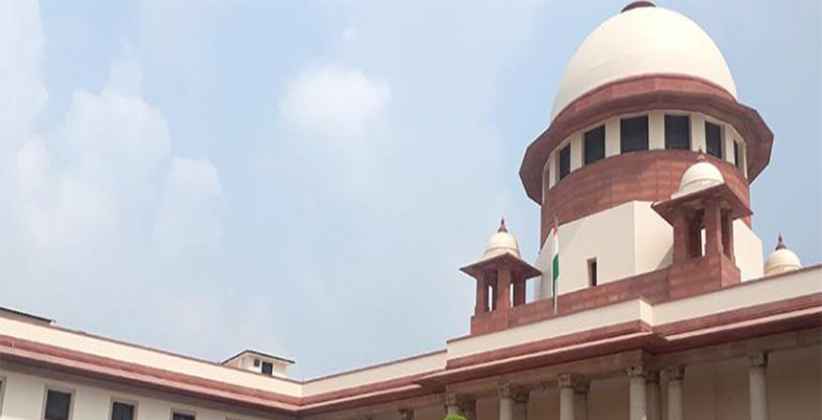
The involvement of India's Supreme Court distinguishes this case from most financial fraud investigations in the country's recent history. The Supreme Court took exception to the manner in which investigating agencies had initially proceeded in the Reliance Communications banking fraud matter, and went on to pass a detailed order pressing both the CBI and the ED to carry the probe to its logical end without delay. In proceedings before the bench of Chief Justice Kant, Justices Joymalya Bagchi and Vipul Pancholi, Solicitor General Tushar Mehta submitted that a Special Investigation Team had been constituted comprising ED officers. The SIT is now the central body overseeing the investigation into all RAAG-related cases of alleged fund diversion and money laundering.
This sixth provisional attachment order, issued on April 28, 2026, is notable not just for its headline figure but for the specific nature of what was seized, assets that investigators say were parked in privately held structures whose beneficial ownership remained within the Ambani family, but whose legal structure created distance from the lender's claim. It is important to note, as the ED itself has acknowledged through the legal framework of provisional attachment, that these are allegations currently under investigation. No final court conviction has been recorded in the RAAG cases. A provisional attachment under Section 5 of the PMLA is a preventive legal measure and does not constitute a finding of guilt. The matter is sub judice, with multiple proceedings ongoing before courts and tribunals.
The ED's statement confirmed that further investigation remains in progress, and the SIT constituted on the Supreme Court's directions continues its work into the full scope of alleged diversion and laundering of bank and public funds across the Reliance Anil Ambani Group.