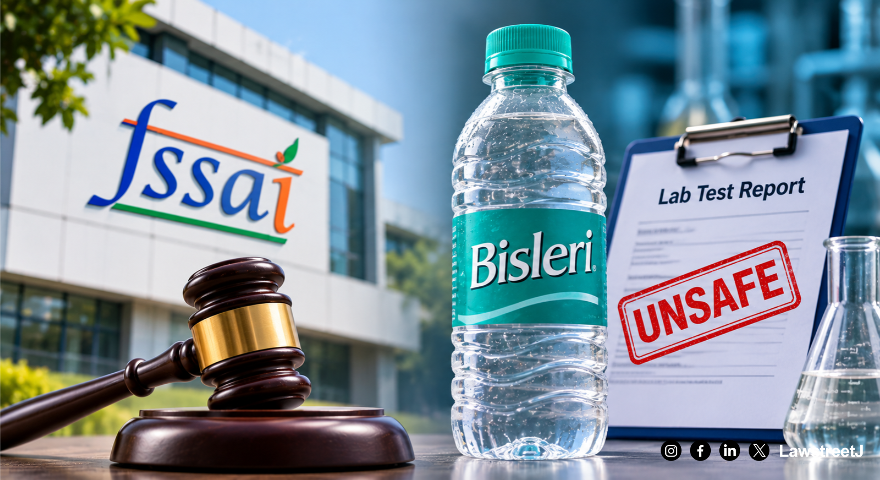
NEW DELHI: The Food Safety and Standards Authority of India (FSSAI) has reportedly sanctioned prosecution against Bisleri International after a sample of its packaged drinking water was declared unsafe for consumption for failing to meet prescribed bromate limits.
The development, has raised concerns about packaged drinking water quality and regulatory compliance in India's bottled-water industry. According to the report, laboratory testing identified bromate levels exceeding the prescribed safety limits, prompting the food safety regulator to initiate prosecution proceedings against the company. The case places renewed focus on food safety monitoring, quality-control standards and the responsibility of manufacturers to ensure that packaged drinking water meets regulatory requirements before reaching consumers.
How the Controversy Began: Sample Collection in September 2025
The case dates back to September 2025, when FSSAI collected six samples from Bisleri's facility in Goa. Five samples initially met the prescribed standards, while one recorded bromate levels of 12 micrograms per litre against the permissible limit of 10 micrograms per litre.
Bisleri disputed the initial findings and maintained that subsequent independent testing arranged by the company showed bromate levels within the prescribed limits. Following the company's appeal, the regulatory sample underwent further examination at a referral laboratory. FSSAI subsequently reported the detection of PAHs and again classified the sample as unsafe.
The two sets of findings therefore involved different chemical parameters, bromate in the initial assessment and PAHs in the subsequent referral laboratory examination.
What Are Bromate and PAHs, and Why Are They a Concern?
Bromate is a chemical compound that can form as a by-product during certain water disinfection processes, particularly ozonation. Its presence in drinking water is regulated because excessive exposure can pose health risks. The prescribed Indian limit cited in this case was 10 micrograms per litre. The initial sample recorded 12 micrograms per litre, exceeding that limit.
The second laboratory assessment identified polynuclear aromatic hydrocarbons, commonly known as PAHs. PAHs are a group of chemical compounds that can originate from incomplete combustion and other environmental or industrial processes. Several compounds in this group are associated with toxic, mutagenic and carcinogenic effects.
The detection of PAHs in the referral laboratory assessment became the basis for the regulator's continued classification of the sample as unsafe. However, the available reports do not establish the precise source of the detected PAHs or the extent of exposure among consumers.
What Has Bisleri Said?
Bisleri International has contested the regulatory findings and defended its quality-control procedures. In a statement to Reuters, the company said drinking water safety remained a priority and that it maintained stringent quality controls. It also said it would cooperate with regulatory authorities.
Bisleri stated that the sample collected from its Goa facility recorded bromate at 12 micrograms per litre, compared with the prescribed limit of 10 micrograms per litre. However, the company maintained that further independent testing found bromate within permissible limits. Government source said the batches associated with the unsafe sample had been recalled and that subsequent testing of products showed no water-quality issues.
However, a February letter from Bisleri to FSSAI, indicated that the company had informed the regulator that no product from the relevant batch remained in the market by that time. The company had not publicly provided a detailed explanation of the referral laboratory's PAH findings in the reports available at publication.
FSSAI Plans Wider Testing Across Packaged Water Brands
The regulatory action against Bisleri could have implications beyond the company. A government source indicated that FSSAI planned to test additional Bisleri samples collected from different parts of India, alongside samples from other packaged drinking water manufacturers.
The move comes amid increased enforcement activity by the food regulator against food businesses and manufacturers over safety and compliance violations. FSSAI has also announced separate prosecution actions against other food businesses for issues involving pesticide residues, product quality and mislabelling.
The broader enforcement drive reflects the regulator's focus on strengthening food safety monitoring and ensuring compliance with the Food Safety and Standards Act.
What Happens Next?
The sanction granted by FSSAI allows prosecution proceedings against Bisleri International under the Food Safety and Standards Act, 2006. It does not, by itself, amount to a court conviction. The company will have the opportunity to contest the allegations through the legal process.
The case also raises broader questions about laboratory testing, quality assurance and transparency in the packaged drinking water industry. For consumers, the immediate takeaway is that the regulatory finding relates to a specific sample and should not be interpreted as proof that every bottle sold under the Bisleri brand is unsafe. As FSSAI considers wider testing, the outcome of further inspections and legal proceedings will be important in determining the extent of regulatory action.
The case is likely to remain significant for India's bottled-water industry, where consumer confidence depends heavily on consistent quality standards and effective independent monitoring.