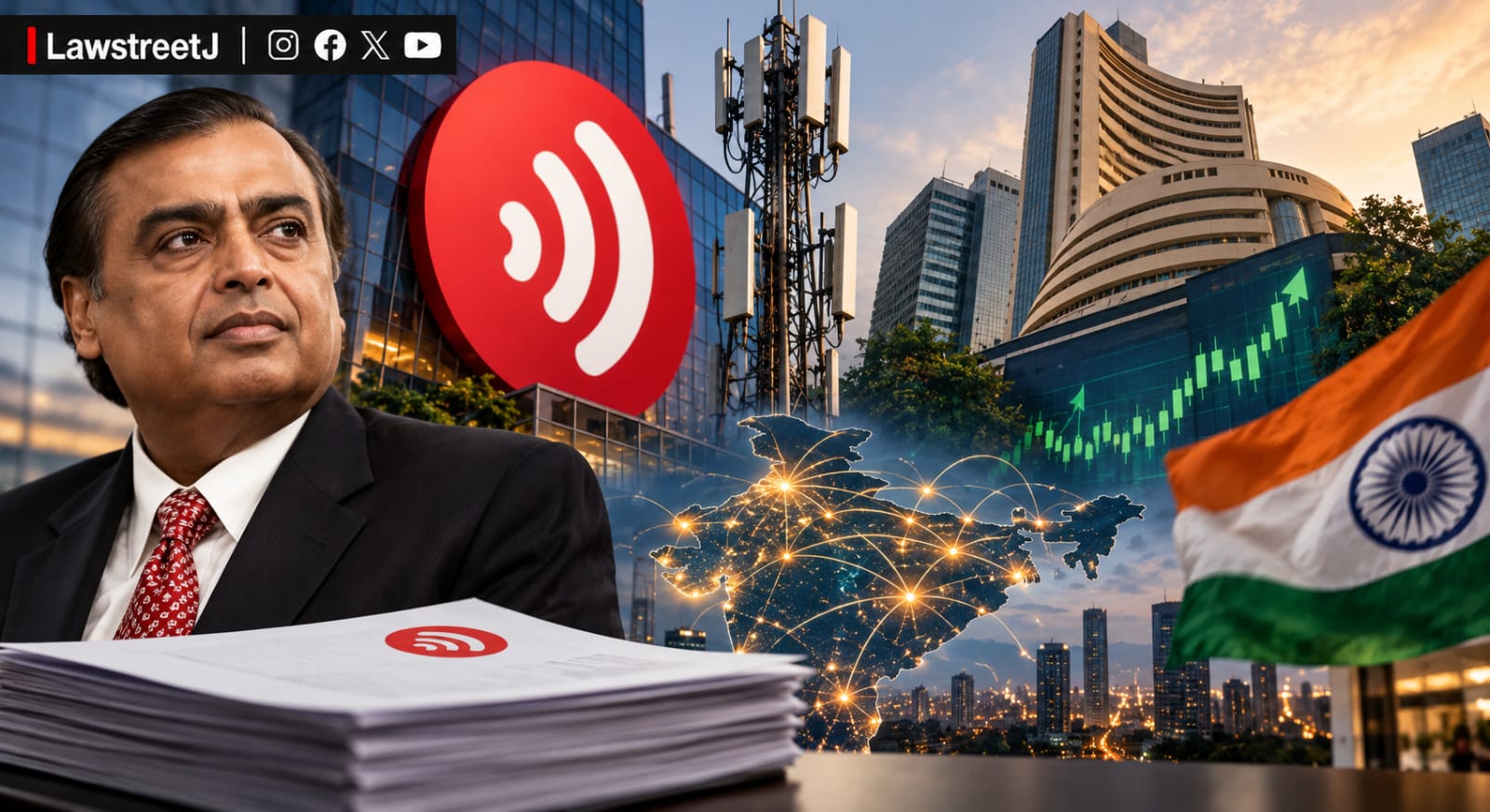
Mumbai — Jio Platforms Limited, the digital and telecom arm of Mukesh Ambani's Reliance Industries, opened India's largest-ever initial public offering on Wednesday, October 21, 2026, seeking to raise fresh capital at an implied valuation of approximately Rs 10.3 lakh crore (roughly $123 billion) at the top end of its price band.
The IPO process began on June 19, 2026, when Jio Platforms filed its Draft Red Herring Prospectus (DRHP) with the Securities and Exchange Board of India, the same day Reliance Industries Chairman and Managing Director Mukesh Ambani announced the filing at the company's 49th Annual General Meeting in Mumbai, describing it as a "significant value-unlocking event for shareholders." SEBI issued its observations on the draft prospectus in August 2026, following which Jio Platforms filed its Red Herring Prospectus (RHP) with the regulator on October 14, 2026. Anchor investor bidding took place on October 19, 2026, ahead of the public subscription window, which opened on October 21 and closed on October 23, 2026. Allotment of shares is scheduled for October 26, 2026, refunds for October 27, and the company's shares are set to list on the BSE and NSE on October 28, 2026.
Issue Structure and Price
The IPO is structured as a 100 percent fresh issue of up to 27 crore equity shares, each with a face value of Rs 10, with no Offer for Sale (OFS) component, meaning existing shareholders, including promoter Reliance Industries, are not selling any of their existing stake through this offering. The price band was set at Rs 1,065 to Rs 1,119 per share, with a minimum lot size of 12 shares, requiring a minimum investment of approximately Rs 12,780 at the lower end of the band for retail investors. At the upper end of the price band, the issue is expected to raise approximately Rs 30,213 crore (around $3.6 billion).
At the IPO price band, Jio Platforms' implied post-issue equity valuation is approximately Rs 10.30 lakh crore at the upper price of Rs 1,119 per share, equivalent to roughly $123 billion based on prevailing exchange rates, though some market estimates circulating prior to the final price-band announcement had pegged the valuation range anywhere between $106 billion and $137 billion depending on the methodology and timing of the estimate. This valuation makes Jio Platforms' IPO the largest in Indian stock market history by both issue size and implied company valuation, surpassing the previous record held by Hyundai Motor India's 2024 listing.
According to the draft prospectus, a substantial portion of the funds raised, up to Rs 27,500 crore, is earmarked for the prepayment or repayment of borrowings held by Reliance Jio Infocomm Limited (RJIL), the telecom operating subsidiary through which Jio runs its mobile network and home broadband services. The remainder of the proceeds is expected to support general corporate purposes and continued investment in the company's digital and artificial intelligence infrastructure, including AI compute capacity reportedly planned for Reliance's Jamnagar facility.
Reliance Industries Limited remains the promoter and largest shareholder of Jio Platforms, holding approximately 66.43 percent of the company as per the draft prospectus disclosures, with the balance held by a mix of global investors who had previously invested in Jio Platforms during its earlier private fundraising rounds between 2020 and subsequent years, including stakes held by technology and investment firms that participated in those rounds. KFin Technologies Limited has been appointed as the registrar for the IPO.
Reliance Industries shareholders are eligible to apply for Jio Platforms shares under a reserved shareholder category, subject to a record date of October 14, 2026, meaning investors who held Reliance Industries shares in their demat accounts as of that date qualify to apply under this reserved category. Eligible shareholders must still separately apply for and pay for the shares, the reserved category does not entail an automatic allotment.
Jio Platforms is the entity behind Reliance Jio's mobile telecommunications network and home broadband services, India's largest telecom operator by subscriber base, alongside a growing portfolio of digital and artificial intelligence-driven products and services developed under the broader Jio ecosystem. The IPO brings this digital and telecom business, distinct from Reliance's oil-to-chemicals and retail businesses, into the public markets as a separately listed entity for the first time.
Legal and Regulatory Framework
The IPO process is governed by the Securities and Exchange Board of India (Issue of Capital and Disclosure Requirements) Regulations, 2018 (SEBI ICDR Regulations), which prescribe the disclosure, eligibility and procedural requirements for companies seeking to raise capital through a public issue in India, including the mandatory filing of a Draft Red Herring Prospectus for regulatory review, SEBI's observation period (typically between 30 and 75 days), and the subsequent filing of a Red Herring Prospectus incorporating the final issue structure prior to the opening of public subscription.
The listing itself, once completed, will be governed by the continuous disclosure and corporate governance obligations applicable to listed companies under the SEBI (Listing Obligations and Disclosure Requirements) Regulations, 2015, in addition to the Companies Act, 2013, which governs the broader corporate structure, shareholder rights and board governance obligations of Jio Platforms as a public listed company going forward.