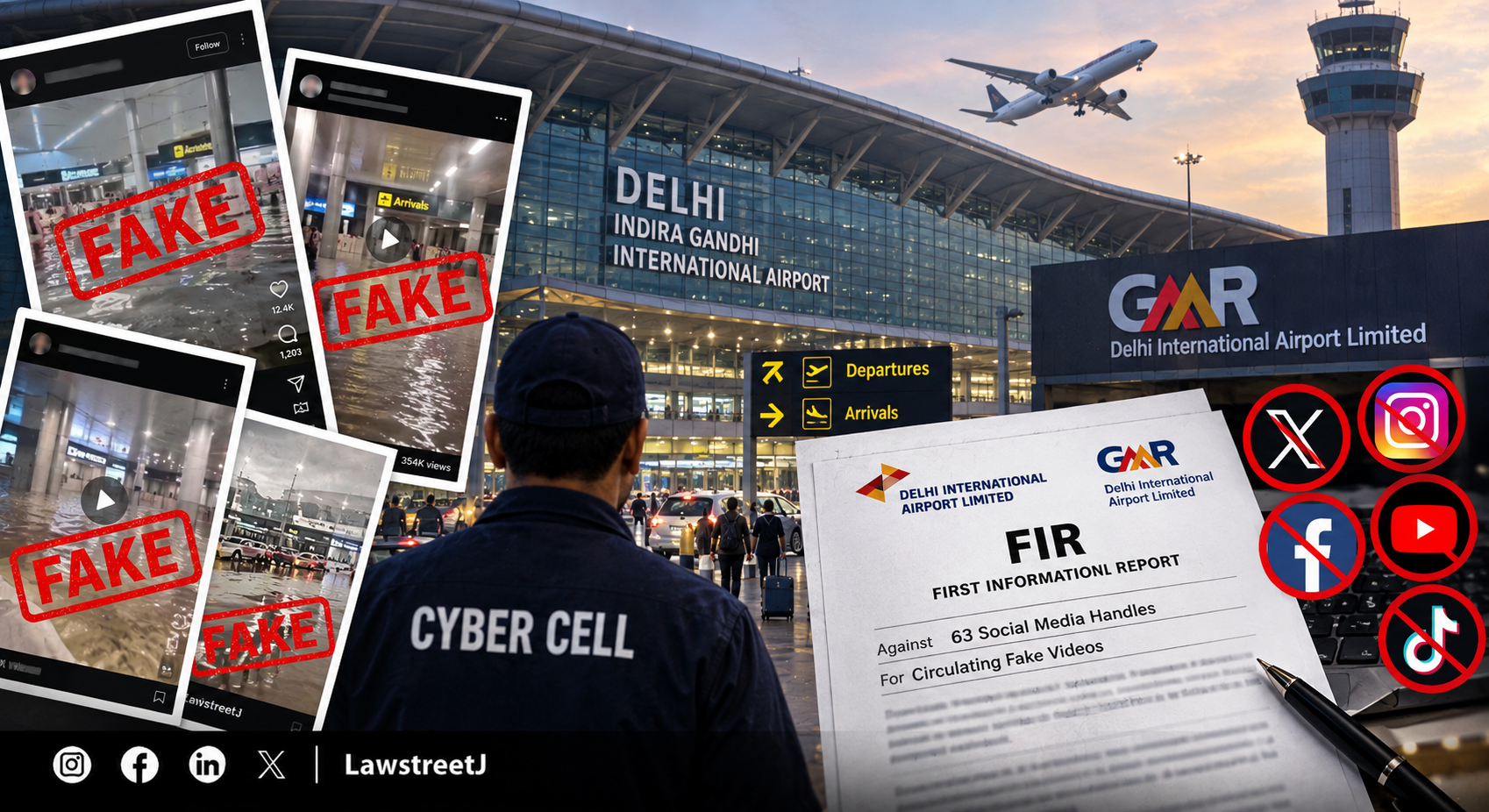
NEW DELHI - Delhi International Airport Limited (DIAL), the operator of Indira Gandhi International Airport, has filed a First Information Report with Delhi Police against 63 social media handles, accusing them of circulating misleading and factually incorrect posts and videos that falsely depicted flooding at the airport and suggested its operations had been disrupted. The complaint, filed on September 9, 2026, marks one of the more significant steps an Indian airport operator has taken against online misinformation targeting its own operations.
What DIAL Has Alleged

DIAL, which operates IGI Airport under the leadership of GMR Airports, announced the FIR in a post on X on Tuesday, September 9, 2026, tagging the Ministry of Civil Aviation and the Directorate General of Civil Aviation in the message, a move that signalled the airport operator wanted the matter flagged directly to the country's aviation regulator and the government department overseeing civil aviation policy, rather than treating it as a purely internal communications issue. According to the airport operator, the 63 flagged handles shared content online that did not reflect the actual situation on the ground at the airport, with several posts and videos circulating claims that the terminals had been submerged and that flight operations were disrupted as a result.
In one specific instance cited directly by DIAL, an old video showing waterlogging at Dubai International Airport was reportedly circulated by one of the flagged accounts while being falsely presented as recent footage from Delhi's IGI Airport, misattributing visuals from an entirely different airport in another country to the Delhi facility. This detail is significant because it moves the allegation beyond simple exaggeration of a real event and toward a more specific claim of fabricated or deliberately mislabelled content, since a video genuinely filmed at Dubai Airport cannot, by definition, be an inaccurate depiction of conditions at Delhi's airport, it is unrelated footage altogether, repurposed and relabelled.
In its statement, DIAL said such misleading content risked creating unnecessary anxiety among passengers and had the potential to undermine public confidence in what it described as a critical public utility. The airport operator also noted the possibility that recycled or fabricated visuals could prompt travellers to alter their travel plans based on inaccurate information, a concern that speaks directly to the practical, real-world consequences airport authorities associate with this kind of viral content: passengers rearranging journeys, arriving late, or avoiding the airport altogether based on posts that do not reflect the airport's actual operational status at the time they were shared. DIAL characterised the circulation of this content as amounting to public mischief rather than a simple case of misreporting, indicating that the airport operator viewed at least some of the posts as a deliberate spread of false information rather than an innocent mistake made by ordinary users sharing something they mistakenly believed to be accurate.
What Actually Happened on September 4
The controversy traces back to a real weather event that occurred five days before the FIR was filed. On September 4, 2026, IGI Airport did experience temporary water accumulation at the arrival forecourt of Terminal 3, following an episode of exceptionally heavy rainfall over the city. According to the airport's own figures, the area recorded approximately 72.2 millimetres of rainfall within a three-hour window, between 2:30 pm and 5:30 pm that day, a substantial amount of rain to fall in such a short period even accounting for Delhi's monsoon season, during which the city regularly experiences intense, short-duration downpours capable of overwhelming urban drainage systems.
Airport authorities said their response teams moved quickly once the water began accumulating, and the pooled water at the forecourt was cleared within roughly 20 minutes of the rainfall event. According to DIAL, flight operations continued safely and smoothly throughout the episode, and the water accumulation was limited specifically to the forecourt area outside Terminal 3 rather than affecting the terminal's interior, check-in areas, or airside operations more broadly. This distinction matters a great deal in understanding the dispute: DIAL is not claiming that no water accumulation occurred at all on September 4, it has openly acknowledged that it did, along with the specific rainfall measurement and the 20-minute clearance time. What DIAL disputes is the far more dramatic characterisation that subsequently spread online, which it says exaggerated a brief, localised, and quickly-resolved forecourt waterlogging event into false claims of large-scale flooding and halted flight operations across the airport.
Why DIAL Took This Step
The decision to file a formal police complaint, rather than simply issuing a public clarification or social media rebuttal, reflects the scale of concern DIAL has expressed about the potential real-world impact of viral misinformation involving a major transport hub. Airports handling international and domestic passenger traffic are particularly sensitive to circulating claims about safety or operational disruption, since such claims can influence traveller behaviour in ways that go beyond simple reputational damage. A passenger who sees a viral video appearing to show their departure terminal underwater may reasonably decide to leave for the airport earlier than planned, seek alternative transport arrangements, or contact airlines for reassurance, generating downstream disruption and passenger anxiety that has nothing to do with the airport's actual, much more limited operational reality that day.
By naming an old, unrelated video of Dubai Airport as one specific example of the misleading content being shared, DIAL appears to be building a documented case that at least some of the content being circulated was not merely an exaggerated account of the actual September 4 waterlogging, but recycled footage entirely unconnected to Delhi that was deliberately mislabelled to appear current and relevant. This distinction between exaggerated reporting of a real event and outright fabrication using unrelated footage may prove significant if the case proceeds through Delhi Police's investigation, since the two categories of conduct could potentially carry different legal implications depending on how investigators and prosecutors choose to approach the matter.
What Happens Next
The FIR has been filed with Delhi Police, and as of the most recent available reporting, further details on the specific legal provisions invoked in the complaint, the identities of the 63 handles named, or any resulting action taken against the accounts had not been made public. The matter is expected to proceed as a police investigation into the alleged circulation of misleading content, running separately from the airport's own operational response to the original September 4 rainfall event, which DIAL has maintained was handled and resolved within a short window without lasting disruption to passengers or flight schedules. Given that the FIR was only filed on September 9, developments such as arrests, formal charges, or further statements from Delhi Police regarding the scope of the investigation would be expected to emerge in the days and weeks following the complaint's filing.

![Delhi HC Rejects Turkish Firm Celebi’s Plea, Upholds Security Ban After Operation Sindoor [Read Judgment]](/secure/uploads/2025/07/lj_4215_Delhi_HC_Rejects_Turkish_Firm.webp)
![Delhi HC Denies Bail To Afghan National Who Smuggled 905 Grams Heroin In Stomach [Read Judgment]](/secure/uploads/2025/09/lj_9171_Delhi_HC_Denies_Bail.webp)