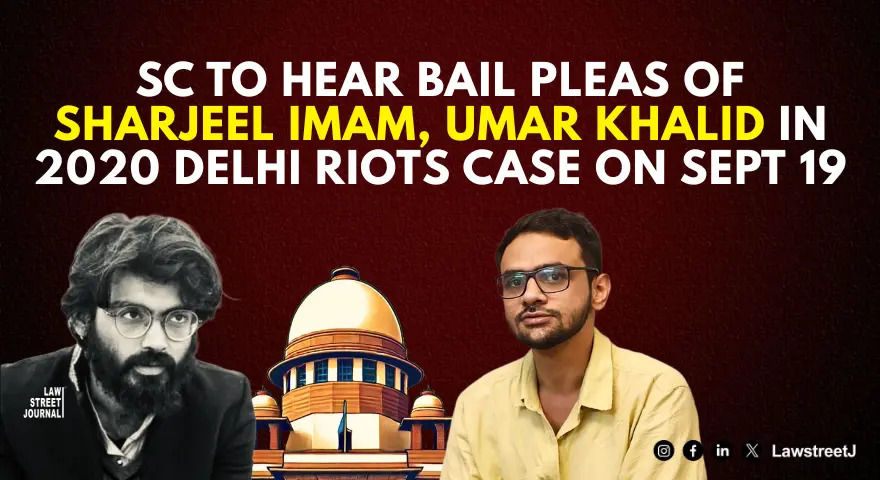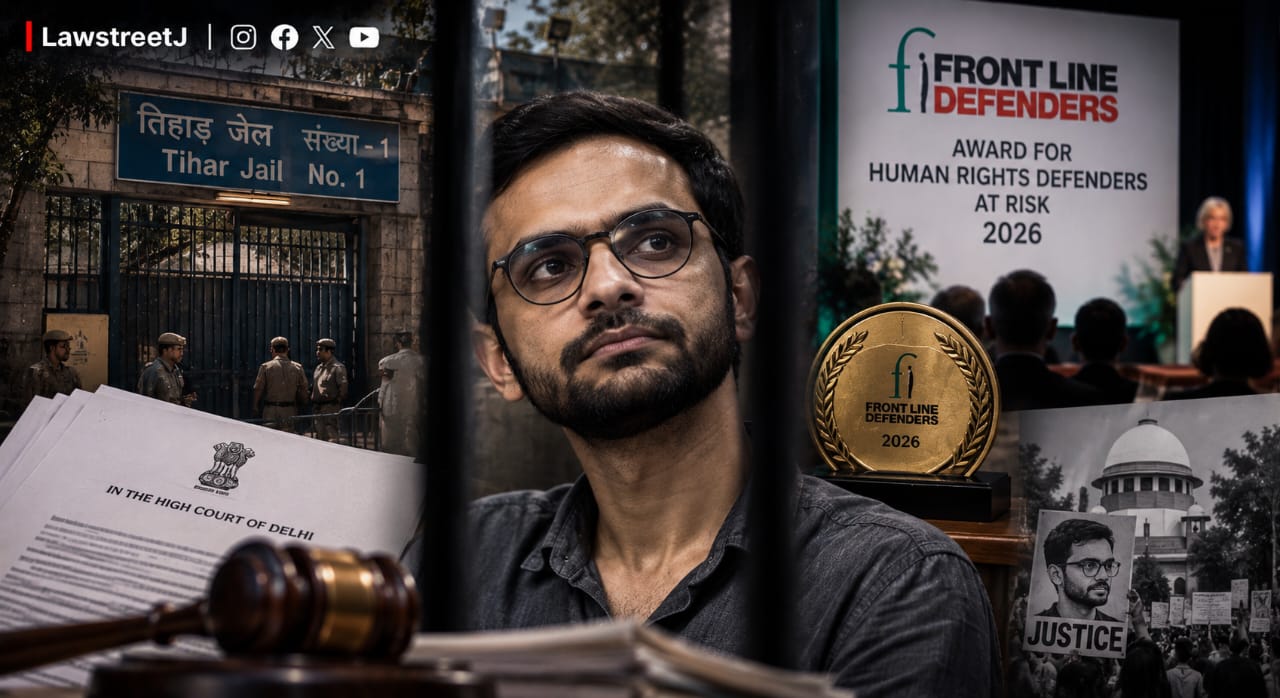
Dublin / New Delhi — Student activist Umar Khalid, who has been imprisoned for more than six years in connection with the 2020 Delhi riots conspiracy case without a trial verdict, has been named the Asia and Pacific recipient of the 2026 Front Line Defenders Award for Human Rights Defenders at Risk. The award was presented at a ceremony in Dublin on Thursday, October 8, 2026, which Khalid was unable to attend as he remains in custody at Tihar Jail in New Delhi.
The Front Line Defenders Award for Human Rights Defenders at Risk is presented annually by Front Line Defenders, an Ireland-based international human rights organisation, and recognises five regional laureates each year for their work defending human rights, often under conditions of serious personal risk. Khalid was named among five global recipients for 2026, honoured as the Asia and Pacific region's laureate.
In its citation, Front Line Defenders described Khalid as having built "a steady trajectory defending students', minorities' and citizens' rights," and named him among the key voices speaking out on issues the organisation associates with this recognition.
The organisation stated that his continued imprisonment reflects what it described as a wider pattern affecting human rights defenders, journalists and students who exercise their rights to peaceful assembly and free expression in India, and said the pattern disproportionately affects such individuals. Front Line Defenders further stated that Khalid's incarceration is evidence of an expanding use of anti-terror laws against dissent, and noted that major international human rights organisations, along with the United Nations Working Group on Arbitrary Detention, have previously raised concerns about the legality of his arrest and detention.
Background: The 2020 Delhi Riots Case
Umar Khalid, a former Jawaharlal Nehru University scholar and student activist, was arrested on September 13, 2020, in connection with communal riots that occurred in northeast Delhi in February 2020, in which 53 people were killed and hundreds injured and displaced. Khalid was charged under the Unlawful Activities (Prevention) Act, 1967, commonly known by its acronym UAPA, along with the Arms Act, the Prevention of Damage to Public Property Act, and provisions of the Indian Penal Code. Fellow activist Sharjeel Imam and several others are co-accused in the same case.
Delhi Police have maintained that Khalid was part of a larger criminal conspiracy connected to the riots, and allege that a speech he delivered in Amravati, Maharashtra, in February 2020 forms part of evidence supporting what prosecutors describe as a premeditated conspiracy. Khalid's defence and Front Line Defenders have disputed this characterisation, with the organisation stating that the Amravati speech does not amount to incitement.
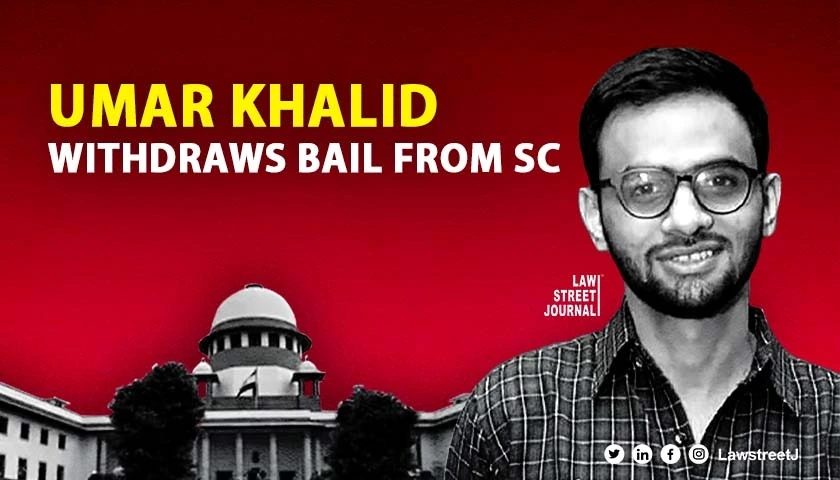
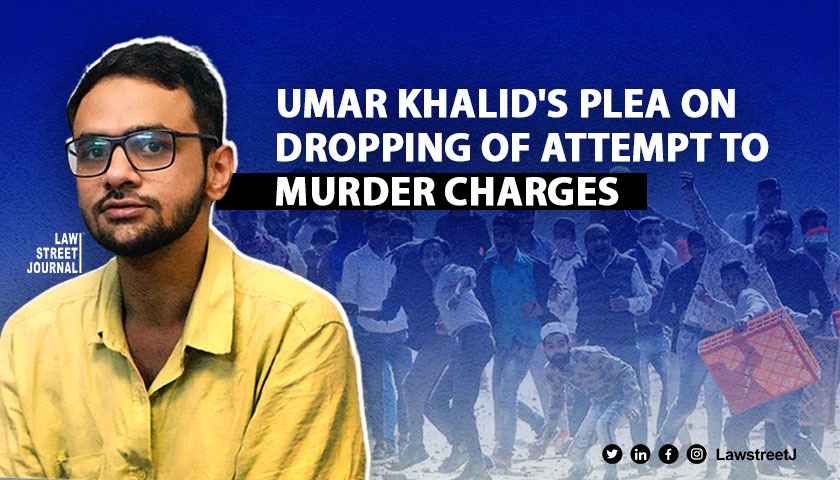
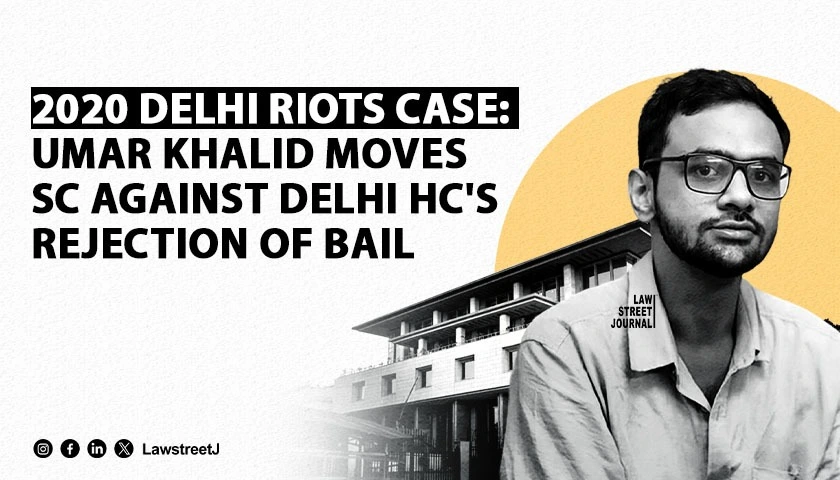
Khalid was separately acquitted by a Delhi court in December 2022 in a related case involving charges of rioting and property damage connected to the same events, though he has remained in continuous custody on the separate UAPA conspiracy case. On September 30, 2026, the Delhi High Court denied bail to both Khalid and Imam for the third time in connection with the ongoing case.
Legal and Constitutional Framework
Khalid's prolonged pre-trial detention centres on the distinctive bail framework established under the UAPA. Section 43D(5) of the Act imposes a markedly higher threshold for bail than the ordinary provisions of criminal procedure, barring courts from releasing an accused on bail if, based on a reading of the case diary or the final chargesheet, there are reasonable grounds to believe that the accusation against the person is prima facie true. This provision has been interpreted by courts as substantially curtailing the ordinary presumption in favour of bail during the pendency of trial.
The Supreme Court has addressed the tension between this statutory bail restriction and the constitutional guarantee of personal liberty in several judgments. In Union of India v. K.A. Najeeb (2021), the Supreme Court held that where a trial under the UAPA is prolonged and conclusion within a reasonable time is unlikely, courts retain the power to grant bail on constitutional grounds under Article 21 of the Constitution, which guarantees the right to life and personal liberty, notwithstanding the statutory restrictions under Section 43D(5). The Court has separately reaffirmed the broader constitutional principle, often summarised as "bail is the rule, jail is the exception," while recognising that this principle operates differently under special statutes such as the UAPA that impose a reverse burden at the bail stage.
Article 22 of the Constitution provides specific procedural protections to persons who are arrested and detained, including the right to be informed of the grounds of arrest and the right to consult and be defended by a legal practitioner of one's choice. The right to a speedy trial has separately been read by the Supreme Court as an intrinsic part of the right to life and personal liberty under Article 21, a principle that has been invoked in multiple bail applications connected to the Delhi riots cases, including those of Khalid and his co-accused, given the extended duration of their pre-trial custody without a concluded trial.
Reactions and Continued Legal Proceedings
Delhi Police have continued to oppose bail applications in the case, describing the alleged conspiracy as one warranting continued detention given its scale and the gravity of the allegations. Families of Khalid and fellow accused Gulfisha Fatima, who was granted bail and released from Tihar Jail in January 2026 after proceedings related to other charges against her concluded, have in the past raised concerns about what they describe as unequal treatment in the handling of bail applications among different accused persons in politically sensitive cases.
Independent human rights organisations, including Amnesty International India and Human Rights Watch, have previously published assessments concerning the broader conduct of law enforcement in connection with the protests and unrest that preceded the February 2020 riots, as well as the subsequent investigation and prosecution of the riots conspiracy case.