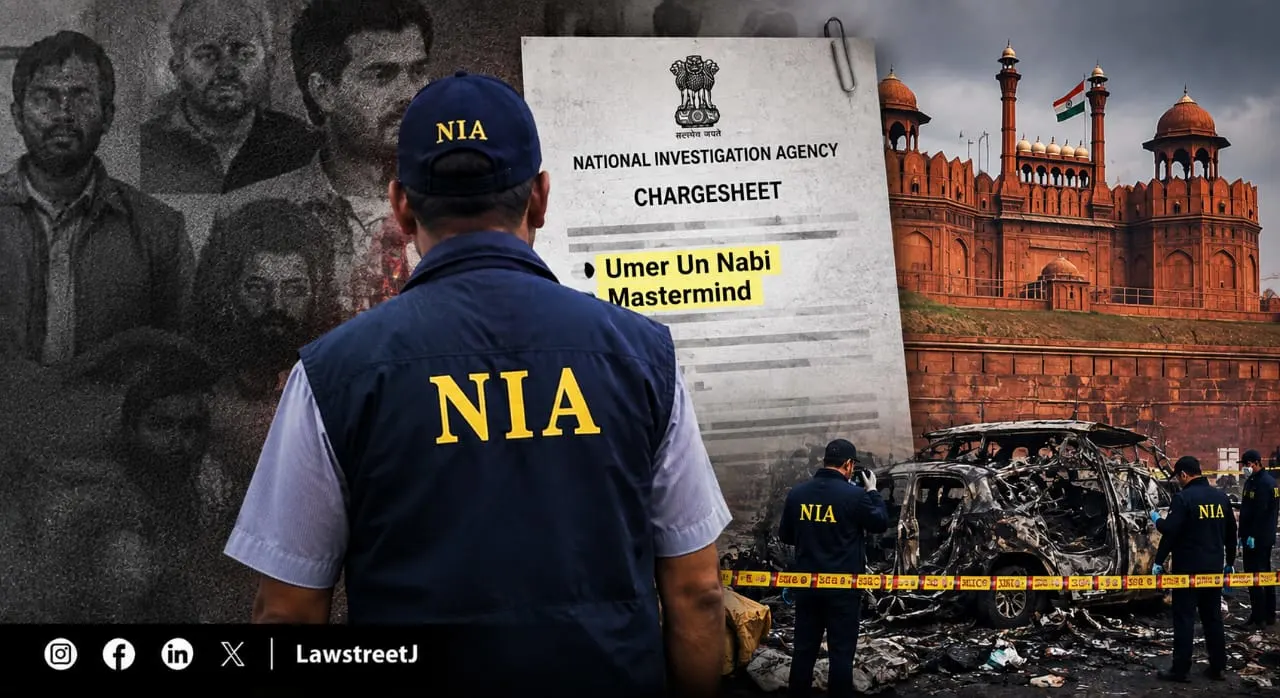
NEW DELHI - The National Investigation Agency has formally named Umer Un Nabi, the driver of the vehicle that exploded near Delhi's Red Fort on November 10, 2025, as the mastermind and operational head of the terror conspiracy behind the attack, according to a chargesheet filed by the agency. The blast killed 11 people and injured 29 others, and the nearly 7,500-page chargesheet lays out, for the first time in this much detail, how the agency believes a dormant terror module was rebuilt over several years before culminating in one of Delhi's deadliest terror attacks in recent memory.
Who Was Umer Un Nabi
According to the NIA's findings, Umer Un Nabi was a Kashmiri doctor, a resident of Pulwama district in Jammu and Kashmir, who worked as an assistant professor in the general medicine department at Al Falah University in Faridabad, Haryana. He was also known by the aliases Pinda and Rahul Bhat, names the agency says he used at different points while operating within the terror network. On the day of the attack, Nabi was behind the wheel of a car that the NIA has since formally described as a "vehicle-borne improvised explosive device," and he died in the resulting explosion, making him both the architect of the plot and the suicide bomber who carried it out.
The chargesheet describes Nabi as the "operational in-charge" of what investigators have termed AGuH Interim, a revived version of Ansar Ghazwat-ul-Hind, a terror outfit the NIA links to the broader ideology of Al-Qaida in the Indian Subcontinent. According to the agency, Nabi had been working since early 2022 to rebuild this dormant module from the ground up, patiently assembling a network of radicalised individuals over nearly three years before the attack was finally carried out. Because Nabi died in the blast, formal criminal proceedings against him personally have been abated under law, even though the chargesheet holds him responsible as the conspiracy's central figure.
Building the Network: Recruitment, Radicalisation and a "White-Collar" Module
What makes this case particularly striking, according to investigators, is the profile of many individuals drawn into the network. Several of those arrested and questioned in connection with the case were doctors and educated professionals rather than the more conventional profile typically associated with terror recruitment, leading some officials to describe the network informally as a "white-collar" terror module. Among those taken into custody by Jammu and Kashmir Police in the days following the blast were three doctors, Muzammil Ganaie, Adeel Rather and Shaheena Saeed, along with a preacher identified as Maulvi Irfan Ahmed Wagay.
According to the NIA, Nabi's role went well beyond simply planning the attack himself. The agency alleges he actively radicalised recruits, glorified acts of "Shahadat," or martyrdom, and arranged clandestine meetings held across both Jammu and Kashmir and the Delhi-NCR region, where members of the module were reportedly trained and prepared for future attacks. He is also accused of arranging funds for the group, procuring illegal weapons, and securing locations where members could meet and train without drawing attention. Communication among those involved allegedly took place largely through encrypted messaging platforms, including Signal, making it harder for investigators to trace the network's internal coordination until after the attack had already occurred.
The chargesheet also states that members of the module possessed and circulated extremist literature intended to justify violent extremism as a religious obligation. Investigators recovered documents bearing titles such as "Definition of Jihad," "The Requirements of Jihad," "The 21 Aims and Objectives of Jihad," "39 Ways to Serve and Participate in Jihad," and "44 Ways to Support Jihad." According to the NIA, this material was used within the network to reinforce the ideological framework members were being trained under. Separately, the agency has said the accused also relied on an assassination manual linked to Al-Qaeda in the Arabian Peninsula for guidance on explosives handling and covert operations, suggesting the network was drawing on international jihadist material rather than developing its methods in isolation.
The Attack: Target Selection, Weapons and Forensic Evidence
According to the chargesheet, Nabi specifically selected the Red Fort as the target for the attack because it stood as a recognisable "symbol of the Indian state," reflecting a deliberate choice to strike a nationally significant and heavily symbolic location rather than a target chosen for practical or tactical reasons alone. Notably, the NIA's investigation suggests the exact date of the attack itself was not pre-planned well in advance. Instead, the agency believes Nabi may have moved up his plans and acted somewhat hastily after a series of arrests in Srinagar linked to the broader network left him fearing that the conspiracy was at risk of being exposed before it could be carried out.
Forensic examination of material recovered after the blast detected traces of TATP, a highly volatile explosive compound known for its instability and its history of use in terror attacks internationally, along with ammonium nitrate, a widely available industrial chemical frequently used as a component in improvised explosive devices. Investigators also recovered chemicals and laboratory equipment during the course of the probe, which the NIA has said pointed toward preparations for further attacks beyond the Red Fort bombing itself, suggesting the network's ambitions and capabilities may have extended well beyond the single attack that was ultimately carried out.
The Investigation: Arrests and the Wider Conspiracy
Since taking over the investigation from Delhi Police shortly after the blast, the NIA has steadily expanded the scope of its inquiry, arresting multiple individuals it alleges played supporting roles in the conspiracy. Amir Rashid Ali, a resident of Samboora in Pampore, Jammu and Kashmir, was arrested for allegedly travelling to Delhi to help facilitate the purchase of the car that was later converted into the explosive device used in the attack. Soyab, a resident of Dhauj in Haryana's Faridabad, was separately arrested and accused of providing logistical support and harbouring Nabi in the period leading up to the blast. By late February 2026, the NIA had also arrested Zameer Ahmad Ahangar of Ganderbal and Tufail Ahmad Bhat of Srinagar, both accused of supplying weapons to Nabi, bringing the total number of arrests made in connection with the case to eleven at that stage of the investigation.
Throughout the probe, the NIA has worked in coordination with Delhi Police, Jammu and Kashmir Police, Haryana Police and Uttar Pradesh Police, examining dozens of witnesses, including several people who were injured in the blast itself. With the chargesheet now filed naming Nabi as the conspiracy's mastermind, attention is likely to shift toward the ongoing legal proceedings against the other individuals arrested in connection with the case, even as the man investigators say built and led the network did not survive to face trial himself.

![NIA Files 7,500-Page Chargesheet In Red Fort Blast Terror Conspiracy Case [Read Press Release]](/secure/uploads/2026/05/lj_2154_NIA_Files_7500_Page_Chargesheet.webp)