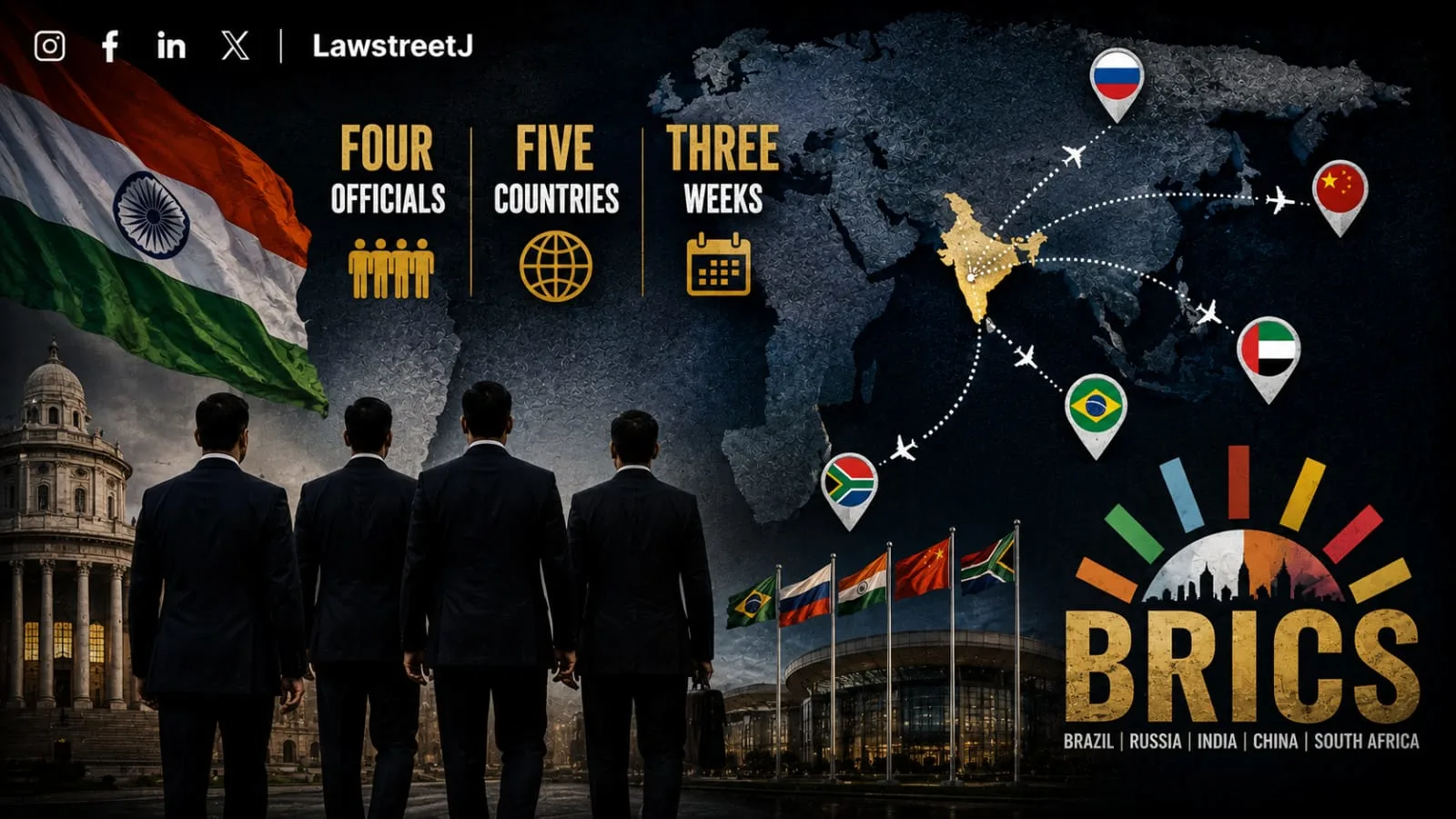
NEW DELHI - India is set to host the 18th BRICS Leaders' Summit in New Delhi on September 12 and 13, 2026, bringing together heads of state and government from an expanded 11-member grouping at a moment when global trade tensions, ongoing wars in the Middle East and Ukraine, and energy security concerns are testing the bloc's ability to maintain unity. Here is a comprehensive round-up of everything confirmed so far about the summit, its attendees, agenda and the extraordinary security operation being mounted around it.
Summit Basics: Dates, Venue and India's Chairship
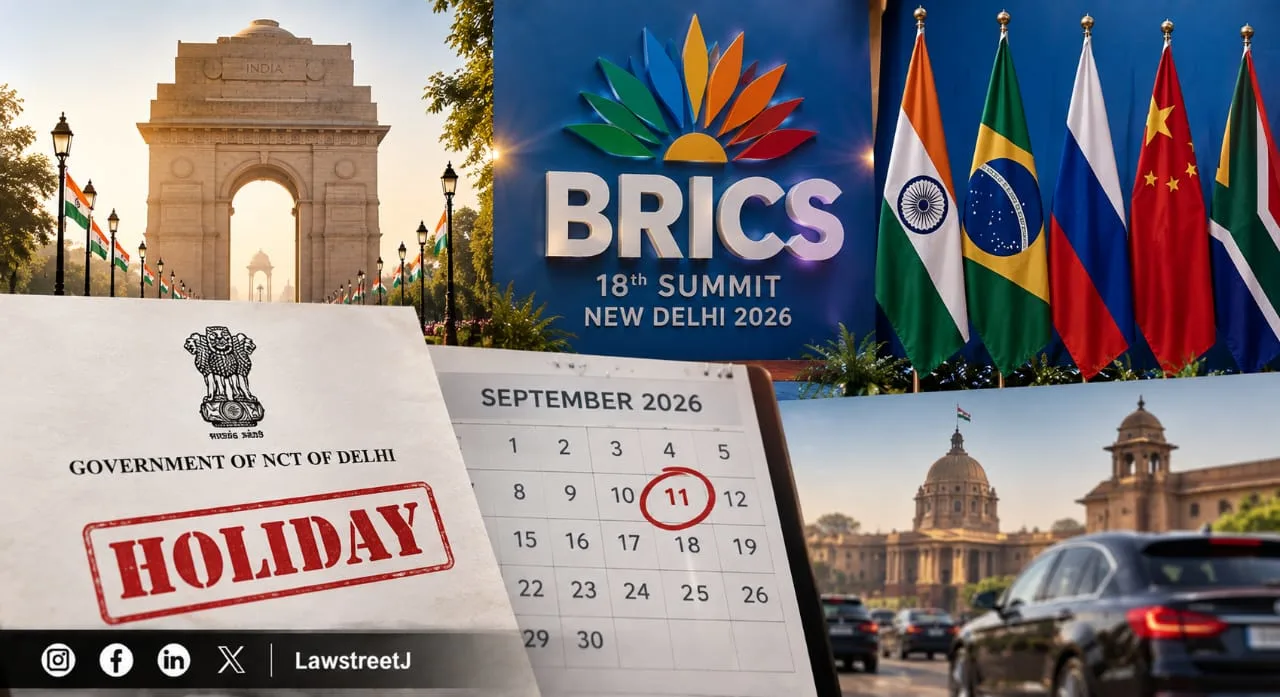
The two-day summit is being held at Bharat Mandapam, the international convention centre located at Pragati Maidan in New Delhi. India assumed the BRICS chairship for 2026 on January 1, marking the fourth time the country has led the grouping, having previously chaired it in 2012, 2016 and 2021. India's chairship this year is guided by the theme "Building for Resilience, Innovation, Cooperation and Sustainability," with officials describing a stated emphasis on a people-centric approach rooted in the principle of "humanity first." According to figures cited from India's chairship activities, more than 350 meetings and preparatory engagements have been held across over 25 Indian cities in the lead-up to the leaders' summit itself, spanning political and security cooperation, economic and financial matters, and cultural and people-to-people exchanges.
This year's gathering carries particular symbolic weight, as it marks 20 years since BRICS was first established, tracing back to 2006, and comes in the aftermath of the grouping's major recent expansion.
What began as a four-nation grouping of Brazil, Russia, India and China, later joined by South Africa in 2010, has since grown into an 11-member bloc following the addition of the United Arab Emirates, Egypt, Ethiopia, Iran, Saudi Arabia and Indonesia. This expansion has significantly increased BRICS's combined global economic and demographic weight, while also introducing a wider range of national interests and priorities that summit organisers must now try to reconcile into a single joint declaration.
Who's Attending: Xi's Historic Return and Putin's Confirmed Visit
The list of confirmed and expected attendees has drawn considerable international attention, particularly the participation of Chinese President Xi Jinping. China's Foreign Ministry formally confirmed on Thursday, September 10, that Xi would attend the summit at the invitation of Prime Minister Narendra Modi, ending days of diplomatic uncertainty over whether the Chinese leader would make the trip. The visit marks Xi's first trip to India in seven years, following a period of strained relations between the two countries in the aftermath of the 2020 Galwan Valley border clashes.
According to Reuters, citing Indian officials familiar with the preparations, Xi is expected to travel to India accompanied by a delegation of roughly 400 officials, more than double the size of the Chinese delegation that had accompanied him during his previous visit to India in 2019, an indication of how significant Beijing considers this trip to be.
Russian President Vladimir Putin has also been confirmed by the Kremlin to attend the summit. Also expected among the top leaders travelling to New Delhi are Iranian President Masoud Pezeshkian, South African President Cyril Ramaphosa, and Indonesian President Prabowo Subianto, alongside other leaders from BRICS partner and outreach countries, including Belarusian President Alexander Lukashenko. Given the significance of India-China relations to the wider BRICS agenda, a bilateral meeting between Modi and Xi on the sidelines of the summit is being closely watched by observers, particularly as the two countries have shown signs of a gradual diplomatic thaw in recent months following years of tension along their shared border.
The Two-Day Agenda and Schedule
The diplomatic programme begins a day ahead of the formal leaders' summit, with the BRICS Business Forum scheduled to convene at Bharat Mandapam on September 11. Prime Minister Modi is set to address the forum, while Commerce and Industry Minister Piyush Goyal and External Affairs Minister S Jaishankar are expected to address its opening session. Discussions at the Business Forum are expected to focus on agriculture, trade, investment, supply chains and the digital economy, bringing together government representatives, business leaders, financial institutions and startups from across BRICS member and partner countries.
China is reported to be bringing a sizeable business delegation alongside Xi Jinping, adding an important commercial dimension to the summit given ongoing discussions between Indian and Chinese companies over trade and investment issues.
On Saturday, September 12, the leaders' summit itself opens with a closed-door session on "Inclusive Global Governance and Strengthening Multilateralism," scheduled for 2:35 pm, followed by visits to the Bharat Mandapam Innovates Exhibition at 4:25 pm, an official family photograph session at 5:05 pm, and a joint tree-planting ceremony. On Sunday, September 13, leaders from BRICS member countries, partner countries and outreach invitees are scheduled to begin arriving at Bharat Mandapam from 9:55 am for the summit's second and final day.
The broader agenda across both days is expected to cover trade and investment, energy security, food security, supply chain resilience, technology cooperation, health, and reform of global multilateral institutions, with the summit set to culminate in the release of a joint communique known as the New Delhi Declaration. Given the consensus-driven nature of BRICS decision-making, reports have noted that negotiations over the final text of this joint document could prove significant, given the range of sometimes divergent interests among the bloc's now-expanded membership.
A Massive Security Operation Around New Delhi
Hosting this many heads of state simultaneously has triggered one of the largest security operations New Delhi has mounted in recent years. According to The Indian Express, around 25,000 security personnel are involved in arrangements for the summit, including Delhi Police, various paramilitary forces, and more than 100 National Security Guard commandos. Authorities have been securing airports, hotels hosting visiting delegations, the Bharat Mandapam venue itself, and designated movement corridors used for the transport of foreign leaders and their delegations. Preparations have also included additional security checks at hotels accommodating visiting leaders, anti-drone measures, and mock security drills conducted ahead of the summit.
The Directorate General of Civil Aviation has restricted the operation of light and micro-light aircraft, unmanned aerial vehicles and similar aircraft within a 300-kilometre radius of Delhi for a 52-hour window beginning Friday, September 11, while flying activities have also been restricted more broadly across seven northern states during the summit period. To support the scale of logistical arrangements required, central government offices in Delhi were kept closed on September 11, and the Delhi government separately declared the same day a public holiday for its own offices, autonomous bodies and public sector undertakings. The summit is also expected to draw significant international media attention, with an estimated 1,200 to 1,300 journalists anticipated to cover the event from within Delhi.
What's at Stake for an Expanded Bloc Under Pressure
The 2026 summit arrives at a genuinely difficult moment for BRICS as a grouping. With wars continuing in both the Middle East and Ukraine, alongside escalating global trade tensions and growing concerns over the resilience of international supply chains, the expanded 11-member bloc faces the challenge of demonstrating that a larger, more diverse membership can still speak with a reasonably unified voice on major global issues.
India, as this year's chair, has positioned itself as seeking to emphasise practical cooperation across areas like trade, technology, development financing and sustainable growth, rather than allowing BRICS to be defined primarily through opposition to Western powers, according to reporting on the summit's framing. For India specifically, successfully hosting Xi, Putin and the leaders of Iran, South Africa and Indonesia simultaneously also offers a notable diplomatic opportunity to demonstrate that it can bring together major and often competing global powers around a single table, all while continuing to pursue its own independent foreign policy priorities on the world stage.

.jpeg)