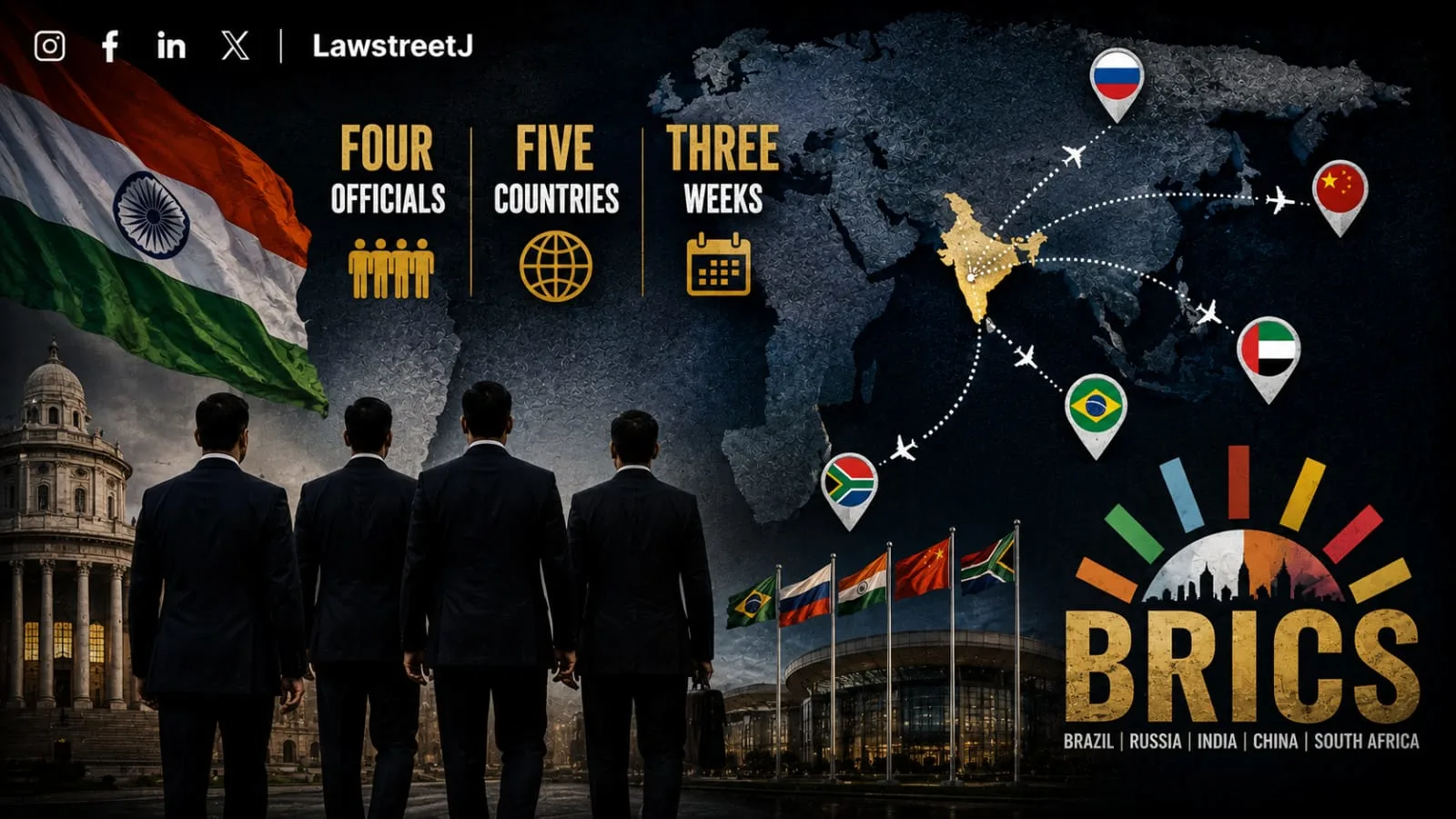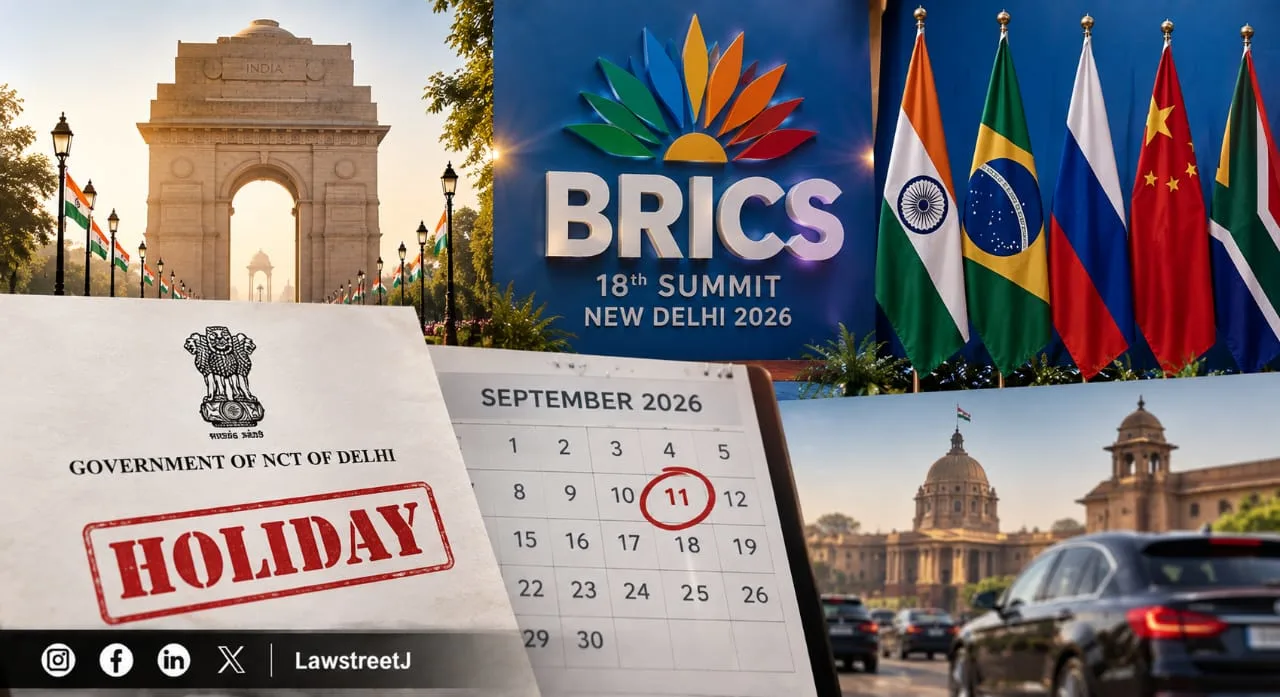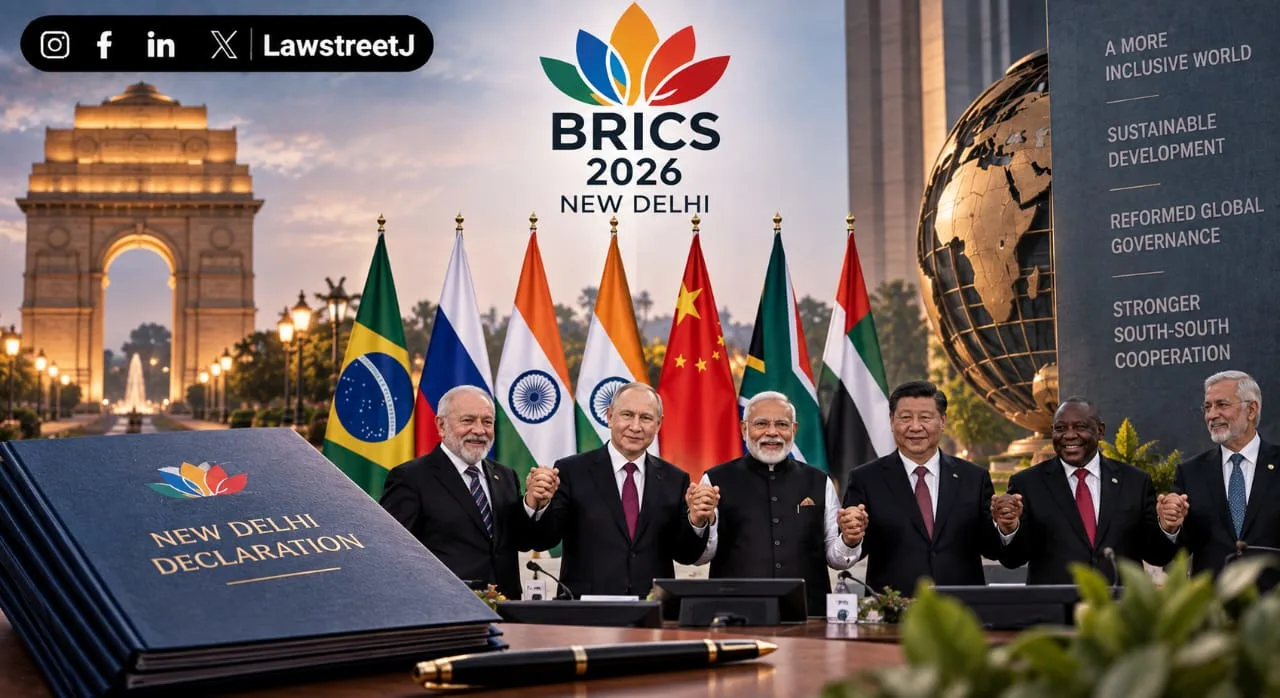
NEW DELHI - The 18th BRICS Summit concluded in New Delhi on Sunday, September 13, 2026, after two days of talks at Bharat Mandapam that produced a unanimously adopted joint declaration, a high-profile bilateral meeting between Prime Minister Narendra Modi and Chinese President Xi Jinping, and a formal handover of the group's chairmanship to China for the coming year. Held under India's chairship theme, "Building for Resilience, Innovation, Cooperation and Sustainability," the summit brought together leaders of the 11-member bloc, which now represents nearly 50 percent of the world's population and roughly 40 percent of global GDP, at a moment marked by trade disruptions, an ongoing conflict in West Asia, and sustained pressure from the Global South for a greater say in international institutions.
New Delhi Declaration Secured After Overnight Negotiations

The summit's central outcome, the New Delhi Declaration, was adopted unanimously on the first day despite sharp divisions among member states, most notably between Iran and the United Arab Emirates over the war in West Asia. According to reporting from the summit, the final text was hammered out through marathon negotiations that reportedly stretched until 4 a.m., as Indian officials worked to bridge the gap between countries on opposing sides of the conflict.
The declaration called for "maximum restraint" and continued diplomacy in West Asia, condemning attacks on civilian infrastructure and nuclear sites, though it stopped short of directly naming or condemning either the US-Israeli strikes or Iran's targeting of Gulf states. Former Indian Foreign Secretary Nirupama Menon Rao described the outcome as a "significant diplomatic success" for New Delhi, noting that consensus was preserved, though only through what she characterised as deliberately careful wording.
On trade, the declaration criticised what it termed indiscriminate tariffs, non-tariff barriers and protectionist measures, warning that such policies threatened to disrupt global supply chains and reduce international trade, language that avoided naming the United States directly but was widely read as a response to recent American tariff actions. The text also opposed unilateral sanctions and coercive measures inconsistent with international law, a position several observers linked to continued Western sanctions on Russia. On Ukraine, the declaration issued a more generic call for international disputes to be resolved through dialogue, reflecting the difficulty of securing unified language on a war involving a founding BRICS member.
Modi Sets Out "3Rs" Roadmap for Global Governance
Opening the summit on Saturday, Modi used his address to press India's long-standing case for institutional reform, proposing a three-part roadmap built on what he called the "3Rs" Representation, Responsiveness and Rule-making. "Today, the Global South stands in the front row of global crises but in the back row of decision-making," he told fellow leaders, calling for BRICS to convert what he described as a "pyramid of privilege" into a "platform of partnership."
On representation, Modi was unambiguous, reform of the United Nations Security Council, he said, "can no longer be postponed," and any text-based negotiations on the matter needed to carry a defined timeframe and clear outcomes. He also pushed for voting power and leadership positions at international financial institutions such as the IMF and World Bank to be realigned with current economic realities, and for the Global South to have a genuine role in shaping emerging rules around artificial intelligence and other new technologies. The declaration ultimately reflected much of this framing, calling for the UN, IMF and World Bank to be reformed so that emerging and developing economies gain greater representation than they currently hold.
Modi-Xi Bilateral Meeting Marks Third Consecutive Year of Talks

Saturday's proceedings also included a closely watched bilateral meeting between Modi and Xi Jinping, their third consecutive year of face-to-face talks following earlier meetings in Kazan in 2024 and Tianjin in 2025. Xi outlined a four-point approach for what China's Ministry of Foreign Affairs described as the "steady and long-term development" of ties between the two countries, calling for strategic understanding, win-win cooperation in trade, mutual respect in addressing differences including the boundary question, and stronger multilateral cooperation through platforms including BRICS, the UN, the SCO and the G20.
Modi, in turn, thanked Xi for China's support during India's BRICS chairmanship and reiterated that peace and tranquillity along the shared border remained essential to the broader relationship. Both sides acknowledged the need to address India's large trade deficit with China and to work toward more predictable market access, though neither government indicated any near-term resolution to the border disputes that have persisted since the 2020 Galwan Valley clash. The session ended with Modi and Xi sharing a prolonged handshake as China formally took over the BRICS chairmanship for the year ahead.
Notably, both Xi and Russian President Vladimir Putin offered to help facilitate peace talks on the Ukraine war during the summit, an offer Putin welcomed, though no concrete mechanism for such talks was announced before the summit concluded.
No Common Currency, But Progress on Payments, AI and Energy
Despite recurring speculation ahead of the summit, BRICS did not launch a common currency, a point Indian officials moved to clarify amid ongoing tensions between member states over de-dollarisation. Instead, discussions centred on expanding local-currency trade and strengthening cross-border payment cooperation among member economies. Leaders also discussed cooperation on artificial intelligence governance, energy security, counter-terrorism coordination, and possible new investment mechanisms tied to the New Development Bank, the BRICS-founded multilateral lender.
The bloc's continued expansion added complexity to this year's negotiations. With Saudi Arabia, the UAE and Iran now part of the 11-member grouping alongside founding members Brazil, Russia, India, China and South Africa, along with Egypt, Ethiopia and Indonesia, the summit had to reconcile sharply different national positions, particularly between Gulf states and Iran, and between Russia and China's preference for stronger anti-Western language and India's effort to avoid the bloc being perceived as an anti-Western alliance given its own strategic ties with Washington and European capitals.
Bangladesh Absent as Dhaka Clarifies Nature of Invitation
Not every regional player was represented at the summit. Bangladesh confirmed it would not send any official representative, after State Minister for Foreign Affairs Humaiun Kobir clarified that Prime Minister Tarique Rahman had been invited only in his capacity as chair of BIMSTEC, not as head of the Bangladesh government. India's Ministry of External Affairs confirmed that the invitation was extended for the summit's outreach session specifically on that basis, with a separate bilateral visit by Rahman to India still being arranged for a later, unspecified date.
India Closes Out Chairship With Wide Participation
The two-day gathering drew a broad roster of world leaders to New Delhi, including Putin, Xi Jinping, Iranian President Masoud Pezeshkian, Egyptian President Abdel Fattah el-Sisi, Indonesian President Prabowo Subianto, South African President Cyril Ramaphosa, Ethiopian Prime Minister Abiy Ahmed Ali and Kazakhstan President Kassym-Jomart Tokayev, among others attending in various capacities. Modi closed out India's chairship year by thanking fellow leaders for what he called a "very productive and outcome oriented" summit, pointing to the more than 350 meetings held across nearly 30 Indian cities over the course of the year-long presidency.
With the New Delhi Declaration adopted and the chairmanship formally passed to China, the 18th BRICS Summit closed having reaffirmed the bloc's stated commitment to global governance reform, even as unresolved fault lines, from the India-China border to the war in Ukraine to internal divisions over West Asia, continued to shape the limits of what the grouping could agree on collectively.