NEW DELHI — German Ambassador to India Jasper Wieck told reporters in New Delhi on Wednesday, September 23, 2026, that Berlin is fully prepared to sign the estimated $8 billion agreement to build six next-generation conventional submarines with India, and that the only thing standing between a finalised deal and an actual signature is India completing its own internal approval process. "From the German side, we should sign tomorrow," Wieck said, a line that leaves little ambiguity about where Germany believes the ball currently sits.
It was Wieck's first press briefing since presenting his credentials to President Droupadi Murmu back in August, and he used the occasion to lay out, in fairly blunt terms, just how close this long-running defence negotiation has actually gotten.
"Germany Stands Ready to Sign at Any Moment"
Asked directly about timing, Wieck didn't hedge. "Germany stands ready to sign at any moment, as soon as the Indian side is ready. So, we are waiting for the final approval from the various authorities on the Indian side, and then we can kickstart this very important partnership," he said. He went further on the documentation specifically, noting there's nothing left to negotiate on Berlin's end. "In terms of documents, it has already been finalised, and the German side has agreed, so it's now up to the Indian side to have their internal processes finished and concluded."
That's a fairly unusual thing for an ambassador to say this plainly in public, essentially putting the remaining delay squarely on New Delhi's bureaucratic machinery rather than leaving it as a vague, mutual "under discussion" situation. Wieck described Berlin's overall posture throughout the negotiation as "forward-leaning" in meeting India's specific requests, framing the deal as a government-to-government pact rather than a standard commercial contract.
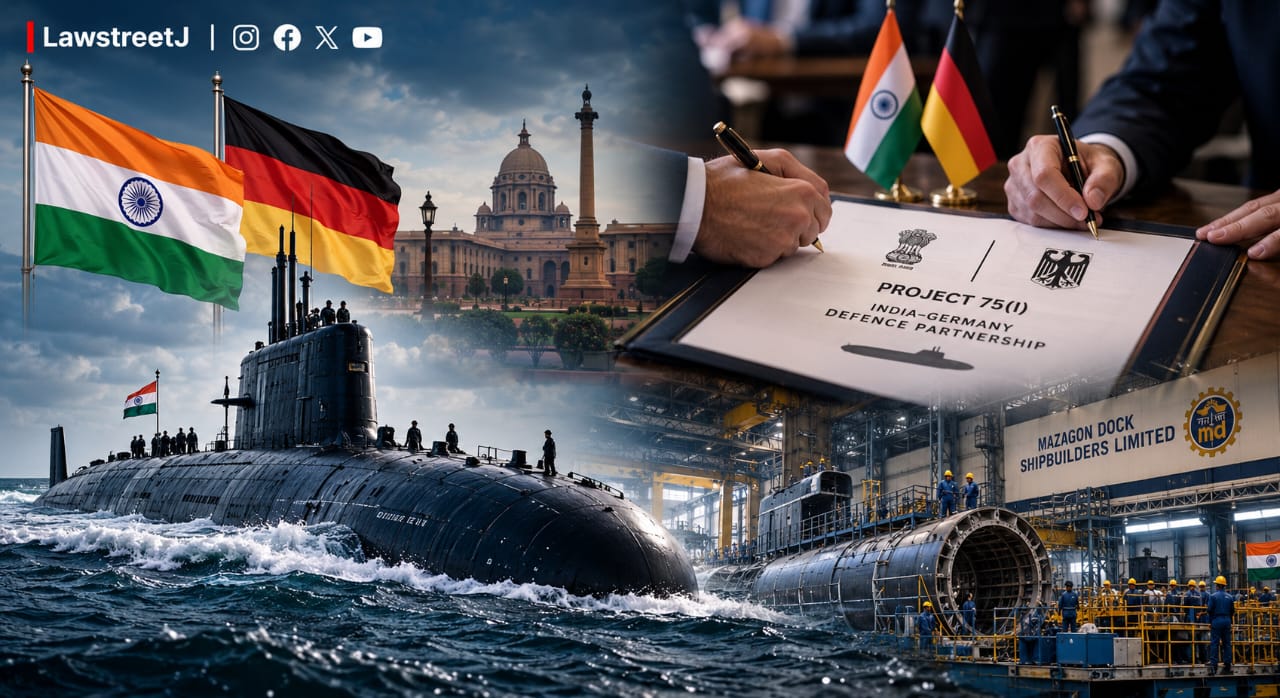
The agreement in question covers Project 75(I), India's long-running programme to acquire six advanced conventional submarines for the Indian Navy. Under the proposed arrangement, Germany's ThyssenKrupp Marine Systems, commonly known as TKMS, would partner with Mazagon Dock Shipbuilders Limited, the Mumbai-based public sector shipyard, to actually construct the vessels on Indian soil.
Wieck was notably insistent on how this partnership should be understood, pushing back against any characterisation of it as a simple sale. "I think the most important thing about this deal is that it is a real partnership. It is not about a German company, TKMS, selling its submarines in India. No. It is about producing them and about technology transfer in India," he said. He extended that framing further, arguing the benefits would ripple outward well beyond the two companies directly involved. "Many companies and the entire ecosystem in the maritime field will benefit from this deal and this partnership," he said, pointing to India's broader domestic submarine design and manufacturing base as a likely beneficiary of the technology and skills transfer built into the agreement.
A Deal Years in the Making
This moment didn't arrive out of nowhere, it's the product of a negotiation that has stretched across several years and multiple German administrations. Project 75(I) itself dates back further still, originally floated as a roughly $7.8 billion tender when India's Ministry of Defence first sent requests for information to foreign shipbuilders. Germany and TKMS have been in and out of the running at various points since, at one stage even stepping back from the bidding process entirely before returning to serious contention.
The project gained fresh momentum following a 2024 visit by German Chancellor Olaf Scholz to New Delhi, during which he and Prime Minister Narendra Modi agreed that security and defence cooperation should become a more central pillar of the India-Germany relationship. That visit was followed by a series of ministerial-level exchanges, including a trip by German Defence Minister Boris Pistorius, who toured Mazagon Dock's Mumbai facility and met his Indian counterpart Rajnath Singh to discuss technology transfer specifics. Through each of these stages, the core sticking points remained fairly consistent, how much technology Germany would actually transfer, what role Indian shipyards would play in construction, and how the financial and industrial terms of the partnership would be structured.
Berlin's Export Policy Shift
One development Wieck highlighted as particularly significant is a change in Germany's own export licensing posture toward India. He described Berlin's approach to export licences and technology transfer as having undergone what he called a "180-degree shift," easing restrictions that had previously complicated defence cooperation between the two countries.
That shift matters beyond just the submarine programme itself. Wieck identified several additional areas where he sees room for deeper India-Germany defence cooperation going forward, including unmanned systems, cyber capabilities, missile technology, and sensor technology. He framed these as natural extensions of the trust being built through the submarine negotiation, rather than entirely separate initiatives, suggesting Berlin views the Project 75(I) agreement as something of a template for how future defence deals between the two countries might be structured.
Wieck's remarks weren't limited to submarine logistics. He used the briefing to situate the deal within a much larger geopolitical picture, one he described in fairly stark terms. He called India a "trusted partner" for Germany and argued that the relationship between the two countries has become more important than at almost any point before, precisely because the broader international environment has grown less stable, less predictable, and marked by a growing deficit of trust between major powers.
He didn't shy away from naming names in explaining why. Russia, he said, "has wrecked trust, peace, confidence and stability" across Europe through what he characterised as a pattern of revisionist policy. He drew a parallel to China as well, describing Beijing as increasingly assertive and similarly revisionist in its own regional posture. Against that backdrop, Wieck argued, both Germany and India have found reason to increase their respective investments in military capability, a shared response to what he called an "unfriendly geostrategic environment" that neither country fully controls but both are being forced to adapt to.
With Germany's side of the paperwork, by its own ambassador's account, already finalised, the remaining timeline for this deal now rests entirely on India's internal approval mechanisms, the various ministries, committees and sign-offs that any defence acquisition of this scale has to clear before a government-to-government agreement can actually be inked. Wieck gave no specific date for when that process might conclude, only reiterating that Berlin is prepared to move the moment New Delhi is ready.
Given how long Project 75(I) has already taken to reach this stage, spanning multiple Indian defence ministers, at least two German chancellors, and TKMS's own on-again, off-again participation in the bidding process, there's reason for measured patience rather than assuming a signature is imminent simply because Wieck says Germany is ready. Still, the tone of this week's briefing, an ambassador speaking in specific, public terms about being able to sign "tomorrow," marks one of the more concrete signals yet that this particular submarine programme may finally be approaching its conclusion after years of on-and-off negotiation.