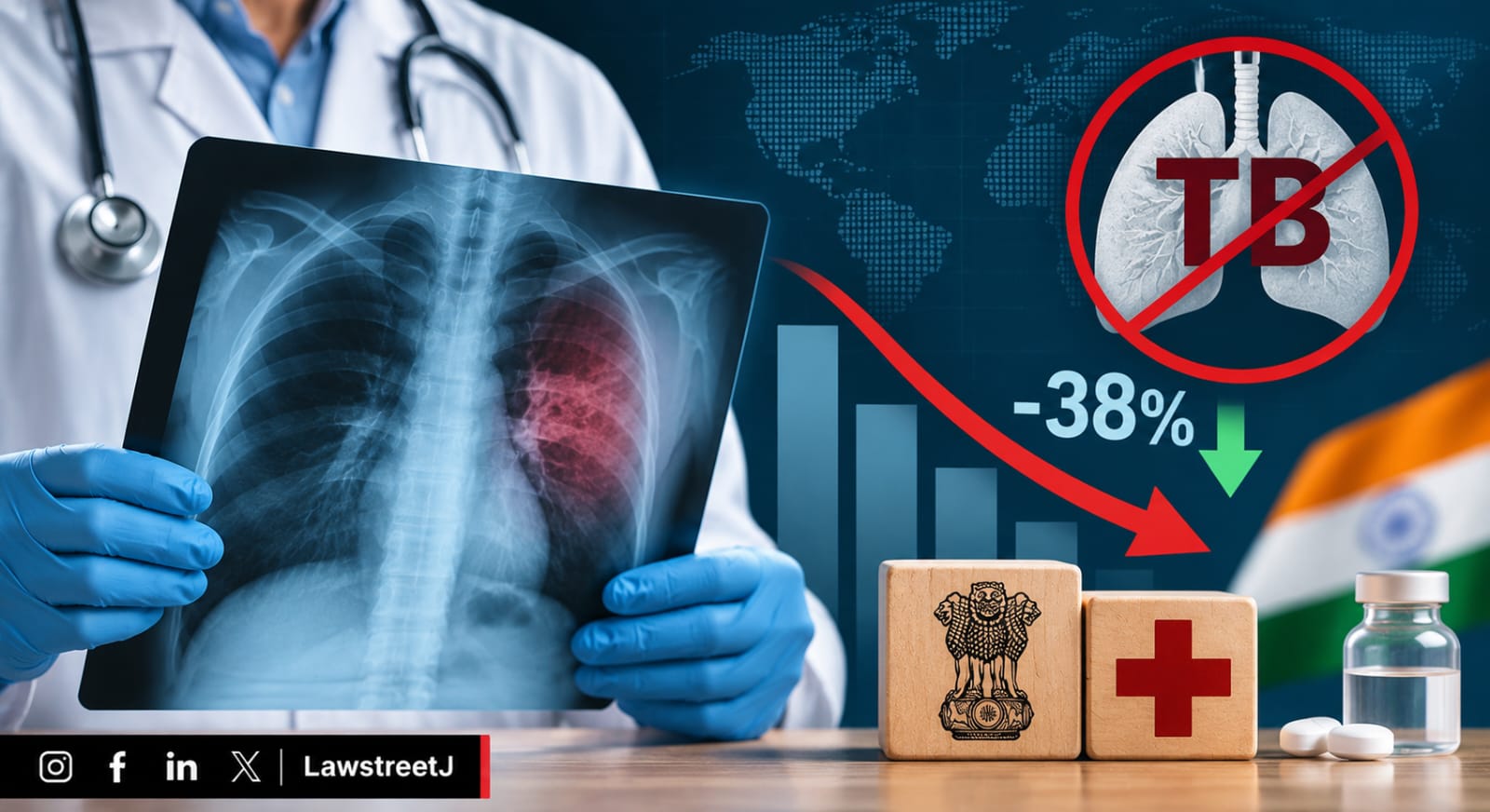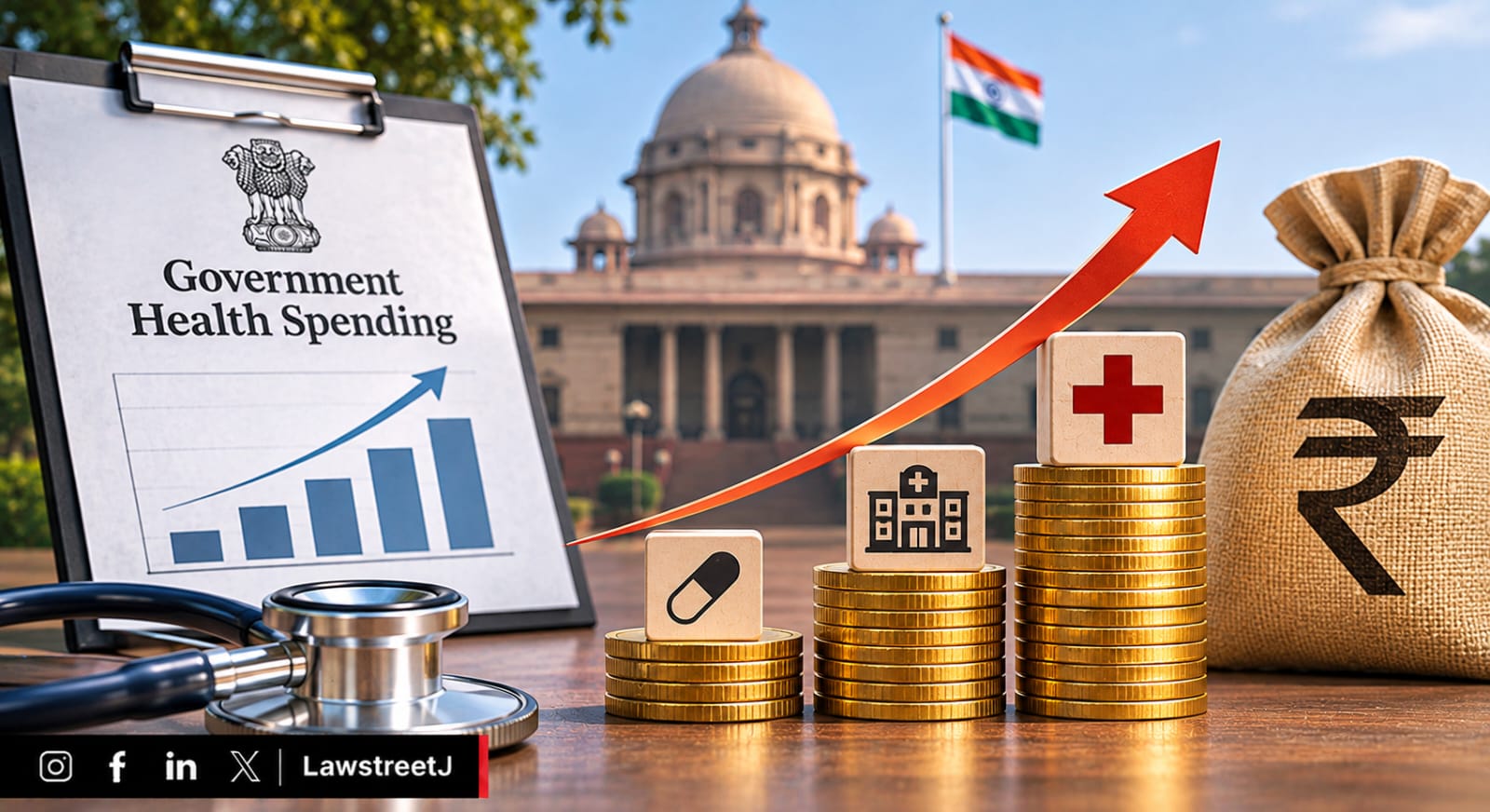
New Delhi — India's government health spending has more than tripled in a decade to ₹4,14,196 crore in 2023-24, while the share of health costs paid directly by households has fallen from 64.2 percent to 42.7 percent, according to the National Health Accounts (NHA) estimates for 2023-24 released by the Union Health Ministry.
The Headline Numbers
According to the release, government health expenditure rose from ₹1,29,778 crore in 2013-14 to ₹4,14,196 crore in 2023-24, a threefold increase. Over the same period, out-of-pocket expenditure (OOPE) as a share of total health expenditure declined by 21.5 percentage points, from 64.2 percent to 42.7 percent. The latest year also saw a decline, with the OOPE share falling from 43.4 percent in 2022-23 to 42.7 percent in 2023-24.
Social security expenditure on health, which includes the Pradhan Mantri Jan Arogya Yojana (PM-JAY) and government-employee medical benefits, rose from 6 percent of total health expenditure in 2013-14 to 11 percent in 2023-24, an increase of 5 percentage points.
It was 9.9 percent in 2022-23. One report on the release put private health insurance at 10.2 percent of total spending in 2023-24, up from 9.2 percent the previous year. The ministry said the shift reflects a structural change in how healthcare is financed, with a lower proportion being met by direct household payments, and linked it to initiatives for free and affordable treatment, medicines, diagnostics and hospital services.
The estimates are the 11th round prepared by the National Health Accounts Technical Secretariat, which operates within the National Health Systems Resource Centre under the Ministry of Health and Family Welfare. They use the internationally recognised System of Health Accounts 2011 framework, which tracks how much a country spends on health and who pays.
Reading the Numbers Carefully
The long-run trend is clear, but the series needs care when compared across releases. An earlier NHA release in September 2024 put out-of-pocket spending at 39.4 percent of total health expenditure in 2021-22, lower than the 43.4 percent now reported for 2022-23, so the series does not move in a straight line, and the sources reviewed for this report do not explain how the rounds differ.
At that earlier release, government health spending was reported at 1.84 percent of GDP, and NITI Aayog member V.K. Paul said the PM-JAY had produced savings of more than ₹1 lakh crore for households. That is a government claim, not an independent finding. The National Health Policy of 2017 had set a goal of raising government health spending to 2.5 percent of GDP by 2025. The 2023-24 share of GDP was not available in the sources reviewed.
The figure also measures the share of spending, not the burden on households. Because total health spending grows over time, a household can pay a smaller share while paying more rupees, and the out-of-pocket share does not capture families that face catastrophic bills or those who skip care because of cost.
Legal and Constitutional Framework
Public health and sanitation, hospitals and dispensaries are state subjects under the Seventh Schedule of the Constitution (List II), which is why the Union's role is exercised largely through centrally sponsored schemes and funding, such as the National Health Mission and PM-JAY, while states provide most services. Article 47, a directive principle, directs the State to regard raising the level of nutrition and improving public health as among its primary duties. The Supreme Court has held in cases such as Paschim Banga Khet Mazdoor Samity v. State of West Bengal (1996) that the right to life under Article 21 includes access to emergency medical care, though the right to healthcare itself is not a standalone, enforceable guarantee in the Constitution.