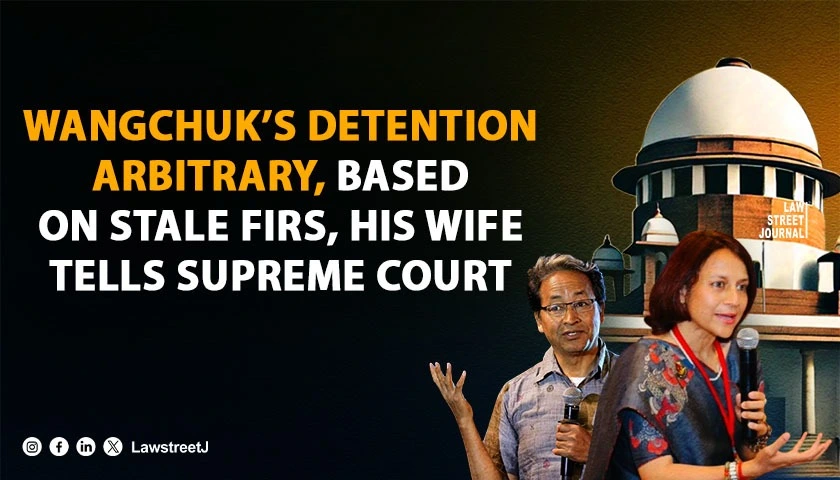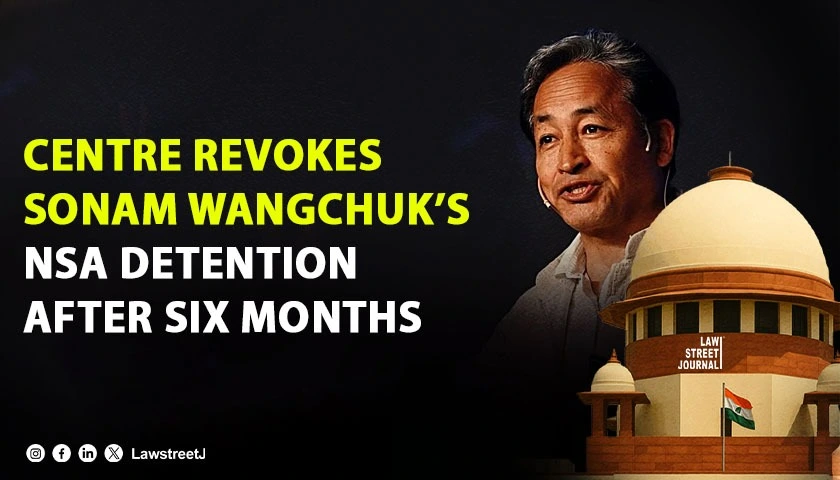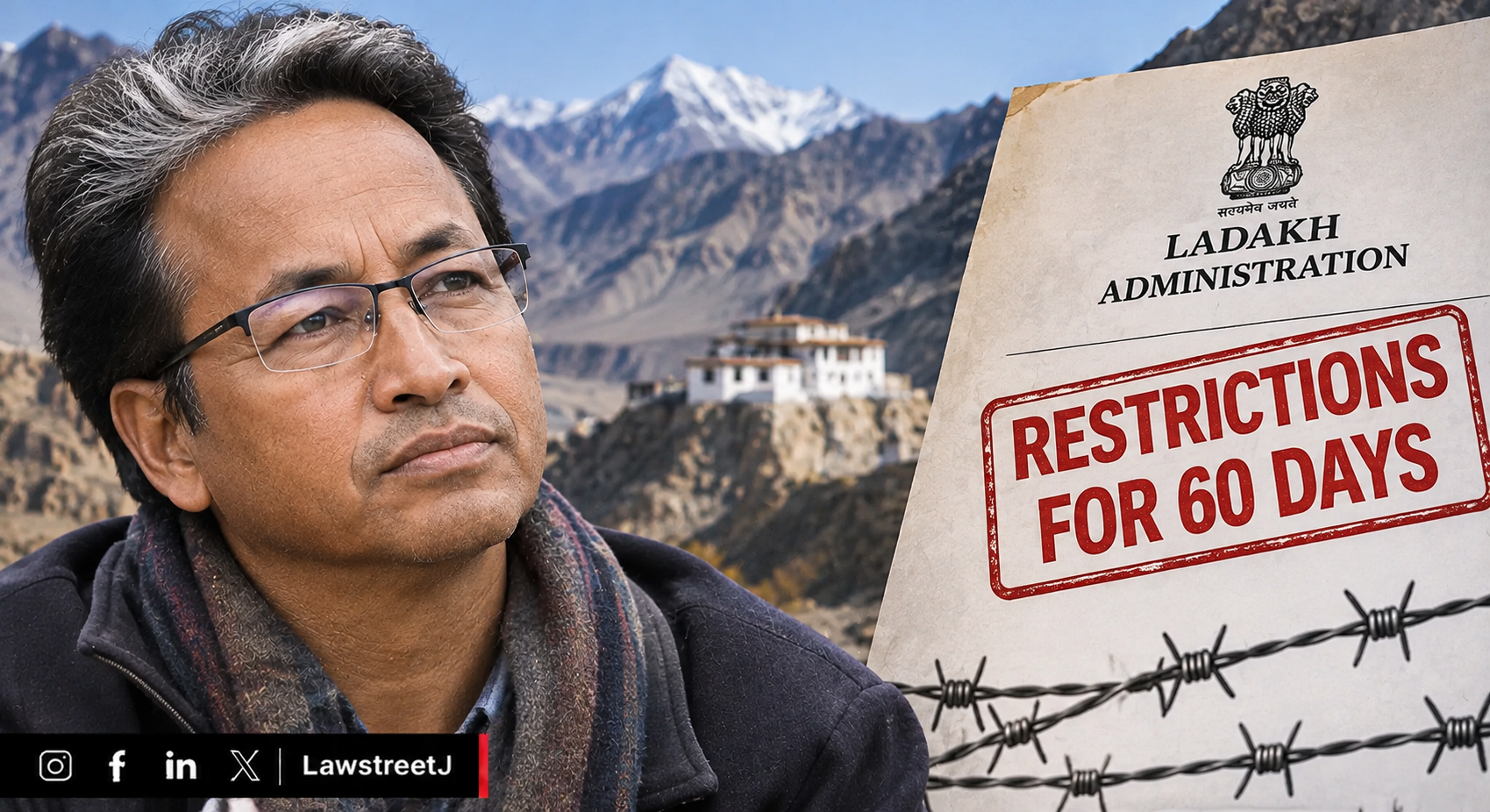
LEH, November 16: The Kargil Democratic Alliance (KDA) has criticised the Ladakh administration for imposing 60-day restrictions on climate activist Sonam Wangchuk, describing the action as a “deeply troubling pattern of administrative high-handedness” and raising concerns over freedom of movement and the right to peaceful protest.
KDA co-chairman Sajjad Kargilli made the remarks on November 15 after he and two other members of the organisation were allegedly stopped by police from meeting Wangchuk at the Himalayan Institute of Alternatives, Ladakh (HIAL), on November 14.
According to Kargilli, police personnel prevented the delegation from proceeding to meet the activist. When the members sought clarification about whether Wangchuk had been arrested, police reportedly told them that he was not under arrest but was facing restrictions on his movement. The KDA leader questioned why visitors were being prevented from meeting Wangchuk if he had not been formally arrested. He said the incident raised concerns about the administration's handling of dissent and democratic rights in the Union Territory.
The Ladakh administration has imposed restrictions on Wangchuk for 60 days under Section 163 of the Bharatiya Nagarik Suraksha Sanhita (BNSS), 2023, citing concerns over public order and the smooth conduct of upcoming local elections.
KDA Questions Restrictions and Police Action
Kargilli said the incident demonstrated what he described as an alarming situation for democracy and the rule of law in Ladakh. He criticised the restrictions on Wangchuk's movement and the reported denial of access to visitors, arguing that the administration had not provided a convincing explanation for preventing people from meeting him.
The KDA leader said Ladakh could not be governed through bureaucratic pressure, intimidation or suppression of dissent. He called for the restoration of democratic freedoms and demanded that the administration resume dialogue with civil society representatives. Wangchuk was shifted from the Nawang Dorjay Stobdan (NDS) Memorial Park, a protest site in Leh, to HIAL on November 11. His removal took place as the Leh Apex Body (LAB), another prominent civil society organisation, prepared to launch an indefinite sit-in over its demands.
Wangchuk has reportedly described the restrictions imposed on him as arbitrary and vague. He has also alleged that he is being prevented from leaving his residence. The distinction between formal arrest and preventive restrictions has become central to the controversy. While police reportedly told Kargilli that Wangchuk was not under arrest, the KDA maintains that preventing visitors from meeting him raises questions about the practical extent of the restrictions.
Administration Cites Public Order and Election Arrangements
The Ladakh administration's order imposes restrictions on Wangchuk for 60 days under Section 163 of the BNSS, 2023. The provision empowers executive magistrates to issue preventive orders in situations where immediate action is considered necessary to prevent potential disturbances or threats to public order.
According to the report, the administration cited concerns about maintaining public order and ensuring the smooth conduct of upcoming panchayat, municipal and hill council elections. The restrictions come amid growing protests by Ladakh-based civil society organisations over the timing of local elections and the lack of progress in their discussions with the Union government.
The administration has not, in the reported account, announced any withdrawal of the restrictions. The KDA, meanwhile, has demanded an end to what it describes as administrative repression.
Winter Election Dispute Intensifies Political Tensions
The controversy surrounding Wangchuk is part of a wider disagreement between Ladakh's civil society organisations and the administration.
The Leh Apex Body and the Kargil Democratic Alliance have opposed holding hill council elections during the peak winter period. They have demanded that the elections, originally scheduled for December 4, be postponed until April or May 2027, citing unfavourable weather conditions and the difficulties residents could face in participating.
The organisations have also called for the Union government to resume dialogue with Ladakh's civil society representatives on their long-standing demands, including statehood and constitutional safeguards under the Sixth Schedule. The LAB's proposed indefinite sit-in at NDS Memorial Park was linked to these demands. Wangchuk's removal from the protest site on November 11 added another point of contention between the administration and the groups leading the movement.
The situation also drew attention after Ladakh Police issued a statement concerning the 17-year-old son of Tsewang Tharchin, an Indian ex-serviceman killed during a protest in Leh in September 2025. The minor had allegedly threatened self-immolation at the protest site on November 13. Police subsequently said the child and his mother were safe and that the administration would facilitate any required medical or counselling support.
The latest developments have intensified concerns surrounding the handling of protests and political disagreements in Ladakh. While the administration has cited public order and election arrangements to justify its restrictions, the KDA has called for dialogue and an end to measures it considers excessive.
With the winter election schedule approaching, the dispute over Wangchuk's movement and the demands of Ladakh's civil society groups remain unresolved.