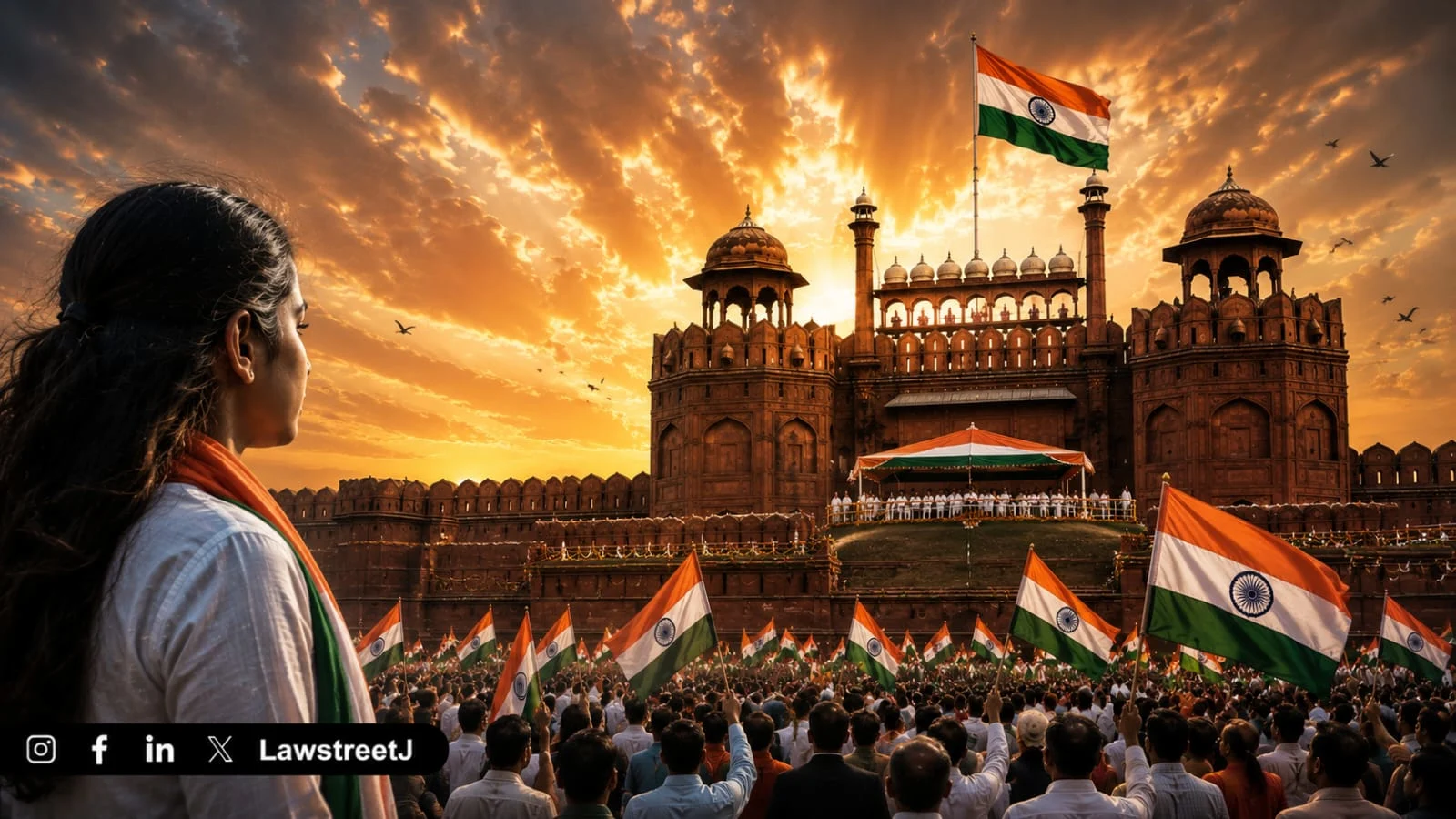
EKTA NAGAR, GUJARAT : India is observing Rashtriya Ekta Diwas, or National Unity Day, on Saturday to commemorate the 151st birth anniversary of Sardar Vallabhbhai Patel, the country’s first Deputy Prime Minister and Home Minister. The annual observance recognises Patel’s contribution to India’s national integration and highlights the importance of unity, integrity and national security.
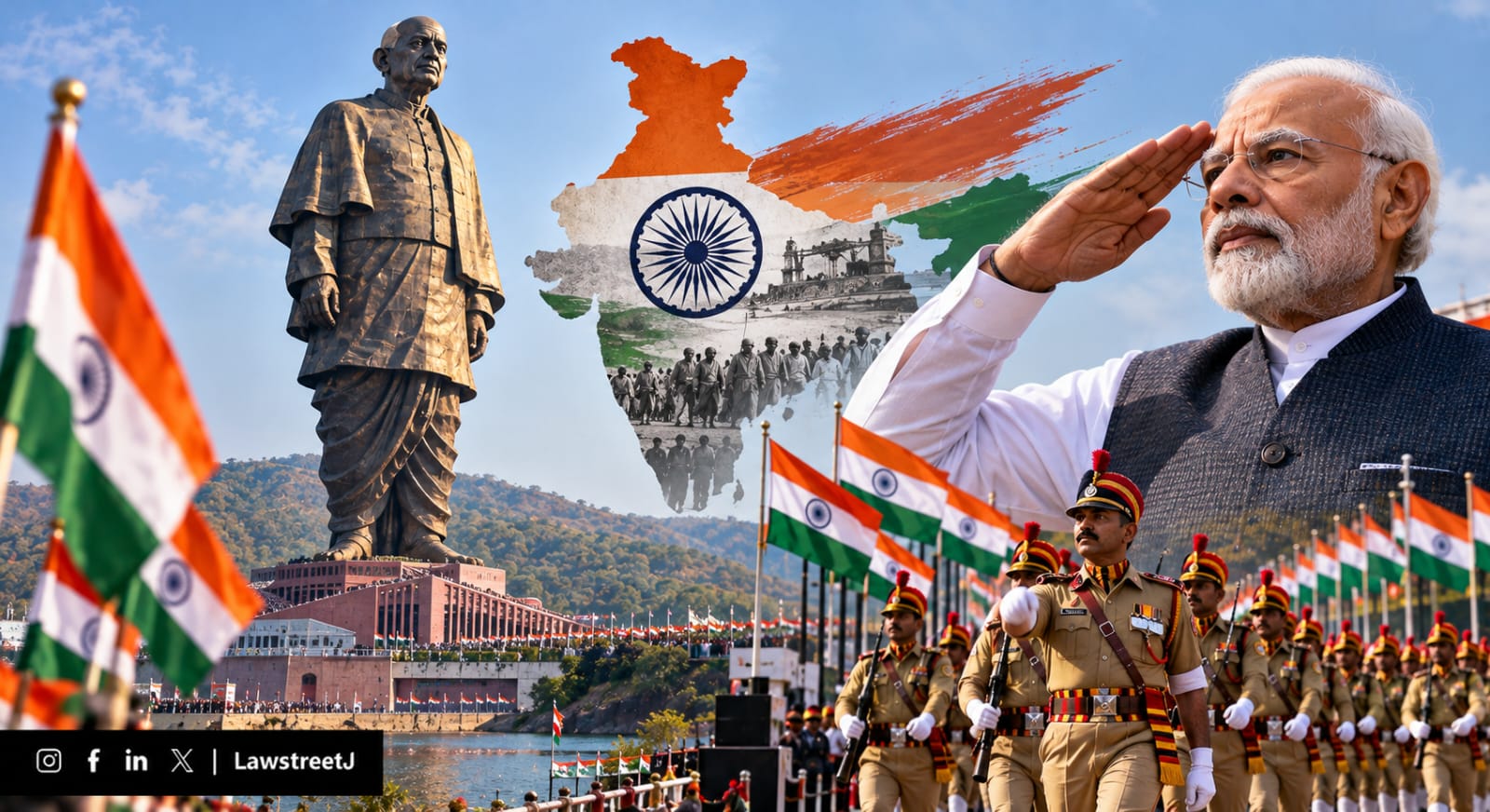
The main celebrations are being held at Ekta Nagar in Gujarat’s Narmada district, near the Statue of Unity, the 182-metre monument dedicated to Sardar Patel. Prime Minister Narendra Modi is scheduled to pay floral tribute to Patel and participate in the National Unity Day programme, which includes the Ekta Diwas pledge and a parade featuring police forces, Central Armed Police Forces (CAPFs) and other contingents.
The Government of India introduced Rashtriya Ekta Diwas in 2014. Since then, October 31 has been observed annually as National Unity Day, marking Sardar Patel’s birth anniversary and commemorating his role in bringing together the princely states following Independence in 1947.
Sardar Vallabhbhai Patel and the Integration of India
Born on October 31, 1875, in Nadiad, Gujarat, Sardar Vallabhbhai Patel was a prominent leader of the Indian independence movement. He worked closely with Mahatma Gandhi and played a significant role in several campaigns against British rule, including the Bardoli Satyagraha of 1928.
Following Independence, Patel became India’s first Deputy Prime Minister and Home Minister. One of his principal responsibilities was the political integration of the princely states into the newly independent Indian Union. At the time of Independence, India consisted of British-administered provinces and more than 560 princely states. Their integration was a major administrative and political challenge. Sardar Patel, working with V. P. Menon and other officials, played a central role in negotiating the accession of princely states to India.
The integration process involved negotiations, agreements and, in certain cases, more complex political and military developments. Patel’s contribution to this process earned him the title “Iron Man of India”.
His role in national integration remains central to the annual observance of Rashtriya Ekta Diwas. The day recognises his contribution to the formation of a unified Indian Union and the establishment of a strong administrative framework after Independence.
Ekta Diwas 2026: Parade, Pledge and National Celebrations
The 2026 celebrations are being organised at the Statue of Unity complex in Ekta Nagar. According to the Ministry of Home Affairs, Prime Minister Modi will pay tribute to Patel in the morning, while the Ekta Diwas Parade is scheduled for the evening.
The parade will feature 16 marching contingents from nine states and one Union Territory police force, four Central Armed Police Forces, the National Cadet Corps (NCC) and a marching band. Special attractions include an NSG Hell March contingent, motorcycle demonstrations by women and men from the Border Security Force (BSF) and Central Reserve Police Force (CRPF), and a martial arts presentation by the BSF.
The Indian Air Force’s Surya Kiran aerobatic team is also scheduled to conduct a flypast. Schoolchildren will participate in a piped band performance, while the parade will showcase the role of police and central forces in maintaining national security.
A major feature of this year’s programme is the commemoration of the end of armed Naxalism in India. The National School of Drama is scheduled to present a theatrical performance titled Naxal Mukt Bharat, involving approximately 2,000 artists from 126 districts that have experienced armed Naxalism. Around 5,000 people from these districts have been invited to attend the celebrations.
The cultural performances and tableaux will follow the theme of Vande Mataram. The programme also includes a theatrical presentation based on Bankim Chandra Chattopadhyay’s novel Anandamath.
Bharat Parv and the Message of National Integration
The Rashtriya Ekta Diwas celebrations are being accompanied by Bharat Parv 2026, a cultural festival at Ekta Nagar that began on October 30 and will continue until November 15. The festival is being organised under the theme Ek Bharat, Shreshtha Bharat, bringing together the cultural identities of states and Union Territories through exhibitions, traditional crafts, cuisines and performances.
The festival provides a platform for showcasing India’s cultural diversity and regional traditions. It is also intended to encourage participation from visitors across the country and promote awareness of the country’s shared cultural heritage. Rashtriya Ekta Diwas is marked across India through activities such as the Run for Unity, unity pledges, educational programmes and commemorative events. Government institutions, educational establishments and local organisations participate in activities highlighting national integration.
The annual observance also draws attention to the constitutional values of unity and integrity. India’s Constitution identifies the protection of the country’s sovereignty, unity and integrity as a fundamental duty of every citizen under Article 51A.
The day serves as an occasion to recognise Patel’s contribution to the country’s political integration and the development of independent India. The 2026 celebrations at Ekta Nagar combine the commemoration of his birth anniversary with programmes highlighting the work of security forces, cultural diversity and national integration.