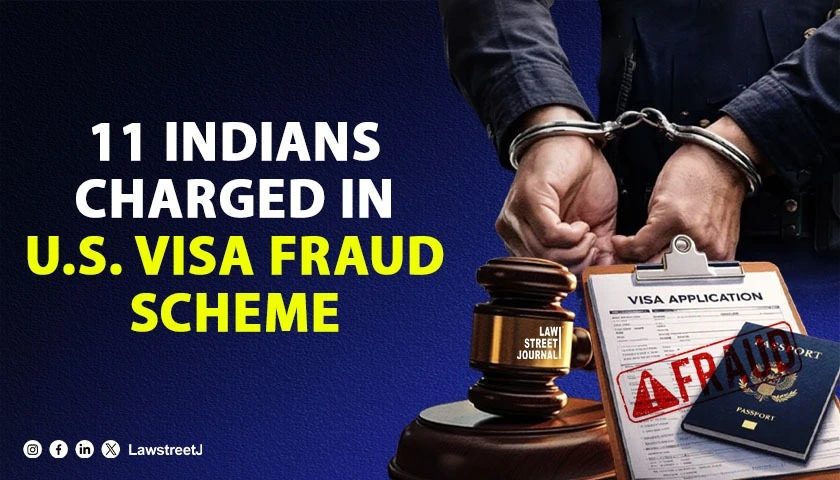
New Delhi: On March 13, 2026, the U.S. Attorney’s Office for the District of Massachusetts announced charges against eleven Indian nationals accused of staging armed robberies to fraudulently obtain immigration benefits. According to the indictment, the defendants conspired between March 2023 and February 2026 to orchestrate false crime scenes at convenience stores and restaurants across Massachusetts.
The alleged scheme was designed to exploit the U Visa program, a provision under U.S. immigration law that grants temporary legal status to victims of certain crimes who assist law enforcement. Prosecutors stated that the defendants fabricated incidents of armed robbery, enabling store clerks to falsely claim victimization and apply for U Visas or permanent residency.
Investigators revealed that participants paid organizers to be included in staged robberies, while store owners allegedly cooperated in creating false reports. These fabricated incidents were then submitted to immigration authorities as evidence of victimization. Federal prosecutors emphasized that while no actual victims were harmed, the deliberate orchestration of violent crime scenarios diverted law enforcement resources and undermined protections intended for genuine victims.
Legal Charges and Potential Penalties
Each of the eleven defendants has been charged with one count of conspiracy to commit visa fraud. Under U.S. federal law, this offense carries:
- Maximum imprisonment: 5 years
- Supervised release: 3 years
- Financial penalty: Up to $250,000
The defendants named in the indictment include:
- Jitendrakumar Patel, 39, Marshfield, Massachusetts
- Maheshkumar Patel, 36, Randolph, Massachusetts
- Sanjaykumar Patel, 45, Quincy, Massachusetts
- Dipikaben Patel, 40, unlawfully residing in Massachusetts
- Seven additional individuals unlawfully residing in Massachusetts, whose names were released in the federal filing.
The Department of Justice (DOJ) clarified that these charges are allegations, and all defendants are presumed innocent until proven guilty in court. The indictment reflects broader enforcement priorities, as U.S. authorities have intensified scrutiny of fraudulent immigration applications in recent years. Federal prosecutors stressed that the scheme not only violated immigration law but also posed risks to public safety by staging armed robberies. The deliberate orchestration of false crime scenes eroded trust in legitimate victim claims and complicated law enforcement’s ability to distinguish between genuine and fabricated cases.
Broader Implications for Immigration Enforcement
The case highlights vulnerabilities in the U Visa program, which was created to protect victims of crime and encourage cooperation with law enforcement. Fraudulent claims undermine protections for genuine victims and complicate law enforcement’s ability to identify legitimate cases. According to DOJ data, visa fraud cases have risen steadily in recent years, with staged crimes representing a particularly concerning trend.
Prosecutors emphasized that safeguarding the integrity of the U Visa program is essential to ensuring that protections remain available to genuine victims of crime. The indictment serves as a warning that immigration fraud involving fabricated crimes will be prosecuted vigorously. Authorities stressed that the case demonstrates the government’s commitment to protecting the integrity of immigration programs and deterring exploitation of legal pathways.
The broader implications extend beyond immigration enforcement. By staging armed robberies, the defendants allegedly created false crime scenes that diverted police resources and undermined community trust. Prosecutors emphasized that such schemes compromise public safety and strain law enforcement agencies tasked with investigating legitimate crimes.
The indictment of eleven Indian nationals in Massachusetts underscores the seriousness with which U.S. authorities treat immigration-related fraud. The case illustrates how fraudulent schemes can exploit legal protections intended for victims of crime while also straining law enforcement resources.
As the defendants await trial, the case serves as a reminder of the legal consequences of visa fraud and the importance of preserving immigration benefits for genuine victims. Federal prosecutors emphasized that protecting the integrity of immigration programs remains a top priority, ensuring that legal pathways remain available to those who truly qualify.