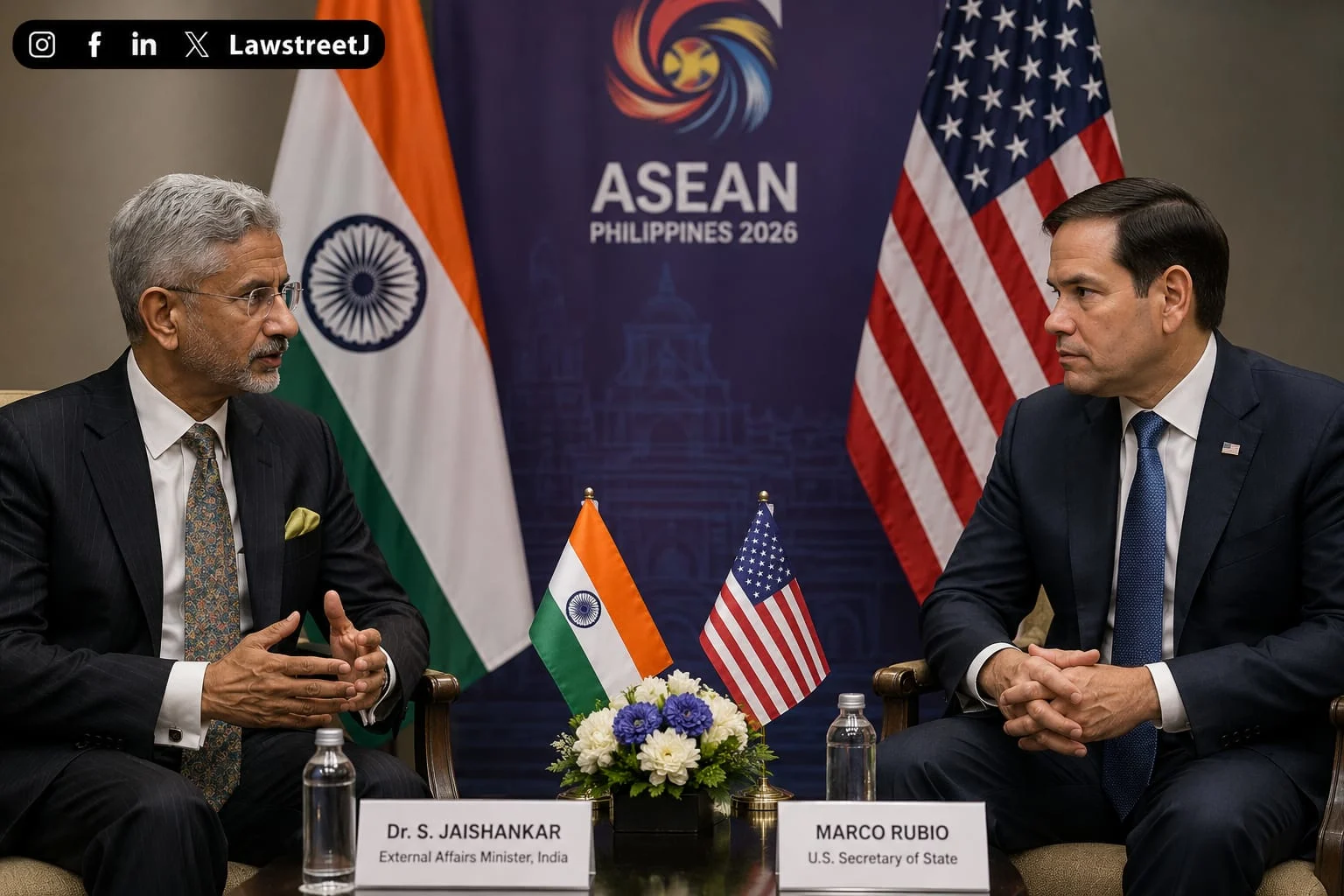

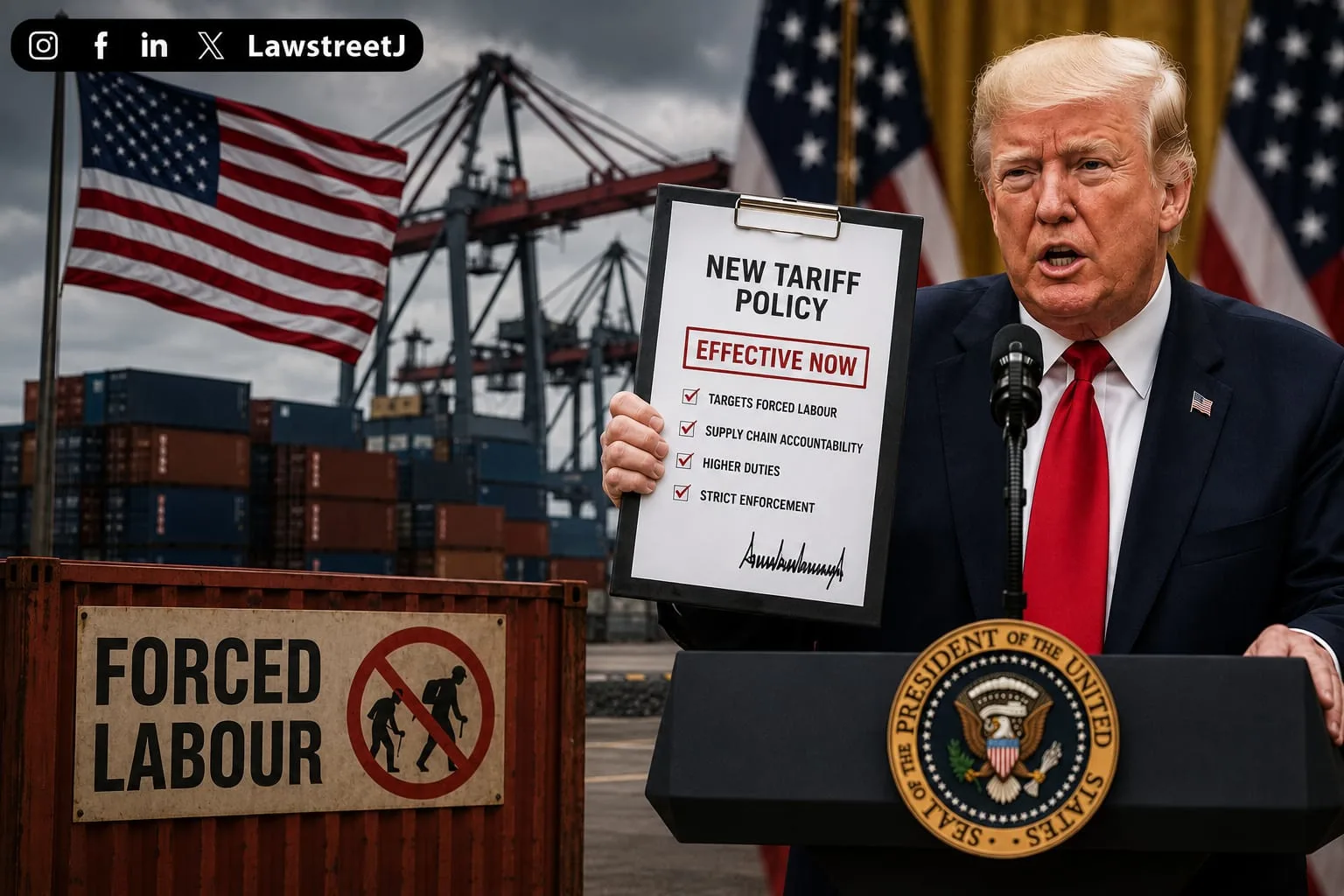
Manila / New Delhi: The juxtaposition is striking. On the same day that the United States imposed new Section 301 "forced labour" tariffs on Indian goods, replacing the expiring Section 122 surcharge with a permanent 10 percent levy covering most of India's export basket, External Affairs Minister S. Jaishankar and US Secretary of State Marco Rubio sat together in Manila two days earlier and described the two countries' interim bilateral trade deal as "almost complete."
The Manila meeting, held on the sidelines of the ASEAN Foreign Ministers' Meeting on July 22, 2026, was one of the most substantive bilateral diplomatic engagements between the two countries since the G7 summit in Evian in June. Its outcomes, a shared statement that the trade deal is nearly finalised, an agreement to accelerate defence agreements, and a reinforcement of the Quad's Indo-Pacific framework, reflect the dual reality of the India-US relationship in mid-2026, simultaneously one of the most consequential and most contested bilateral partnerships in the world.
What the US State Department Said: The Official Readout
According to a US State Department readout attributed to Spokesperson Tommy Pigott, the two leaders met in Manila on the sidelines of the Association of Southeast Asian Nations Foreign Ministers' Meeting. "Secretary Rubio met today with Indian External Affairs Minister Jaishankar in Manila. The Secretary and Minister Jaishankar discussed recent developments in the Middle East and the Indo-Pacific," the readout said.
The discussions also centred on defence cooperation, with both sides reviewing progress on agreements stemming from the Trump-Modi commitments. "The Secretary and Minister Jaishankar discussed finalising key defense agreements in fulfillment of commitments made between President Trump and Prime Minister Modi last year."
"The Secretary and Minister Jaishankar agreed on the importance of finalizing the interim trade deal, which is almost complete," the State Department said.
Three subjects. One formal meeting. But the word "almost" in that final clause is doing considerable diplomatic work at a moment when the tariff clock has just run out and a new permanent tariff regime has begun.
The Trade Deal: What "Almost Complete" Actually Means
The India-US interim trade deal has been in negotiation since the bilateral relationship entered its current intensive phase following Prime Minister Modi's visit to Washington in 2025. The deal is intended to serve as a holding framework, a set of agreed tariff commitments and trade facilitation measures that provide stability and predictability to bilateral commerce while a more comprehensive trade agreement is negotiated over a longer timeline.
Commerce Secretary Rajesh Agarwal on July 13 said India sees no hurdles in concluding a trade agreement with the United States and both sides are ready to sign once the timing is right. "We don't see any challenge on India-US trade deal negotiations," the Commerce Secretary said, adding that discussions are moving forward within an agreed structure. "Indian team visited the US in May. US team visited in June. Talks are going on in a proper framework," he said.
The word "almost" from the State Department, combined with Agarwal's "ready to sign once the timing is right," suggests the deal is in its final drafting and approval phase rather than still in substantive negotiation. The remaining gaps are likely to be in the fine print, specific tariff line commitments, implementation timelines, and the legal architecture governing any dispute resolution mechanism.
The meeting covered a broad spectrum of issues, including trade, tariffs, defence, energy security, critical minerals, artificial intelligence, and developments in the Indo-Pacific region. The inclusion of critical minerals and artificial intelligence alongside the more expected trade and defence subjects reflects how comprehensively the bilateral relationship has expanded beyond its original military-strategic foundation.
A particularly significant signal came from a separate readout about a planned presidential visit. Rubio also indicated that Trump is likely to visit India early next year, a potential presidential visit to India that would represent the highest-level American engagement with India since Modi's Washington visit. If confirmed, a Trump visit to India would almost certainly be the occasion for the formal signing of the interim trade deal and potentially the announcement of additional bilateral commitments.
The Defence Agreements: What the Trump-Modi Commitments Were
The two sides discussed finalising key defence agreements in fulfilment of commitments made between President Trump and Prime Minister Modi last year. The phrase "key defence agreements" covers a specific set of frameworks whose contents have been publicly discussed to varying degrees.
The commitments made by Trump and Modi during their bilateral interactions in 2025, including at the G7 in Evian, encompassed several categories: continued F-16 and F-18 fighter aircraft discussions, co-production arrangements for GE F414 jet engines under the ongoing India-US Defence Technology and Trade Initiative, the Patriot air defence missile co-production arrangement that Trump personally authorised India to pursue, and potential cooperation on unmanned aerial systems and space-based surveillance platforms.
India's Ministry of External Affairs described Jaishankar's Manila visit as reflecting India's continued engagement with ASEAN under the Act East Policy and its commitment to strengthening the ASEAN-India Comprehensive Strategic Partnership. The Act East Policy framing is significant, it places the Manila meetings within India's broader strategic architecture for engagement with Southeast Asia, rather than treating them solely as a function of the bilateral with the United States.
Jaishankar Also Met Lavrov: The Balancing Act Continues
One of the most diplomatically significant aspects of Jaishankar's Manila schedule was a separate bilateral meeting with Russian Foreign Minister Sergei Lavrov on the sidelines of the same ASEAN meetings.
Jaishankar characterised his meeting with Lavrov as an "in-depth" one where the two reviewed bilateral relations. "Reiterated our strong concern regarding the safety of Indian seafarers in the region. Discussed various aspects of our partnership, including trade and investment, energy and connectivity, science and technology, and mobility. Also exchanged views on the Ukraine conflict and the Gulf situation."

The reference to "Indian seafarers in the region" is a diplomatic flag connected to the broader Hormuz crisis, with Iranian strikes on tankers in the Gulf having killed an Indian national in mid-July, the safety of Indian maritime workers in conflict-adjacent waterways has become a specific Indian foreign policy concern that Jaishankar is now raising in every bilateral context.
Meeting both Rubio and Lavrov on the same day in Manila is a classic exercise of India's strategic autonomy doctrine maintaining substantive engagement with Washington on defence, trade, and Indo-Pacific security while preserving the bilateral with Moscow on energy, trade, and conflict diplomacy. That both meetings occurred at the same ASEAN venue, on the same day, within hours of each other, encapsulates the tightrope that India's foreign policy is walking in the current global environment.
The Quad Foreign Ministers' Meeting: Indo-Pacific Reaffirmation
The bilateral meeting came as the Quad foreign ministers also met in Manila and issued a joint statement reaffirming support for ASEAN and a rules-based Indo-Pacific. The foreign ministers of the United States, India, Australia and Japan described themselves as "deeply invested in the region's success" and pledged closer cooperation with ASEAN member states.
"As ASEAN Comprehensive Strategic Partners, we, the Secretary of State of the United States and the Foreign Ministers of Australia, India, and Japan, met today in Manila to reaffirm our commitment to strengthening a free and open Indo-Pacific and our unwavering support for ASEAN unity and centrality," the Quad joint statement read.
The Quad Foreign Ministers' Meeting in Manila follows the Quad Leaders' Summit commitments made at the G7 in Evian and builds on the New Delhi Quad meeting held earlier this year. The specific language "ASEAN unity and centrality" is a deliberate signal to Southeast Asian nations that the Quad does not seek to displace ASEAN as the primary multilateral architecture of the region, but to complement and support it. This framing has been consistently emphasised in Quad communications, particularly after early criticism from some ASEAN members that the grouping could fragment regional solidarity.
Jaishankar also co-chaired the ASEAN Post-Ministerial Conference with India alongside Philippines Secretary Tess Lazaro on July 22, separately from the Quad meeting, underscoring the depth of India's engagement with the region in what was a densely scheduled two-day diplomatic visit to Manila.
The Tariff Timing: Why July 24 Makes the Manila Outcomes More Urgent
The Manila meeting on July 22 was two days before today, July 24, the date on which America's Section 122 tariff expired and the new Section 301 forced labour tariffs of 10 percent on Indian goods took effect. This is not a coincidence.
The diplomatic calculus behind the "almost complete" trade deal language and the urgency of finalising defence agreements is directly connected to the tariff transition that both sides knew was coming. An interim trade deal, if concluded, would almost certainly include provisions that affect the tariff rate applicable to Indian goods, either reducing the 10 percent baseline, creating sector-specific exemptions, or establishing a pathway toward lower tariffs as negotiations toward a comprehensive deal continue.
The forced labour tariff framework's explicitly conditional structure, under which countries that demonstrate stronger enforcement of forced labour import bans receive lower rates, means that India's 10 percent rate rather than 12.5 percent is already a product of diplomatic engagement. An interim trade deal finalised in the coming weeks could build further on that conditionality, providing Indian exporters with a more stable and potentially lower tariff environment than the current 10 percent Section 301 baseline.
For the millions of Indian exporters, students, diplomats, and citizens whose daily lives are affected by the India-US relationship, the word "almost" in the US State Department's July 22 readout is the most consequential word in weeks of bilateral diplomacy. What it becomes, whether it becomes "signed", depends on what happens between now and the moment that the deal's remaining gaps are bridged.



.jpeg)