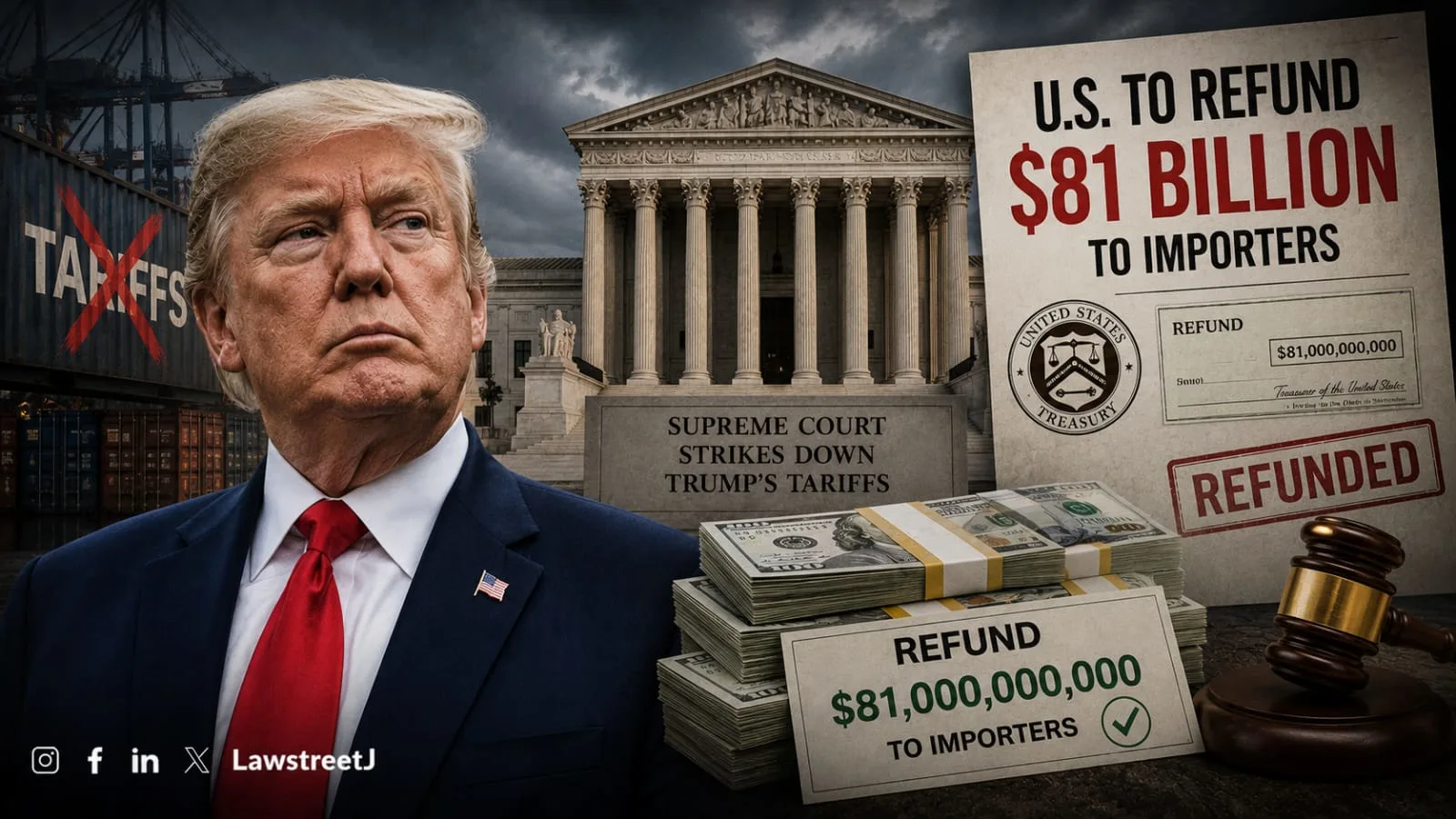
Washington D.C. | The United States government has refunded $81 billion to importers so far this fiscal year, a sum that dwarfs the $5 billion refunded in the same period last year, after the Supreme Court of the United States ruled in February that President Donald Trump's sweeping tariff regime, imposed under the International Emergency Economic Powers Act, was unconstitutional. The budget figures, released on Monday July 14 by the Treasury Department, laid bare the fiscal consequences of one of the most significant defeats an American president has suffered in the Supreme Court on economic policy in the modern era.
A Treasury Department official confirmed that the surge in refunds is almost entirely driven by the February 20 ruling, with most payments made in May and June as the government processed a backlog of importer claims. The refunds have pushed the US budget deficit higher at precisely the moment when the administration is managing record debt interest costs, the federal deficit for the current fiscal year has reached $1.367 trillion, with interest payments on the national debt having crossed the $1 trillion threshold for the first time in American history.
And yet, even as it processes refunds for the tariffs the Court struck down, the White House is actively preparing to impose new ones.
The Supreme Court Ruling That Changed Everything: Learning Resources v. Trump
The legal architecture underlying the $81 billion refund is the Supreme Court's ruling of February 20, 2026, in the consolidated cases of Learning Resources, Inc. v. Trump and Trump v. V.O.S. Selections, Inc. In a 6-3 decision authored by Chief Justice John Roberts, the Court held that the International Emergency Economic Powers Act of 1977 does not authorise the President to impose tariffs.
The majority, Roberts joined by Justices Sotomayor, Kagan, Gorsuch, Barrett, and Jackson, found that IEEPA's grant of authority to "regulate" importation does not include the power to impose taxes or tariffs. The Chief Justice wrote that the power to impose tariffs is "very clearly a branch of the taxing power" vested exclusively in Congress under Article I, Section 8 of the Constitution. In a portion of the opinion joined by Justices Gorsuch and Barrett, Roberts also invoked the Major Questions Doctrine, the principle that Congress must explicitly authorise policies of major nationwide consequence, finding that Trump's tariff regime had outsized economic effects that required specific congressional authorisation rather than executive inference from ambiguous statutory language.
The three dissenters, Justices Thomas, Kavanaugh, and Alito, would have upheld the tariffs. In his dissent, Kavanaugh noted presciently that the federal government "may be required to refund billions of dollars to importers who paid the IEEPA tariffs", a warning that has since materialised into the $81 billion figure released on Monday.
The ruling invalidated two categories of IEEPA tariffs. The first were the "Trafficking Tariffs", imposed on imports from Canada, Mexico, and China, nominally to address declared emergencies concerning illicit fentanyl and immigration. The second were the "Reciprocal Tariffs", the "Liberation Day" tariffs announced on April 2, 2025, which imposed a baseline levy of at least 10 percent on imports from almost all US trading partners and higher country-specific rates on dozens of others, based on a declared emergency concerning the US trade deficit. India was subject to a 26 percent reciprocal tariff on Liberation Day, with an additional 25 percent Russia oil tariff added in August 2025, before the Supreme Court's ruling eliminated both.
The Tax Foundation estimated that IEEPA tariffs had raised more than $160 billion through February 20, 2026, and would have raised $1.4 trillion from 2026 through 2035. The Penn-Wharton Budget Model estimated total IEEPA collections at approximately $175 to $179 billion. A Federal Reserve Bank of New York study found that approximately 90 percent of the roughly $175 billion generated by IEEPA tariffs was paid by domestic American consumers and businesses rather than by foreign exporters, directly contradicting the administration's claim that other countries were paying the tariffs.
The Refund Process: $81 Billion Out, More to Come
The Court did not order refunds directly, it remanded the refund question to the US Court of International Trade. However, the US government conceded in litigation that it would not oppose the CIT's reliquidation authority and would refund unlawfully collected IEEPA duties following a final and unappealable decision. The CIT is expected to establish a case management process covering nearly 2,000 cases already filed for refund purposes, as well as additional claims that followed the ruling.
CBP guidance issued on February 22 halted collection of all IEEPA tariffs for goods entered on or after February 24, 2026. Trump simultaneously issued an executive order on February 20, "Ending Certain Tariff Actions," directing that IEEPA tariffs "shall no longer be in effect and, as soon as practicable, shall no longer be collected."
The $81 billion refunded so far this fiscal year, against $5 billion in the same period last year, represents a dramatic surge in customs duty refunds that is substantially all attributable to the IEEPA ruling. Total estimated IEEPA collections of $160 to $179 billion mean that roughly half of the illegally collected tariffs have been refunded so far, with additional claims expected to push the total refund figure significantly higher in the coming months.
The fiscal impact is direct and documented. The federal budget deficit, which had "gotten a little smaller last year thanks to the tariff income," has now begun rising again as the refunds flow out and the replacement tariff revenues at lower rates are insufficient to compensate for the loss.
What Replaced IEEPA: Section 122, Section 232, and Section 301
Within hours of the Supreme Court's ruling on February 20, Trump announced he would impose new tariffs under statutory authorities the Court had not invalidated. The replacement tariff architecture has three pillars.
Section 122 of the Trade Act of 1974 was invoked on February 20 to impose a 10 percent "temporary import surcharge" on products of all countries, effective February 24. This is the critical deadline that now looms: Section 122 tariffs are time-limited to 150 days. The 150-day Section 122 tariff regime expires on July 24, 2026, nine days from the date of this article. What replaces it is the central question in US trade policy at this moment.
Section 232 tariffs, imposed on national security grounds on steel, aluminium, and other specific product categories, were not invalidated by the IEEPA ruling and remain in place. Section 301 tariffs, originally imposed on Chinese goods during Trump's first term and maintained under Biden, also remain in effect.
Secretary of the Treasury Scott Bessent stated that combining Section 122, Section 232, and Section 301 tariffs "will result in virtually unchanged tariff revenue in 2026", a signal of the administration's determination to reconstruct, through alternative statutory authorities, the same tariff architecture the Supreme Court struck down.
What Comes Next: New Tariffs Targeting India, UK, Japan, Taiwan, China, and the EU
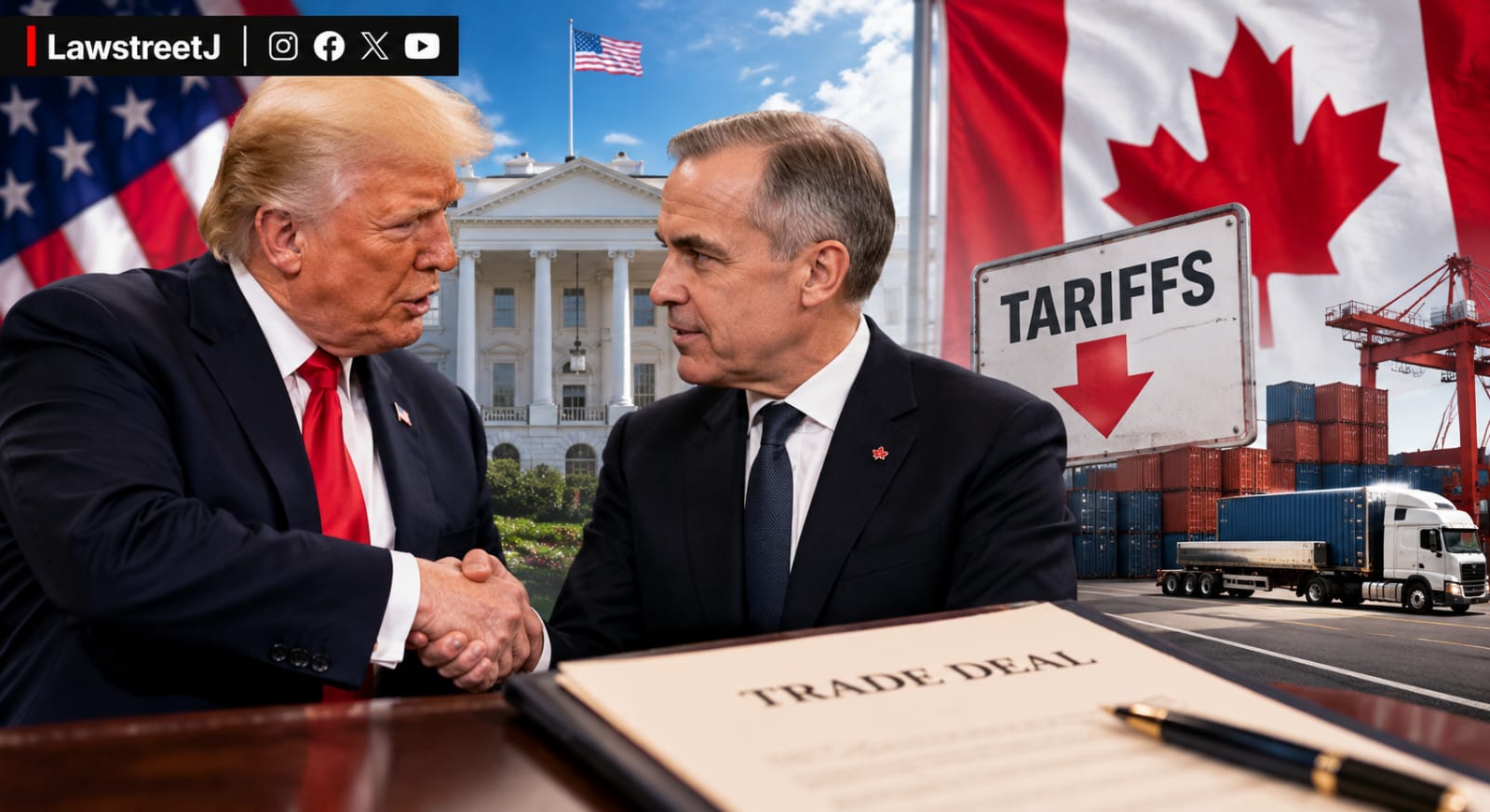
The White House's preparation of fresh tariffs, is directly connected to the July 24 expiry of the Section 122 surcharge. With that regime about to lapse, the administration is preparing to impose new levies under Section 301 and Section 232 investigations that Trump launched on the same day the Supreme Court ruled.
Specifically, as documented in reporting by multiple outlets, the new round of tariffs under preparation would affect the United Kingdom, India, Japan, Taiwan, and China. Estimated new tariff levels under these preparations range between 10 and 12.5 percent as a baseline, with country-specific higher rates possible depending on investigation outcomes.
Additionally, the United States has threatened a 25 percent tariff on imports from Brazil, a separate action tied to Brazilian trade practices. Most dramatically, Trump threatened 100 percent tariffs on European countries that impose digital services taxes on large American technology companies, a direct escalation of the longstanding dispute between Washington and European capitals over the right to tax the revenues of companies like Google, Apple, and Meta. The EU, France, and the UK all have or have proposed digital services taxes, making all three potential targets of the 100 percent threat.
For India specifically, the stakes are substantial. The February 2026 bilateral framework that reduced US tariffs on Indian goods from 50 percent to 18 percent was premised on IEEPA authority, the same authority the Supreme Court struck down. The replacement of IEEPA tariffs with Section 301 investigation outcomes may result in new tariffs on Indian goods that are structured differently but potentially arrive at similar effective rates.
The Broader Constitutional and Economic Significance
The February 20 ruling is the most consequential check on presidential economic power in decades. Before Trump, no president had ever used IEEPA, a statute designed as a Cold War instrument for freezing assets and severing market access in foreign policy emergencies, to impose broad-based tariffs. The Supreme Court's finding that "regulate importation" does not include "tax importation" restores to Congress its constitutional tariff-setting authority and bars future presidents from using IEEPA to impose tariffs without explicit legislative authorisation.
The ruling, however, did not end Trump's tariff agenda, it redirected it. Section 301 and Section 232 investigations can produce tariffs that, while more procedurally constrained, are not time-limited in the way Section 122 is, and are not capped at 15 percent the way Section 122 is. The administration has been explicit that its goal is to maintain "virtually unchanged tariff revenue" through alternative means and the $81 billion in refunds now flowing out of the Treasury is simply the price of the transition from an unconstitutional authority to a constitutional one.
For American importers, the refund process is ongoing but uncertain. For American consumers, the Section 232 tariffs that remain estimated to cost US households an average of $400 each in 2026, have not been touched. And for US trading partners including India, China, the UK, and the EU, the expiry of the Section 122 deadline on July 24 and the new tariffs being prepared to replace it mean that the era of tariff uncertainty that began on Liberation Day has not ended with the Supreme Court ruling, it has simply entered a new statutory phase.



.jpeg)