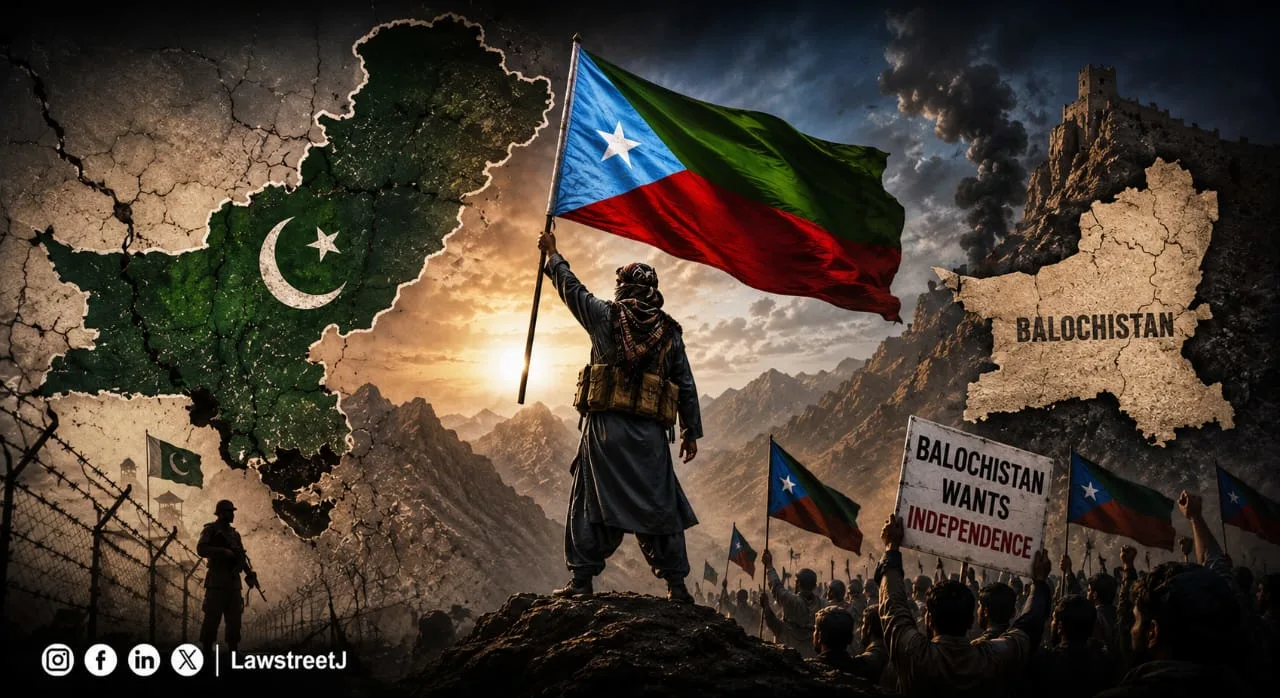

Quetta / New Delhi: A declaration of independence posted on social media by Baloch activist Mir Yar Baloch on July 13, 2026 has gone massively viral, triggering a wave of international coverage and intense debate about the status of one of South Asia's longest-running and least-reported separatist conflicts. The statement claims that the "Republic of Balochistan" has declared independence from Pakistan, controls 85 percent of Balochistan's territory, has adopted a national flag, anthem, and currency, and commands a force of 500,000 personnel. It urges the United Nations and the international community to formally recognise the new state.
The declaration is politically significant and humanly urgent, the grievances it describes are real, documented, and serious. But it is not a state. No country has recognised it. Pakistan continues to govern Balochistan. The 85 percent territorial control claim is entirely unverified by any independent source. And international law sets a specific, demanding standard for what turns a declaration into a state. This article covers all of it.
What Was Actually Said: Mir Yar Baloch's July 13 Statement

The declaration, published on X by @miryar_baloch and subsequently reported by Akashvani, Deccan Chronicle, The Researchers, Asian Mirror, and Sunday Guardian Live, among others, states the following in its key claims:
That Balochistan has declared its independence and adopted its national anthem "Ma Chukain Balochani." That the province has introduced its own flag and a new currency called the "Balochi Falus." That the "Republic of Balochistan's Defence and Security Forces" have secured 85 percent of Balochistan's territory. That the self-proclaimed republic controls "gold and copper mines, more than 150 active gas fields, and over 1,200 operational coal mines." That a force of 500,000 personnel comprising the Balochistan military, navy, air force, and civil administration stands ready to "overthrow the occupying forces of Pakistan by the end of 2026." That the declaration calls on the international community to open embassies and recognise the Republic of Balochistan.
Every one of these claims requires scrutiny. None of them has been independently verified by any news organisation, satellite imagery analysis, or international body. Pakistan's Dawn newspaper's ongoing coverage from early July 2026 shows the provincial government and Pakistani military still running counterinsurgency operations, holding cabinet meetings, and responding to militant attacks, the standard markers of an administration that has not lost control of its territory. Islamabad has not issued a statement acknowledging any loss of sovereignty over Balochistan. The United Nations has not received a membership application from a Republic of Balochistan.
This is not the first such declaration by Mir Yar Baloch. He made a similar proclamation in May 2025, following India's military standoff with Pakistan after Operation Sindoor, tying it to that context and calling for Indian and British recognition. He wrote to Buckingham Palace seeking British recognition. Neither India, Britain, nor any other country responded formally. The July 13 declaration follows the same pattern, escalated in its specific claims and in its viral reach, but structurally identical to prior declarations that produced no change in international recognition.
Who Is Mir Yar Baloch and What Is His Actual Position?
Mir Yar Baloch is a prominent Baloch activist and writer who has been one of the most vocal international advocates for Baloch independence. He is not the head of any internationally recognised government, a military commander, or a representative of a coalition of Baloch armed groups that has effectively controlled territory. He is a diaspora-based political activist whose social media presence has made him one of the most visible faces of the Baloch independence cause internationally.
The Baloch Liberation Army, the most active armed group operating inside Balochistan, has not publicly endorsed Mir Yar Baloch's July 13 declaration as a formal state proclamation. The BLA has claimed responsibility for multiple coordinated attacks on Pakistani security forces and CPEC infrastructure in recent months, including attacks on police posts that Pakistan says resulted in the killing of dozens of militants in subsequent counterinsurgency operations. Those attacks reflect genuine military activity, but military activity by an insurgent organisation is not the same as the control of 85 percent of a territory by a functioning state administration.
The Historical Roots: Why the Grievances Are Real
The Baloch independence movement has deep historical roots that predate Pakistan's creation. When British India was partitioned in August 1947, the princely state of Kalat, the dominant Baloch political entity, briefly declared its independence before acceding to Pakistan. The Khan of Kalat signed the Instrument of Accession on March 27, 1948, formally integrating Balochistan into Pakistan. Baloch nationalists have disputed this accession from the beginning, describing it as coerced and illegitimate. That disagreement over a document signed 78 years ago is the root of the conflict.
Since 1948, Balochistan has experienced five major insurgencies against Pakistan's central government, with the current insurgency, the fifth, regarded by analysts as the most intense and widespread. The BLA and allied groups have carried out coordinated attacks on Chinese workers at CPEC projects, on Pakistani security forces and police posts, and on provincial infrastructure. Baloch nationalist groups document sustained allegations of enforced disappearances, the abduction of Baloch activists and civilians by security forces without any formal arrest or charge, that have been verified by Human Rights Watch, Amnesty International, and the UN Human Rights Committee as a systematic pattern of abuse. The Human Rights Commission of Pakistan has itself documented cases of missing persons in Balochistan numbering in the thousands.
The province is Pakistan's largest by area but least densely populated, and despite holding enormous reserves of natural gas, coal, copper, and gold, as well as hosting the strategically significant Gwadar Port, the flagship of the China-Pakistan Economic Corridor, it remains Pakistan's poorest province by per capita income. This gap between resource wealth and human development is a central argument deployed by Baloch nationalists: that Balochistan's people have been systematically excluded from the benefits of their own land.
What International Law Actually Requires for Statehood
The declaration's most significant claim is that it meets the international legal standard for statehood. Does it?
The primary legal benchmark is the 1933 Montevideo Convention on the Rights and Duties of States, which codified the criteria for statehood as follows: a permanent population, a defined territory, an effective government, and the capacity to enter into relations with other states. The Montevideo criteria are the closest thing international law has to a formal definition of what makes a state.
On each of the four criteria, the Republic of Balochistan's declaration falls short of what the standard requires. The permanent population criterion is met, Balochistan has approximately 15 million people. The defined territory criterion is disputed, Balochistan's borders as a Pakistani province are well-defined, but whether the Republic of Balochistan actually controls those borders, or any portion of them, is precisely what the unverified 85 percent claim is about. The effective government criterion is the most demanding and most clearly unmet, a functioning government requires an administrative apparatus, judicial system, revenue collection mechanism, and the physical ability to enforce its authority across the claimed territory. No independent evidence supports the existence of any of these. The capacity to enter into relations with other states, diplomatic relations, treaty-making, international legal personality requires other states to be willing to engage. None are.
The International Court of Justice issued an advisory opinion in 2010 on Kosovo's declaration of independence, ruling that a declaration of independence does not itself violate international law. That ruling is sometimes cited in support of Balochistan's claim. But the ICJ's Kosovo opinion was specifically about whether the declaration was a violation of law, not about whether it created a state. Kosovo's subsequent recognition by over 100 countries, its admission to multiple international organisations, and its functioning governmental apparatus distinguish it categorically from Balochistan's situation.
Under the "declaratory theory" of statehood, one school of thought in international law, a state exists once it meets the Montevideo criteria, regardless of who recognises it. Under the "constitutive theory", the competing school, recognition by other states is what gives a state legal personality. In practice, international institutions and the United Nations operate on a framework that combines elements of both, but the political reality is unambiguous: without recognition from other states and without the practical ability to exercise governmental authority, a declaration of independence is a political act, not a legal transformation.
Pakistan's Response and the Ongoing Counterinsurgency
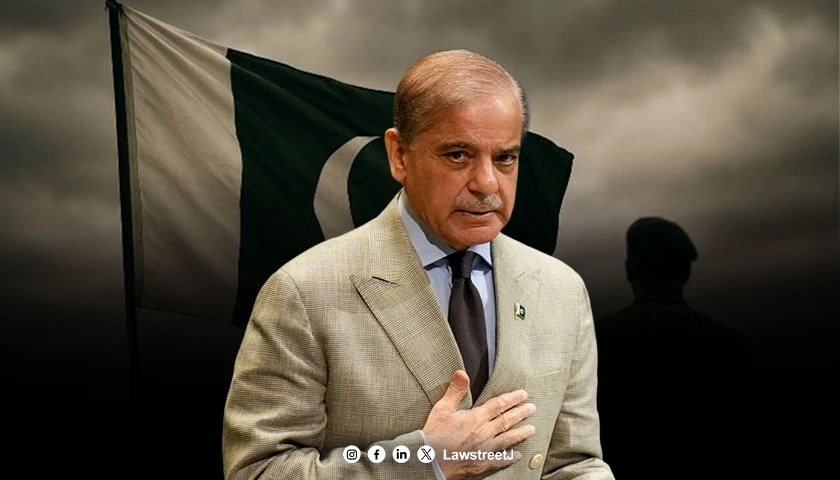
Pakistan has not issued a specific formal response to the July 13 declaration, a choice that itself signals how Islamabad views the claim. Responding formally would grant it more credibility than the Pakistani government intends to concede. Pakistan's parliament and military leadership continue to treat Balochistan as a province in active counterinsurgency, not a lost territory. Prime Minister Shehbaz Sharif has in recent weeks vowed to continue action against BLA and allied insurgent groups, following coordinated attacks on police posts across the province.
Pakistani authorities have launched large-scale counter-insurgency operations against the BLA after attacks that Islamabad characterises as terrorism. Dozens of militants have been killed in ongoing military operations, according to Pakistani government statements. The military presence in Balochistan, in the form of the Frontier Corps, the Pakistan Army, and paramilitary forces, remains active and substantial. None of this is consistent with an administration that has lost control of 85 percent of a territory.
What Comes Next: Escalation, International Attention, and the Limits of a Declaration
The July 13 declaration's viral reach has done something significant even if it has not created a state, it has placed Balochistan's cause before a global audience that was previously largely unaware of it. The social media momentum generated by the "Republic of Balochistan" trending in multiple countries will force a broader conversation about the province's documented human rights situation, the enforced disappearances, the resource extraction, and the gap between Pakistan's constitutional obligations to the province and the lived experience of its people.
Whether that attention translates into any concrete international action, formal inquiries at the UN Human Rights Council, expanded documentation by international organisations, or diplomatic pressure on Pakistan from third-party governments, remains to be seen. It has not, and is very unlikely in the near term to, translate into state recognition. Balochistan's independence claim fails the basic tests of statehood on every criterion that matters: no verified territorial control, no functioning government recognised by any other entity, and no international relations to speak of.
What exists in Balochistan is one of the world's most serious and least internationally understood human rights crises, a decades-long armed insurgency, and a political movement that has, through this declaration, achieved a moment of maximum global visibility. A letter and a flag do not make a country. But the people behind the letter, and their documented experiences, deserve the scrutiny that this declaration has briefly turned toward their land.


.jpeg)