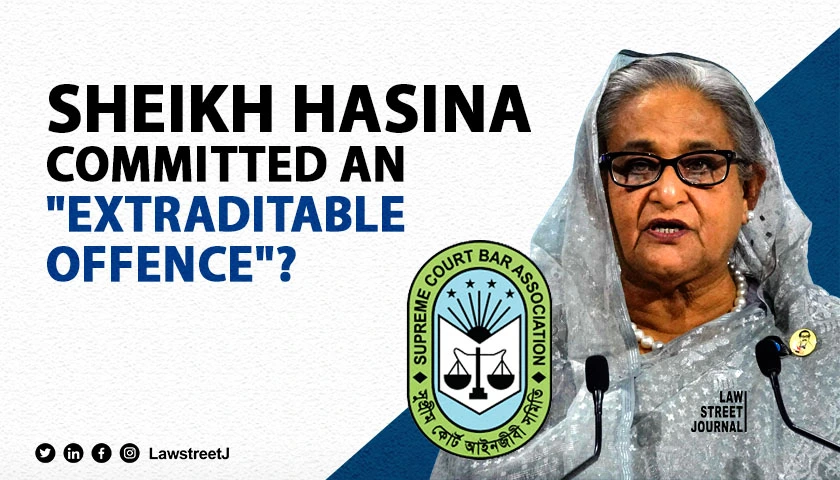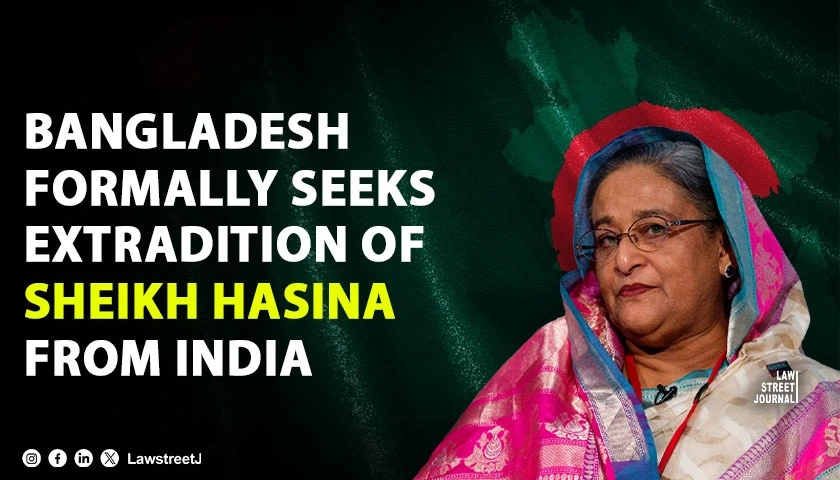
Bangladesh's newly elected government formally raised the demand for the extradition of former Prime Minister Sheikh Hasina with Indian authorities on April 8, 2026, marking the first time the Bangladesh Nationalist Party (BNP)-led administration has officially placed the matter on the table in a high-level bilateral meeting. The request was reiterated by Bangladesh Foreign Minister Dr. Khalilur Rahman during his two-day visit to New Delhi, where he held talks with Indian External Affairs Minister Dr. S. Jaishankar, National Security Adviser Ajit Doval, and Petroleum and Natural Gas Minister Hardeep Singh Puri. Alongside the extradition request, India agreed to ease visa restrictions for Bangladeshi nationals, particularly for medical and business purposes.
Both sides agreed that the extradition issue should not hinder the broader trajectory of bilateral ties. The meeting represents a significant diplomatic milestone, it is the first high-level engagement between India and the BNP government, which came to power following the February 12, 2026 general elections.
The Conviction That Triggered the Demand
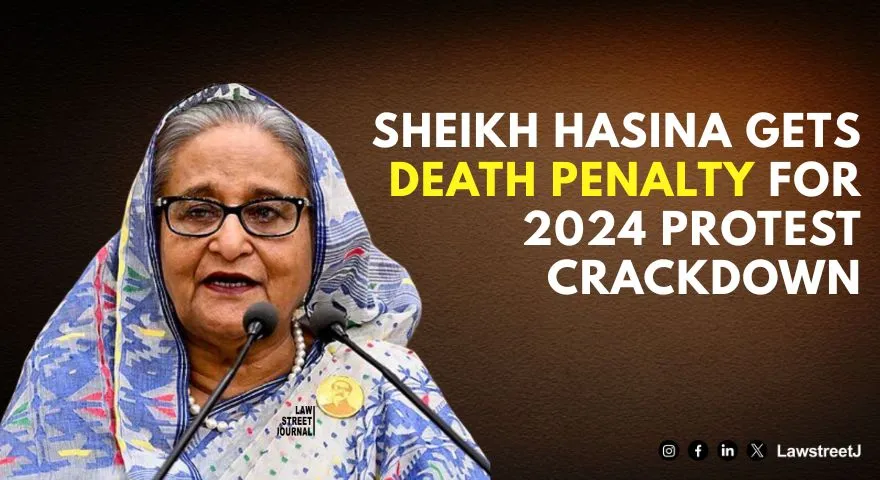
The formal extradition request is grounded in a verdict handed down nearly five months before this diplomatic meeting. On November 17, 2025, Bangladesh's International Crimes Tribunal (ICT) found Sheikh Hasina guilty on three of five charges of crimes against humanity, specifically, her incitement orders, her directive to use drones, helicopters, and lethal weapons, and her failure to take preventive or punitive measures against the killings of protesters.
Both Hasina and former Home Minister Asaduzzaman Khan Kamal were sentenced to capital punishment, and all assets declared in their affidavits for the 12th National Parliament Election were ordered confiscated. A third accused, former Inspector General of Police Chowdhury Abdullah Al-Mamun, avoided the death penalty after turning state witness and received a five-year prison sentence. The tribunal examined 14 volumes of documents spanning approximately 10,000 pages including official reports, medical and postmortem records, ballistics data, flight logs, and media footage along with 93 documentary exhibits, 32 physical exhibits, and testimony from more than 80 witnesses.
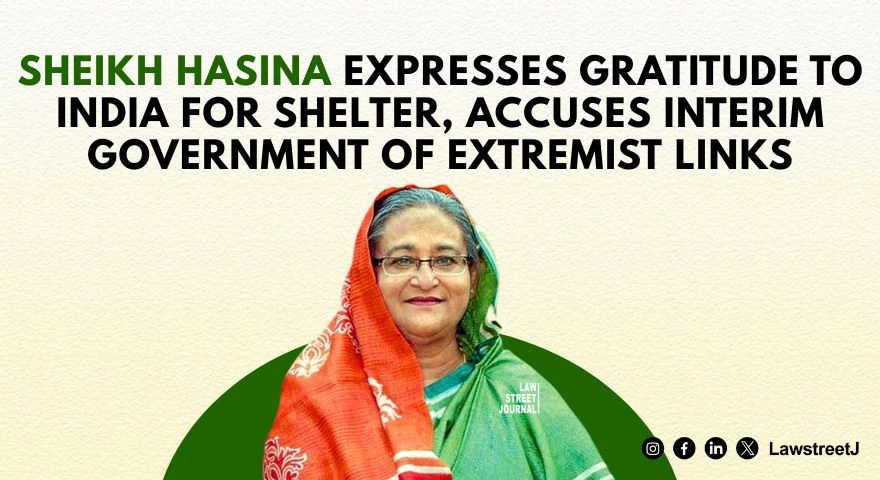
A UN-led investigation found that approximately 1,400 people, including children, may have been killed while thousands were injured during the July and August 2024 protests. Sheikh Hasina, 78, has been residing in India since August 5, 2024, when she fled Bangladesh amid the student-led uprising that brought down her 15-year government. The ICT also convicted Hasina separately on a contempt charge. On July 2, 2025, the tribunal sentenced her to six months in prison in absentia after an audio recording emerged in which she was allegedly heard stating that she had a "licence to kill."
Hasina has denied all charges, calling the verdict biased and politically motivated and saying she was given no fair chance to defend herself in court, nor even allowed lawyers of her own choosing to represent her in absentia.
The Legal Architecture: What the Treaty Says
At the heart of this dispute is the bilateral Extradition Treaty signed between India and Bangladesh on January 28, 2013, which entered into force on October 23, 2013, and was subsequently amended in 2016. The treaty covers persons accused or convicted of extraditable offences, those punishable with at least one year of imprisonment under the laws of both countries, following the principle of dual criminality. It includes crimes such as terrorism, organised crime, murder, kidnapping, drug trafficking, and economic offences.
However, the treaty contains several clauses that grant the requested state in this case, India, considerable legal latitude to decline the request. Articles 6 and 8 of the treaty are the key provisions. Article 6 allows India to refuse extradition if the offence is deemed to be of a political nature. However, the treaty specifies that certain serious offences including culpable homicide, terrorism-related acts, and the use of lethal weapons cannot be classified as political offences. Article 8 permits refusal if the accusation was not made with good faith in the interests of justice, or if the offence is a military one not recognised under general criminal law.
Among the most consequential safeguards is the good-faith assessment. India may argue that proceedings are politically driven, rushed, or lack guarantees of a fair trial. There is also the question of trial standards. Under the principle of non-refoulement, the prohibition on sending a person back to face execution or ill treatment, India may argue a legal duty not to return Hasina, particularly following a trial conducted in absentia that international observers, including Human Rights Watch, found failed to meet international fair trial standards. Human Rights Watch noted that both Hasina and Kamal were prosecuted in absentia, without representation by counsel of their choosing, raising serious human rights concerns.
Under Section 21 of Bangladesh's International Crimes (Tribunals) Act, Hasina's right to appeal is restricted unless she turns herself in voluntarily and files an appeal within 30 days of conviction, a deadline that has already passed.
India's Position and the Diplomatic Calculus
India has thus far acknowledged the extradition request without making any formal commitment. India's Ministry of External Affairs acknowledged receipt of Dhaka's extradition request, stating it is being examined as part of ongoing judicial and internal legal processes. At the April 8 meeting, Dr. Jaishankar reiterated India's desire to engage constructively with the new government and further strengthen bilateral ties, with both sides agreeing to explore proposals for deepening the partnership through relevant bilateral mechanisms.
On the matter of visa relaxation, the Indian side indicated that visa services for Bangladeshis, particularly for medical and business purposes, would be eased in the coming weeks.
The two governments also reached a separate agreement on another sensitive matter. Bangladesh thanked India for apprehending the suspected killers of student leader Shaheed Osman Hadi, with both sides agreeing that the arrested individuals would be returned to Bangladesh in accordance with the procedures laid out in the extradition treaty. The BNP government, led by Prime Minister Tarique Rahman, has framed its foreign policy around a "Bangladesh First" doctrine. Dr. Rahman stated that the BNP government would pursue its foreign policy based on mutual trust, respect, and reciprocal benefit. The UN High Commissioner for Human Rights, while describing the ICT verdict as an important moment for victims, stressed that accountability proceedings for international crimes must unquestionably meet international standards of due process and fair trial, particularly where trials in absentia and capital punishment are involved.
As of April 9, 2026, India has not issued a formal response to the extradition request, and no date has been set for follow-on legal or diplomatic proceedings. The matter remains one of the most consequential bilateral questions in South Asia, sitting at the intersection of treaty law, international criminal accountability, and regional strategic interests.