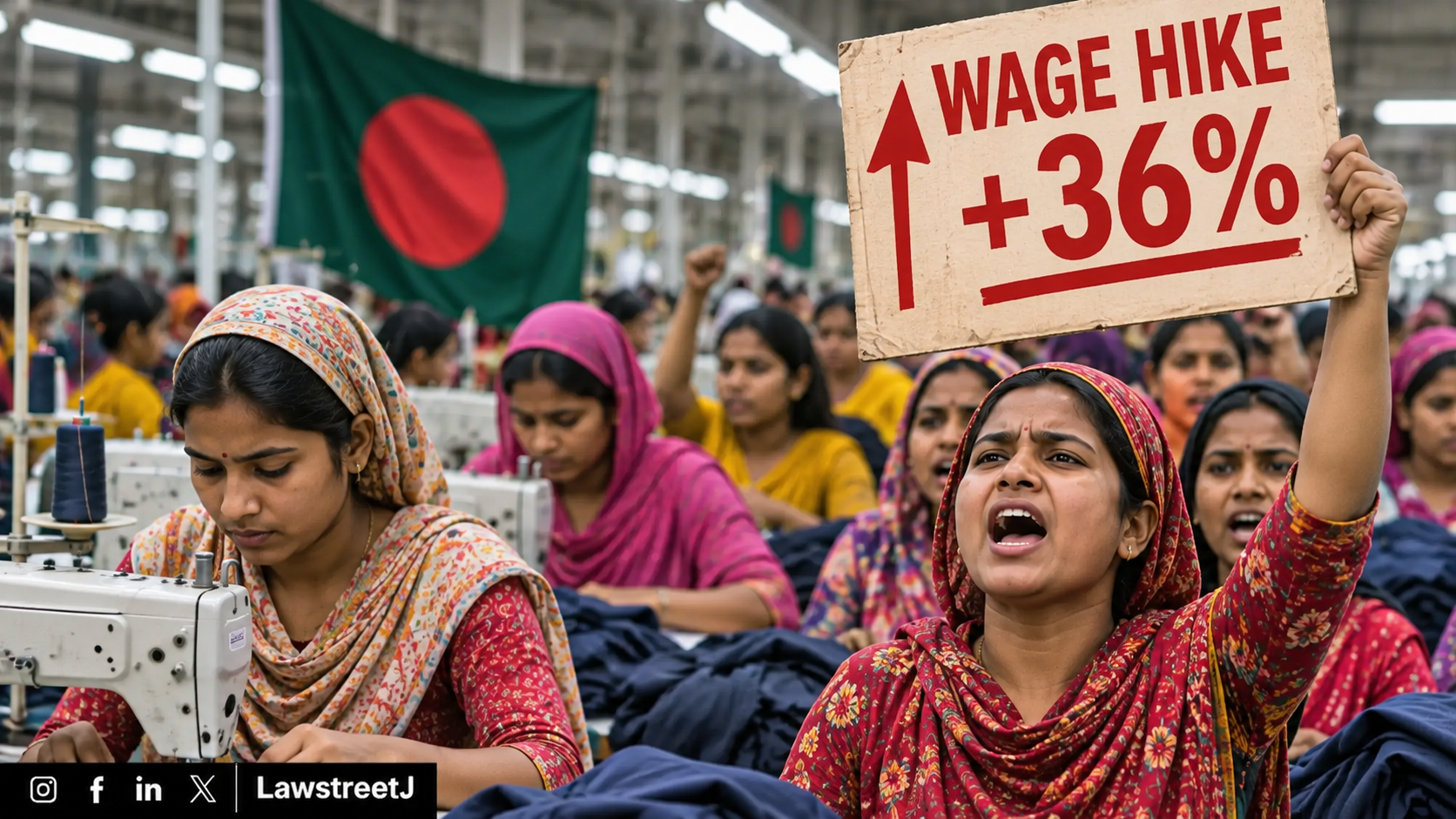
DHAKA: After weeks of protests, factory shutdowns and clashes with security forces, garment workers in Bangladesh have secured a 36% increase in their minimum monthly wages. A government-appointed wage board approved raising the minimum pay from Tk 12,500 to Tk 17,000, bringing a partial resolution to a dispute that had disrupted one of the country's most important industries.
The decision was reached early Wednesday following nearly 12 hours of negotiations between representatives of garment workers and factory owners. However, the settlement falls short of the workers' revised demand of Tk 18,000 per month, leaving questions about whether the increase will be enough to end the unrest.
The new wage structure is scheduled to take effect from December 1, with workers expected to receive revised salaries in January.
For thousands of workers who have been demanding better pay amid rising living costs, the announcement represents an important concession. But for many, the struggle for wages that can adequately cover everyday expenses is far from over.
How the Wage Agreement Was Reached
The six-member Minimum Wage Board reached its decision after several rounds of discussions involving worker representatives, factory owners and government-appointed members.
Unable to reach a unanimous agreement, the board ultimately decided the minimum wage through a vote. Four members supported the Tk 17,000 proposal, while two worker representatives backed the higher demand of Tk 18,000.
The decision increases the minimum monthly wage by Tk 4,500 compared with the existing Tk 12,500 structure introduced in November 2023.
Under the revised four-grade wage structure, monthly minimum salaries will be:
- Grade 4: Tk 17,000
- Grade 3: Tk 19,200
- Grade 2: Tk 20,000
- Grade 1: Tk 21,500
Workers' representative Babul Akhter acknowledged that the outcome did not fully meet workers' expectations but described it as a partial achievement. He also pointed out that workers had previously received wage revisions at five-year intervals, whereas the latest revision came after three years.
The agreement followed prolonged negotiations that continued into the early hours of November 25.
Why Were Garment Workers Protesting?
The protests began in October, with workers demanding a substantial increase in minimum wages to keep pace with the rising cost of living. Food prices, house rents, transportation and healthcare expenses have placed increasing pressure on workers, many of whom struggle to meet basic household needs on their existing salaries.
Initially, workers demanded a minimum monthly wage of Tk 32,000, compared with the existing Tk 12,500. During negotiations, the demand was revised several times before workers settled on Tk 18,000 as their final proposal.
Factory owners, meanwhile, initially offered Tk 15,000 and later increased their proposal to Tk 17,000. The disagreement over the amount led to repeated demonstrations, factory closures and road blockades across major industrial areas, particularly Gazipur and Ashulia.
Workers argued that the existing wage structure no longer reflected the economic realities they faced. Factory owners countered that a substantially higher wage increase would put additional pressure on manufacturers already dealing with rising production costs and challenging international market conditions.
Protests Disrupt Production and Global Supply Chains
The labour unrest has had consequences far beyond Bangladesh's industrial areas. During the protests, workers blocked major roads, forcing factories to suspend operations and disrupting the movement of goods. Clashes with police also intensified tensions, with security personnel using tear gas and sound grenades to disperse demonstrators in Gazipur.
On November 24, fresh demonstrations and road blockades were reported as workers continued demanding better pay ahead of the wage board's decision. According to an industry survey, 317 factories suffered approximately $428 million in production losses over 18 days of disruption. International buyers also shifted orders worth around $254 million to other countries.
The disruption came at a particularly important time for the industry, with manufacturers preparing for orders linked to the Christmas shopping season.
Although the wage agreement has been reached, the extent to which it will restore normal production remains uncertain.
Why Bangladesh's Garment Industry Matters
Bangladesh is the world's second-largest garment exporter after China, making the industry central to its economy. The ready-made garment sector employs more than four million people, with women accounting for a substantial proportion of its workforce.
It also generates more than 80% of the country's export earnings, supplying international retailers and fashion brands across major global markets. The sector has played a significant role in Bangladesh's economic development by creating employment opportunities, supporting industrial growth and generating foreign exchange.
However, its dependence on relatively low-cost labour has also made wages, working conditions and labour rights recurring issues. For international buyers, prolonged disruptions in Bangladesh can create delays and force companies to shift orders to competing manufacturing destinations.
The latest wage dispute has therefore highlighted the connection between workers' living standards and the stability of global clothing supply chains.