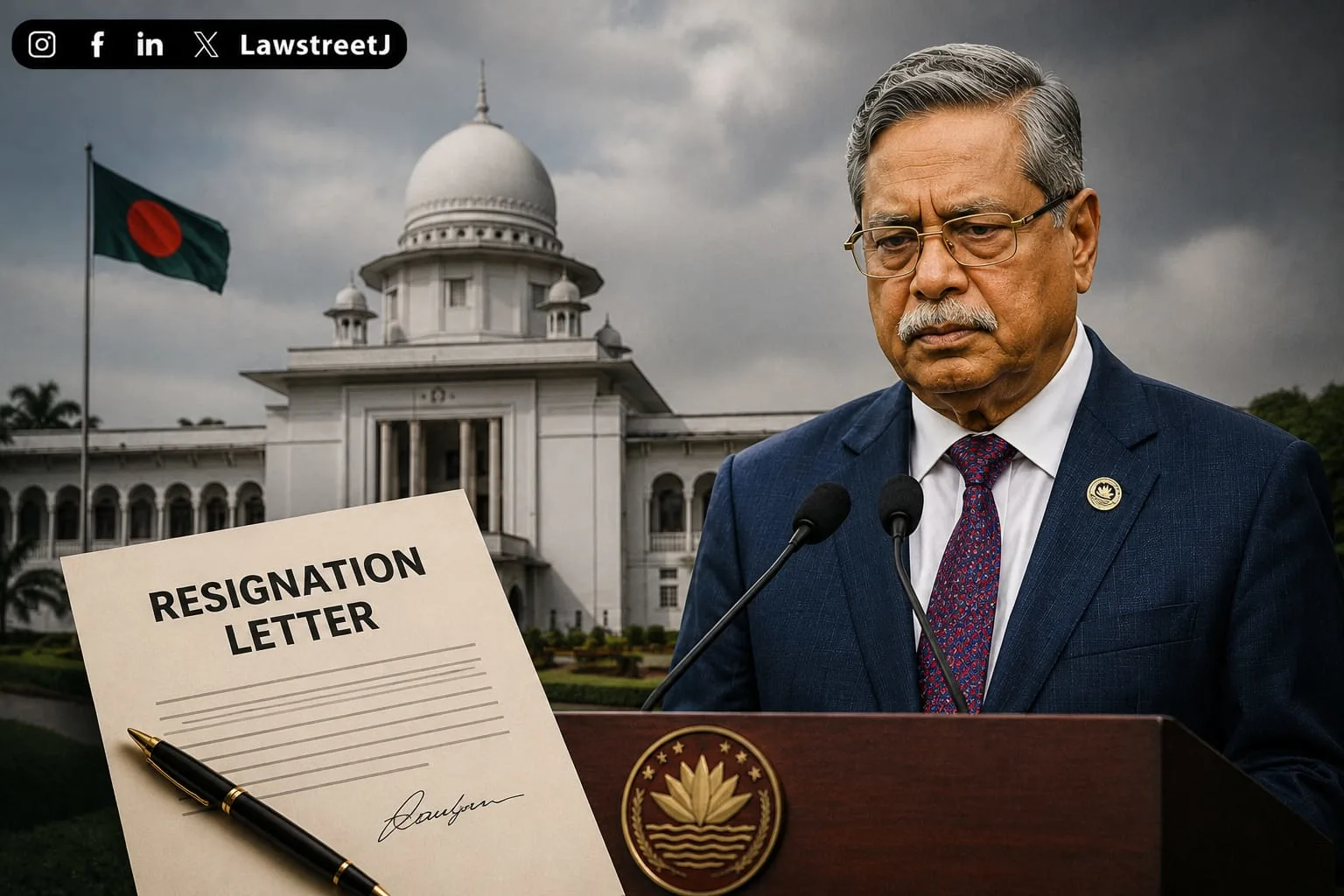
Dhaka: Bangladesh President Mohammed Shahabuddin resigned two years ahead of the end of his full five-year term on Friday, July 24, citing health reasons. President Mohammed Shahabuddin confirmed he was stepping down in a call with AFP. "Yes, I have resigned," Shahabuddin said when asked about widespread speculation that he planned to step down before completing his full term ending in 2028.
In a statement released by his press secretary, Shahabuddin said: "Recent medical examinations have diagnosed me with a condition known as Autonomic Neuropathy. Due to this condition, I occasionally experience momentary loss of consciousness." In his resignation letter to the speaker of parliament, seen by AFP, Shahabuddin cited his deteriorating health. "Due to worsening physical and mental incapacity… it is no longer possible for me to properly discharge the responsibilities of an important constitutional office such as the presidency," it said.
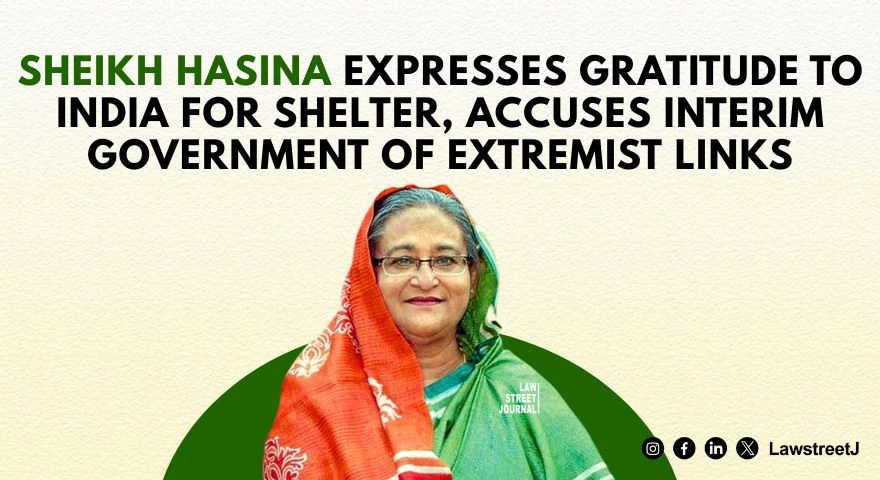
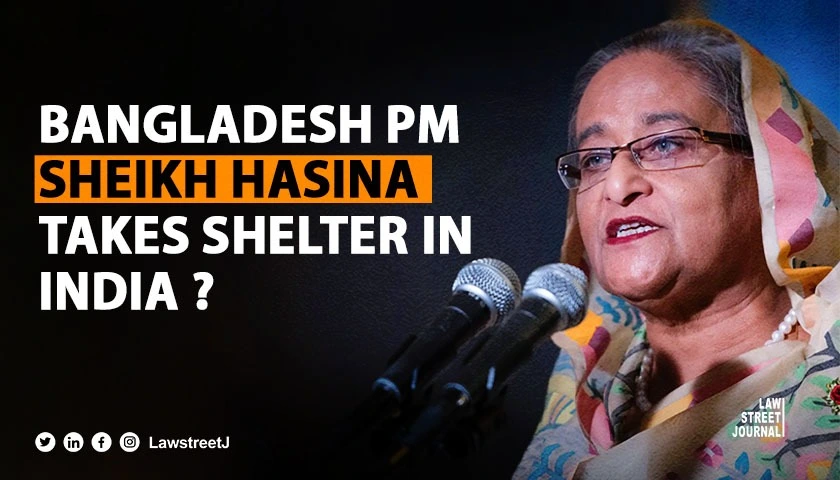
Shahabuddin's resignation leaves Sheikh Hasina without any remaining allies in a senior state office. It arrives on a day already dense with political significance days after Hasina announced she would return to Bangladesh in December from her exile in India, and months after a Bangladeshi court sentenced her to death in absentia.
Who Is Shahabuddin and Why the Resignation Matters
The speaker of the Jatiya Sangsad, the national parliament, will perform the duties of the president until a new one is elected. A new president must be elected within the next 90 days, according to the constitution. Speaker Hafiz Uddin Ahmad confirmed Shahabuddin's resignation at a press briefing on Friday evening.
The 76-year-old, widely known as "Chuppu," was elected by parliament in 2023 with support from Hasina's Awami League. He had been appointed president during the height of Hasina's political dominance, when the Awami League controlled parliament and the presidency was a position the ruling party could fill with a loyalist. Shahabuddin was a longtime ally of ousted Prime Minister Sheikh Hasina.
Shahabuddin, who remained in office after Hasina fled to India in August 2024, oversaw a transition that first saw a caretaker administration led by Nobel laureate Mohammad Yunus. Elections held this past February propelled Bangladesh National Party's Tarique Rahman to power. Hasina's Awami League, which is now banned, was not allowed to participate.
In the Tarique Rahman government's Bangladesh, Shahabuddin's continued presence as president had become an increasing anomaly, a Hasina-era appointee presiding over a state that had, through elections and institutional transformation, moved significantly away from the Awami League's political order. The National Citizen Party had demanded the impeachment and arrest of President Shahabuddin as recently as February 2026, accusing him of failing to act during the July 2024 uprising violence.
The Hasina Return Context: Timing That Is Not a Coincidence
The resignation comes days after Hasina said she was returning home from exile to surrender following a court conviction.
The sequencing is politically charged. Hasina announced in late July that she planned to return to Bangladesh in December to face the courts, a decision that, if she follows through on it, would bring her back to a country where she has been sentenced to death in absentia, where her party is banned, and where the political and judicial landscape has been entirely reconstituted under an administration that came to power specifically in the aftermath of the movement that ousted her.
With Shahabuddin now gone, Hasina returns to a Bangladesh where she has no ally in any constitutional office at the national level. The president who oversaw the transitional period after her flight, who had been appointed with her party's support, who might conceivably have exercised any remaining presidential discretion in ways that complicated her prosecution is no longer in office.
Whether that timing is coincidental or whether the resignation was accelerated by political considerations that go beyond the stated health rationale is a question Dhaka's political analysts are actively debating. The health grounds cited, Autonomic Neuropathy causing loss of consciousness are medically verifiable and serious. But the timing, arriving in the specific week of Hasina's return announcement, has made the health explanation politically harder to read as simply a health explanation.
What the Constitution Requires: 90 Days, Speaker as Acting President
The speaker of the Jatiya Sangsad will perform the duties of the president until a new one is elected. A new president must be elected within the next 90 days, according to the constitution.
Speaker Hafiz Uddin Ahmad, who confirmed the resignation at Friday's press briefing now becomes acting president, a role the Constitution assigns to the Speaker when the presidency is vacant. Ahmad is a Bangladesh Nationalist Party-aligned figure, reflecting the parliamentary majority that Tarique Rahman's government commands.
The 90-day window means that Bangladesh must elect a new president by approximately late October 2026. Under Bangladesh's constitutional framework, the president is elected by members of the Jatiya Sangsad, the national parliament through a simple majority vote. With BNP holding a working parliamentary majority following the February elections, the new president will almost certainly be a BNP-aligned figure, completing the transformation of Bangladesh's constitutional architecture from the Hasina-era political order to one reflecting the current parliamentary balance.
Bangladesh Since August 2024: The Full Transition
The resignation of President Shahabuddin is the final chapter in a two-year institutional transformation that began on August 5, 2024, when Sheikh Hasina fled Bangladesh by military helicopter to India as student-led protests, which had begun over quota reform, escalated into a mass uprising that brought down her fifteen-year government.
In the weeks that followed, a caretaker government was formed under Nobel Peace Prize laureate Muhammad Yunus, who served as Chief Adviser. Elections were held in February 2026, which the Awami League, now banned, could not contest. Tarique Rahman, Hasina's principal political rival and the son of former Prime Minister Khaleda Zia, led the BNP to victory and was sworn in as Prime Minister on February 17, 2026, with Shahabuddin administering the oath, one of the final visible moments of continuity between the Hasina-era appointment and the new political order it was now formally inaugurating.
In November 2025, a Bangladeshi court sentenced Hasina to death in absentia for her role in a violent crackdown on protesters that led to her ouster.
Shahabuddin's resignation on July 24 means that not a single figure appointed to a major constitutional position during Hasina's tenure remains in the senior offices of the Bangladesh state. The transition that began in August 2024 is, constitutionally speaking, complete.
![CJI cites Bangladesh to highlight importance of liberty [Read Speech]](/secure/uploads/2024/08/lj_1548_CJI_Bangladesh.webp)