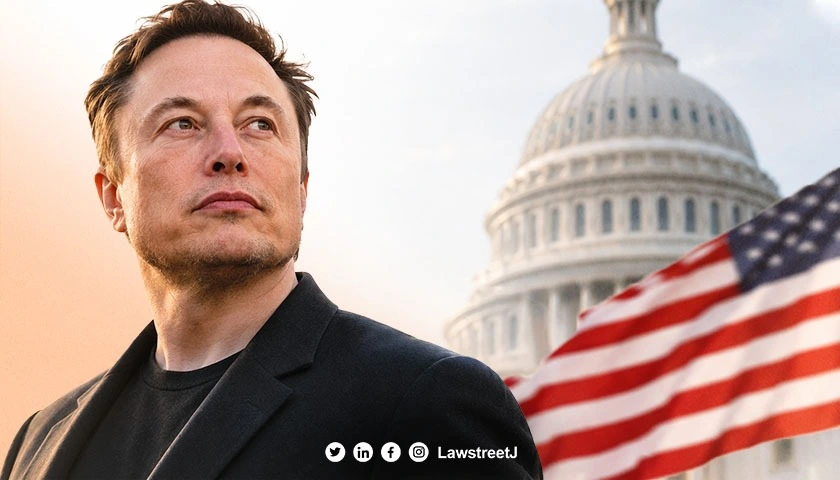
Washington — Elon Musk gave about $445.6 million to Republican causes in the 2026 midterm cycle, making him by far the largest donor, according to an analysis of federal filings through October 14. Democrats nonetheless won control of both the House and the Senate on Tuesday. The ranking is based on money reported to the Federal Election Commission (FEC), and the numbers vary slightly between outlets.
The Top of the List
According to the analysis cited in a Newsweek report, Musk's giving reached $445.6 million through October 14, the latest date for which contribution data was available. The figure includes money from United States of America Inc., a nonprofit group he controls. Other outlets put the figure at about $446 million. Of that, Musk gave at least $355 million to his super PAC and other Republican-aligned groups since the start of July, according to Washington Post reporting on FEC filings.
The same analysis lists former New York City mayor Mike Bloomberg, a Democrat, at $84.8 million, most of it given in the last two months of the campaign, Cameron and Tyler Winklevoss, the cryptocurrency entrepreneurs, who are Republican donors, at $53.2 million and LinkedIn co-founder Reid Hoffman, a Democrat, at $41.8 million.
Figures differ by source and methodology. A Washington Post list based on FEC filings put Bloomberg at $84.2 million, the Winklevoss brothers at $55.9 million and Hoffman and his wife, Michelle Yee, together at $41.2 million, while OpenSecrets put Bloomberg's giving at $83.4 million.
Rankings also vary the graphic circulating on social media lists the four donors as numbers one to four, but lists that include other major donors and groups place them differently. Washington Post and Visual Capitalist lists put Bloomberg ninth, the Winklevoss brothers 13th and Hoffman and Yee 22nd. OpenSecrets, which counts individuals, ranked Bloomberg fourth overall and the top donor to Democratic causes.
Other Major Donors
Beyond the four on the graphic, several donors and groups gave more than Bloomberg, according to lists compiled from FEC data. These include Elizabeth and Richard Uihlein, shipping-supplies executives, at about $150 million, One Nation, a Republican-aligned nonprofit, at about $133 million to $138 million depending on the tally, Jeff and Janine Yass at about $110 million, George Soros at about $102 million and the Democratic-aligned groups Majority Forward at about $102 million to $104 million and House Majority Forward at about $94 million to $97 million. Venture capitalists Ben Horowitz and Marc Andreessen gave about $92 million, Miriam Adelson about $68 million, and Coinbase about $55 million.
The 50 largest donors and donor groups had contributed about $2.77 billion as of October 26, with Republican-aligned contributors accounting for roughly 60 percent, according to a Visual Capitalist analysis of FEC filings. Musk's contributions represented about 16 percent of that top-50 total. The Washington Post described him as having "cemented his record as the largest individual political donor in modern American history." By comparison, Musk gave more than $291 million in the 2024 cycle, per one report.
How the Results Compare
Tuesday's results went against the party Musk backed. The Associated Press reported that Democrats retook the Senate, with projected flips in Iowa, Kansas, North Carolina, Ohio, South Carolina and Texas, and Democrats were also projected to win the House. In Texas, Democrat James Talarico defeated Republican Ken Paxton, the first Democrat elected to the Senate from the state since 1988.
Individual contributions directly to candidates are capped by federal law at a few thousand dollars per candidate per election, so the totals above flow overwhelmingly through other channels. Following the Supreme Court's 2010 decision in Citizens United v. FEC and a related appeals court ruling in SpeechNow.org v. FEC, individuals, corporations and unions may give unlimited amounts to super PACs, which may spend independently of candidates' campaigns but may not coordinate with them.
Super PACs and party committees disclose their donors in periodic FEC filings, which is the source of the rankings. Nonprofit groups organised under section 501(c)(4) of the tax code can spend on politics without disclosing their own donors, which is why money moved through such groups, including some of those named above, is tracked at the level of the organisation rather than the original donor. Foreign nationals are barred from contributing to US federal campaigns.