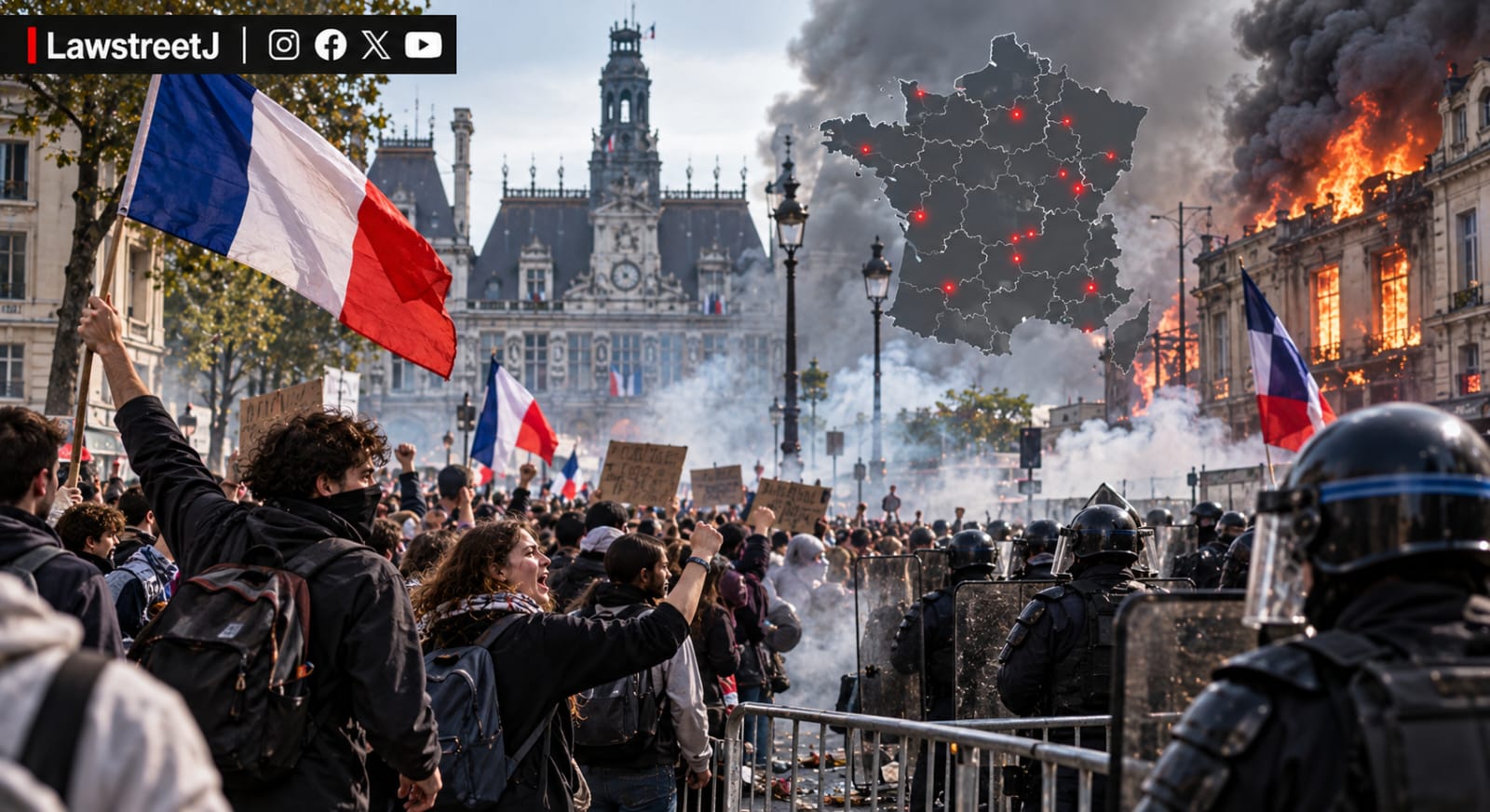
Paris — France is experiencing its most serious wave of civil unrest in years, after protests that began in mid-September over understaffed schools escalated into nationwide demonstrations over the cost of living, then into rioting, looting and deadly violence by mid-October. This report sets out the full, verified timeline of what happened, why, and how, followed by a separate, sourced look at the comparative national statistics being circulated alongside the unrest.
The unrest began in mid-September 2026 at a lycée in Créteil, in the southeastern Paris suburbs, where students and teachers mobilised over a shortage of teaching staff and classroom resources. The protest quickly spread through the wider Île-de-France region before expanding nationwide, as students in cities and towns across the country organised class strikes, blockades and demonstrations. According to the Union Syndicale des Lycéens, around 400 of France's roughly 3,700 high schools were blockaded at the height of the movement, with French Justice Minister Gérald Darmanin later stating that 735 schools had been affected "in one way or another."
Escalation Through Late September and Early October
Through late September and into October, the protests grew increasingly violent on their margins. Visuals from Paris, Lille, Strasbourg, Marseille, Rennes and Lyon showed masked protesters setting rubbish bins and barricades alight, throwing projectiles, and confronting riot police, who responded with tear gas, batons and other crowd-control measures.
By early October, French authorities reported more than 5,000 arrests connected to the unrest, with roughly 85 to 90 percent of those detained being minors, according to figures released by the Justice Ministry and Interior Ministry at different points. Education Minister Édouard Geffray said more than 170 students and 78 school staff had been injured, and 24 schools had been set on fire or ransacked, Euronews separately reported more than 600 police officers injured. In one incident in Tours, a young man was reported to have lost sight in one eye, with injuries suggesting he may have been struck by a police rubber bullet, in La Ciotat, a 59-year-old teacher was doused with petrol and beaten during a demonstration.
Prime Minister Sébastien Lecornu chaired an inter-ministerial crisis meeting on October 1, after which the government characterised the escalating unrest as "urban violence." The government separately alleged that far-left activists had infiltrated and intensified parts of the protest movement, an allegation disputed by opposition figures, including Socialist Party leader Olivier Faure.
Through mid-October, the protest movement's focus broadened beyond school conditions to include anger over the rising cost of living and falling purchasing power, drawing a wider cross-section of demonstrators, including workers and trade unions, alongside students.
October 17-18: The Deadliest Weekend
The crisis reached its most severe point on Saturday, October 17, 2026, when nationwide demonstrations against rising living costs and in solidarity with students drew what organisers said was more than half a million people, with police groups reporting hundreds of thousands at minimum.
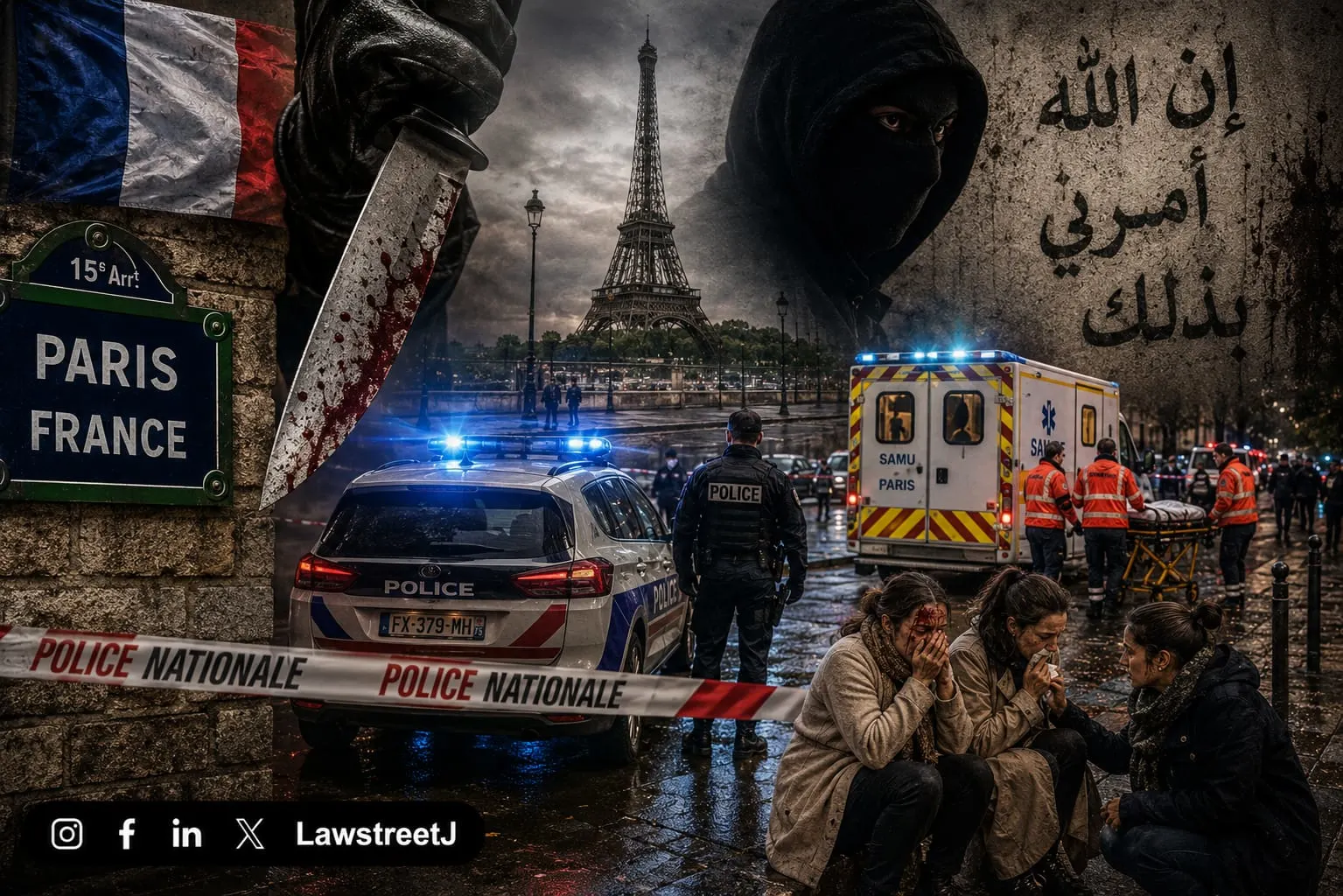
What began as largely peaceful marches degenerated into rioting and looting as night fell. Police said groups of hundreds formed unauthorised marches through central Paris, and that "by late afternoon, a new phase began with the arrival of large numbers of people whose sole aim was to steal and loot, taking advantage of the unrest." Masked groups set fires and attacked public buildings, including city halls, in several cities, a tourism office was set ablaze during a demonstration in Lyon. The violence left one police officer and one protester dead, and hundreds of businesses looted across the country. French police arrested more than 1,800 people in the immediate aftermath, with later reporting putting the figure at more than 2,400.
President Emmanuel Macron held an emergency meeting with senior government officials on Sunday, October 18, and later addressed the nation in a televised statement. He said he shared the public's "anger" and "shame" over the rioting and looting, and asked, "How can French people do this to France?" Macron stated: "Those who looted will have to pay back for the damage, and those who sought to bring down the Republic will be held accountable." He blamed "unrestrained violence" on "insurrectionist elements from radical far-left groups, joined by numerous criminals," describing the perpetrators elsewhere as "seditious elements from far-left factions, joined by numerous delinquents." Macron said he had instructed prefects to work with mayors to protect public buildings and businesses in the coming weeks, including by banning protests where necessary.
French authorities and police have explicitly stated they have not linked immigrants to the rioting, instead attributing the violence specifically to radical far-left groups and opportunistic looters who joined otherwise peaceful demonstrations.
Political Fallout Ahead of the 2027 Presidential Election
The unrest has become entangled in France's political jockeying ahead of next spring's presidential election. Far-right leader and presidential hopeful Marine Le Pen criticised Macron's government as "exhausted, disoriented and seemingly incapable of doing anything other than commenting on its own powerlessness," and separately accused "rioters" of having "again spoiled" the October 17 demonstrations.
Far-left La France Insoumise leader Jean-Luc Mélenchon, who joined Saturday's Paris march, said on social media that the majority of demonstrators had made their point peacefully, and stated that "those who share our fight have no business in looting or destruction." Mélenchon separately accused Prime Minister Lecornu of "playing with fire," alleging that "by banking on degradation, you have only succeeded in uniting all youths and workers' unions."