LONDON / WASHINGTON D.C. / NEW YORK / BRADFORD — The protests did not start with a campaign strategy or a political calculation. They started with phone calls that went unanswered, with families in Bradford and Luton and Washington trying to reach their relatives in Rawalakot and Muzaffarabad and hearing nothing back. They started with the kind of helplessness that no political party can manufacture, the helplessness of a parent who does not know whether their child is alive.
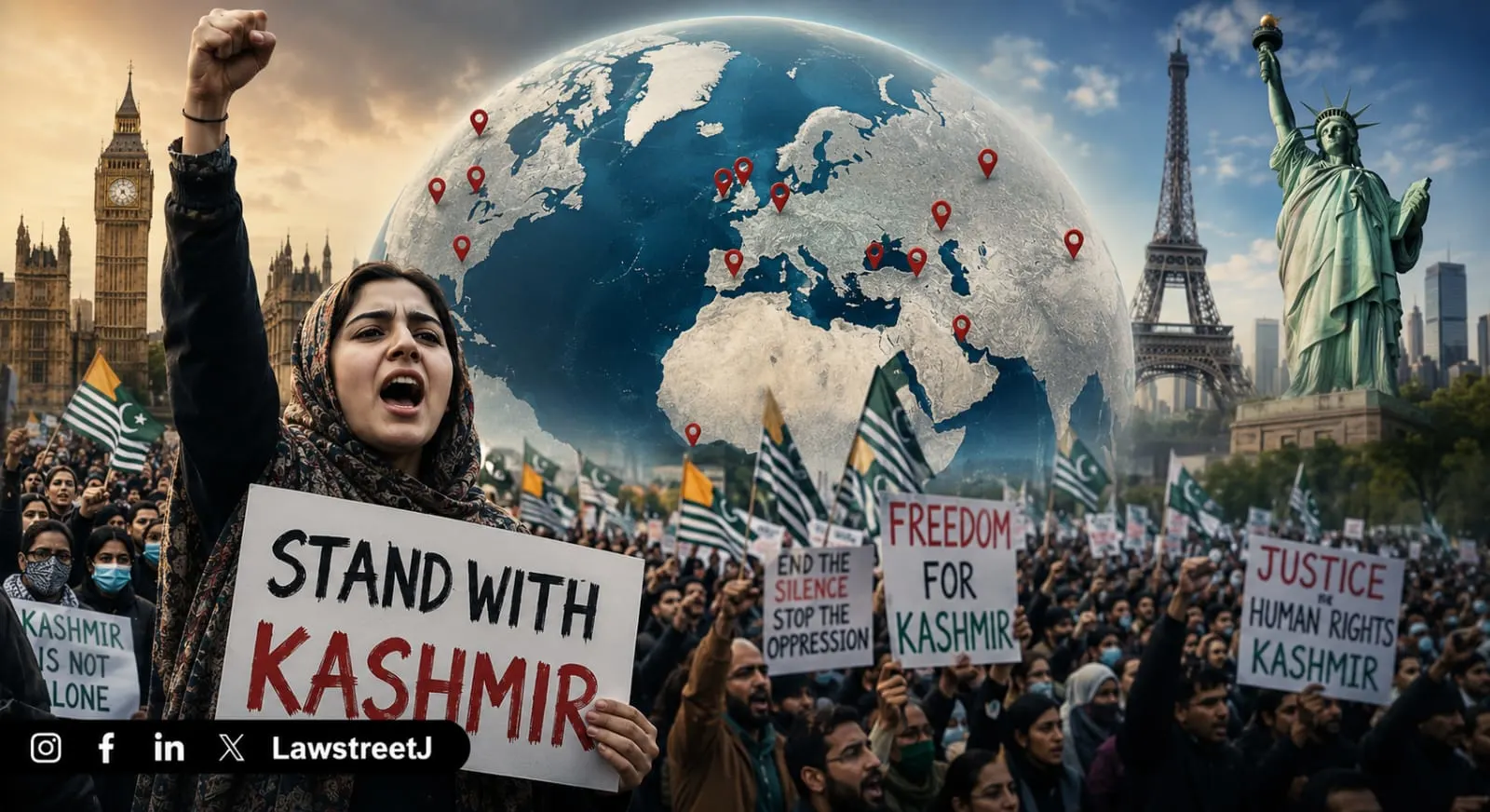
That helplessness has now filled the streets of London, Bradford, Washington D.C., New York, and Geneva. It has produced what observers are calling the largest wave of Kashmiri diaspora protests in more than two decades. And it has carried a message from the mountains of Pakistan-occupied Jammu and Kashmir to the doorsteps of Pakistani embassies, consulates, the United Nations headquarters, and the White House itself, a message that an official Pakistani media blackout has been unable to silence.
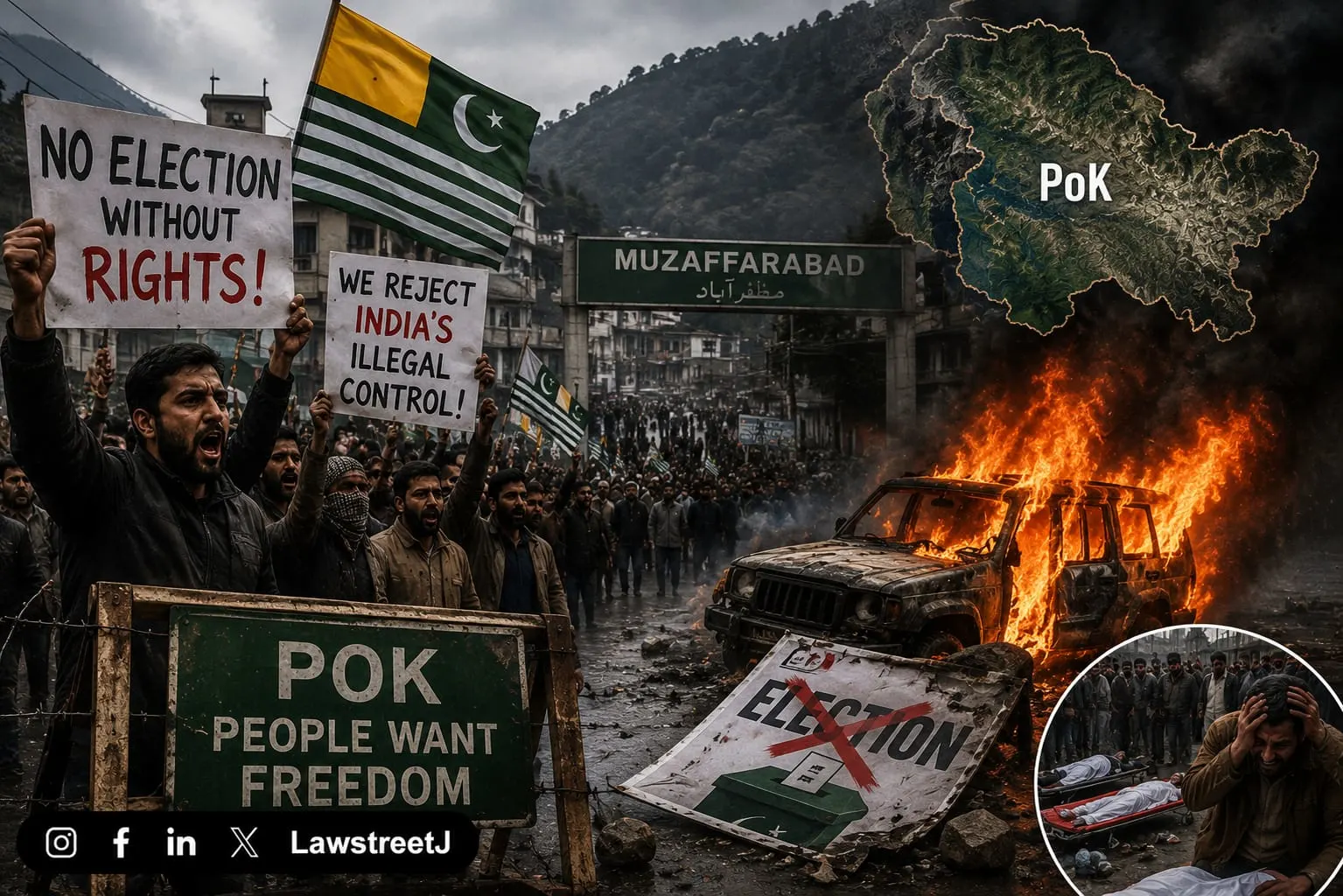
The death toll in PoJK, as independently documented by the Human Rights Council of Pakistan-occupied Jammu and Kashmir, stands at 80 confirmed civilian fatalities. India's Ministry of External Affairs has put the figure at 90. Hundreds more have been injured. Civil society leaders have been arrested. The internet has been cut. And for weeks, food and medicines were allegedly prevented from entering affected districts by security deployments that communities described as a siege.
The world is watching. And parts of it are beginning to act.
The Streets of London: When Businesses Shut and Families March
The image that defined the London protests was not a politician speaking from a stage. It was a symbolic coffin, carried through the streets of central London by women and families, headed toward the Pakistani High Commission.
More than 5,000 British Kashmiris participated in a march from Hyde Park to the Pakistan High Commission many having shut their businesses, many having taken leave from work, to protest what they described as a brutal military siege in Pakistan-administered Jammu and Kashmir. Led by hundreds of women and families carrying placards alongside the symbolic coffin, demonstrators denounced massacres in Rawalakot and Mirpur, alleged shootings of civilians carrying white flags, and a communication blackout that has left diaspora families in a state of sustained and unresolved anguish.
Protesters alleged that Pakistani forces were firing on civilians carrying white flags while transporting the injured. They said troops had looted homes, that women had been molested, that funerals had been blocked. They demanded urgent international intervention, and they said explicitly that statements from Amnesty International and the UN were not enough while "blood of Kashmiris is on the roads."
That march was preceded by an earlier protest outside the Pakistani Embassy in London, where Jammu Kashmir National Independence Alliance Chairman Mahmood Kashmiri addressed Pakistani officials directly. He said: "No food is being allowed in. Medicines are not being allowed in." He accused Pakistan of deploying thousands of security personnel to create an atmosphere of fear, and he made a promise that has since been kept, that the protests would continue globally until Pakistani forces were withdrawn and those responsible for civilian deaths were held accountable.
The marches in London are being described by organisers and observers as the largest Kashmiri demonstrations in the United Kingdom since the early 2000s. The scale of participation, nearly 10,000 people on a single day in central London alone, represents a shift from the scattered vigils and small demonstrations that have historically marked the diaspora's public response to events in Kashmir. This time, it was different in both size and tone.
Bradford: Women, Children, and the Elderly Take the Streets
The Bradford demonstration, held most recently, brought together members of the British Kashmiri diaspora in the city centre, carrying banners and placards calling for the protection of fundamental rights, civil liberties, and human dignity.
Organisers said the rally was aimed at drawing international attention to what they described as the deteriorating human rights situation in PoJK. Speakers at the demonstration alleged that security operations carried out over the past two months had resulted in civilian casualties, widespread fear and restrictions affecting local communities. They also claimed that women, children and elderly residents had been among those adversely affected.
The demonstrators appealed to the international community, human rights organisations and the British government to closely monitor developments in PoJK and support efforts to protect fundamental freedoms and promote a peaceful resolution to the issues raised by local communities.
Bradford is one of the cities in the United Kingdom with the deepest community ties to both Pakistan and PoJK, a city where the crisis is not an abstraction but a family matter. The presence of elderly men and women at the Bradford protest, alongside children and young adults, is a detail that speaks to how completely the events in PoJK have penetrated communities across the generations.
Protesters outside the Pakistani Consulate in Bradford carried placards that read: "Pakistan Stop Brutalities", "Pakistan Stop Killing Kashmiris in Rawalakot" and "We Stand with Awami Action Committee."
Washington D.C.: Taking the Case to the White House
Across the Atlantic, members of the Jammu and Kashmir community from Washington D.C., Maryland, Virginia, and other parts of the United States staged a protest outside the White House, urging the United States government and the international community to intervene and resolve the crisis in PoJK.
The demonstrators demanded international intervention to resolve the crisis of PoJK and liberate it from what they called the iron fist of Pakistan and restore its democratic and economic rights. The protestors shouted "Stop state terrorism in PoJK."
The choice of the White House as a protest location was deliberate. The United States government, engaged in the Iran conflict since February, has not formally spoken on PoJK with the same urgency that the situation has attracted at street level. The protest outside the White House was a direct appeal to the most powerful government in the world to pay attention.
The Kashmiri diaspora also demonstrated outside the United Nations headquarters in New York, carrying the demands of PoJK's civil society, crystallised around the Joint Awami Action Committee's 38-point charter to the institution that is formally mandated to respond to human rights crises and whose High Commissioner for Human Rights has been formally petitioned.
Geneva: Taking the Case to the UN Human Rights Council
The international escalation of the PoJK crisis reached one of its most significant institutional milestones when Tasleema Akhter, Chairperson of the Association of Terror Victims in Kashmir, delivered formal testimony at the 61st session of the United Nations Human Rights Council in Geneva.
During the 61st session of the United Nations Human Rights Council in Geneva, Akhter delivered a forceful rebuttal to Islamabad's narrative, asserting that PoJK remains an inseparable part of India. Her testimony highlighted a stark contrast in governance models, comparing the democratic processes available within Indian-administered Jammu and Kashmir to the alleged detention of journalists and dismantling of political frameworks across the border.
She has issued an urgent directive for a unified regional protest, demanding international intervention regarding civilian casualties, internet blackouts, and economic deprivation in PoJK. Petitions have been filed at the UN Human Rights Council session in Geneva.
The filing of formal petitions at the UN Human Rights Council elevates the PoJK crisis from the domain of street protests and diaspora demonstrations into the formal architecture of international human rights law, a shift with potentially significant long-term consequences for how the international community formally categorises and responds to what is happening in the region.
Protests Even Inside Pakistan
Perhaps the most significant development in the expanding geography of protest is that demonstrations have now reached inside Pakistan itself, a country whose government has attempted to suppress coverage of the PoJK unrest through media restrictions, digital blocks, and the banning of the Joint Awami Action Committee under anti-terrorism legislation.
Students staged a protest outside Rawalpindi Press Club, and large protest gatherings were also reported in Karachi, Islamabad and Rawalpindi, where demonstrators criticised the electoral process and demanded political reforms. Police detained several protesters and student leaders during the demonstrations.
Inside PoJK itself, protesters have maintained a sit-in at Dreak Eidgah for nearly 50 days. Demonstrators at D-Chowk staged a sit-in and announced plans for a long march towards Muzaffarabad.
The persistence of the sit-in at Dreak Eidgah, nearly 50 days without pause, is a statement of endurance that has no equivalent in recent protest history in the region. The people sitting there have not gone home. They have stayed, through curfews and communication blackouts and security operations, because they have nowhere else to take a demand that no one in authority is yet fully answering.
British Parliamentarians and the Question of Formal International Response
The protests have produced political movement beyond the streets. Several British parliamentarians have formally expressed concern over the situation in PoJK.
British Labour Party MP Liam Byrne said that reports of live fire being used against peaceful protesters in PoJK are "deeply alarming." His remarks represent a formal parliamentary record that the protests have been seeking since the first day they gathered outside the Pakistani Embassy in London.
The Joint Awami Action Committee, which remains banned in Pakistan under anti-terrorism legislation, has called on the United Nations, the Office of the UN High Commissioner for Human Rights, Amnesty International, Human Rights Watch, and international media outlets to respond to the situation. Three UN Special Rapporteurs have formally raised concerns. Amnesty International and CPJ Asia have called for independent investigations.
What has not yet happened is a formal UN Security Council session on PoJK, or a diplomatic démarche from the UK or US governments directly to Islamabad on the scale of the civilian casualties. The protests have created visibility and institutional records. They have produced a British MP's formal alarm and a UN Human Rights Council petition and street demonstrations from Bradford to Washington. Whether that translates into formal international action, the kind that changes what happens on the ground in Rawalakot and Muzaffarabad, remains the question that the men and women carrying placards outside Pakistani embassies across the world are still waiting to have answered.