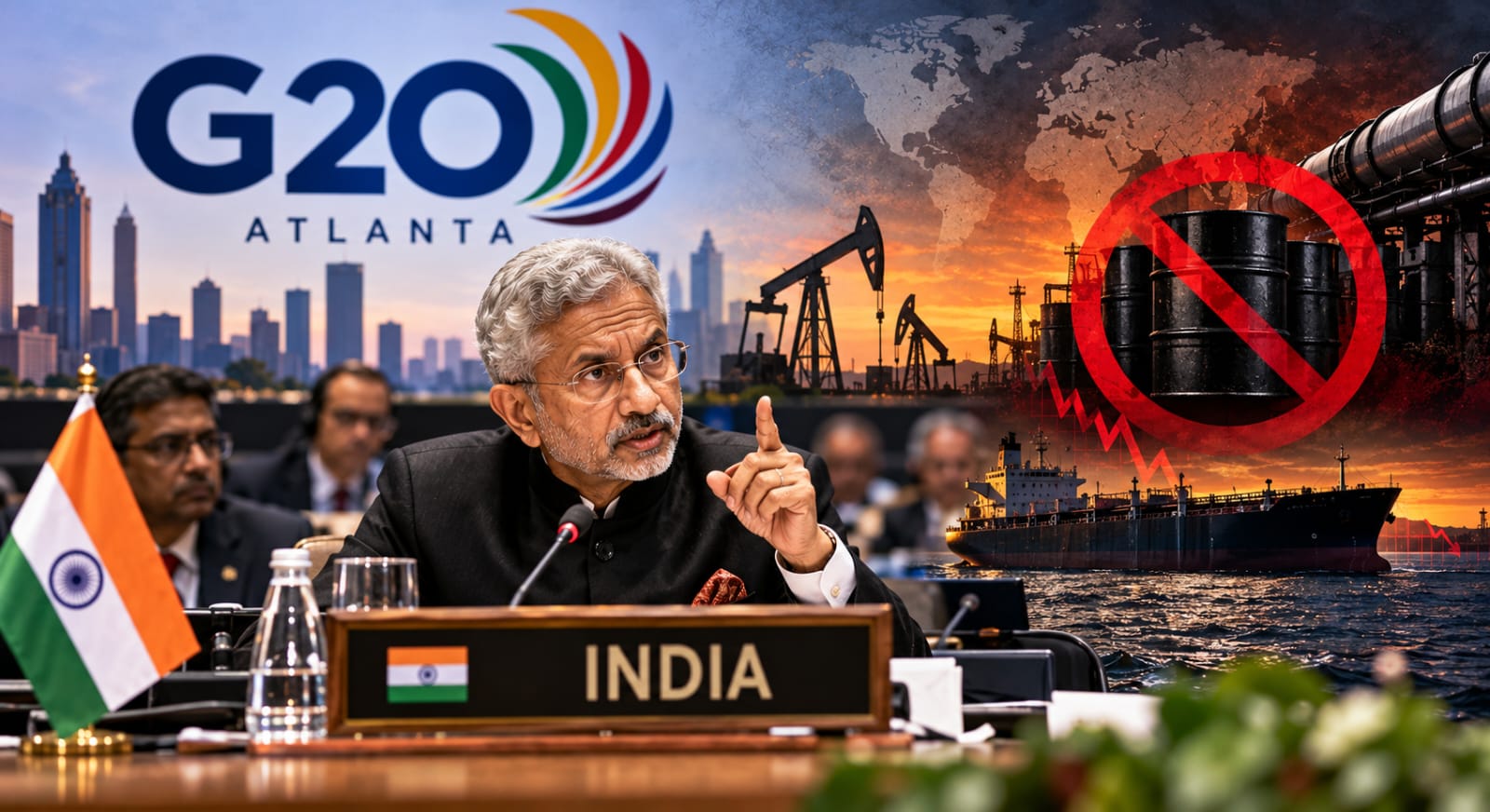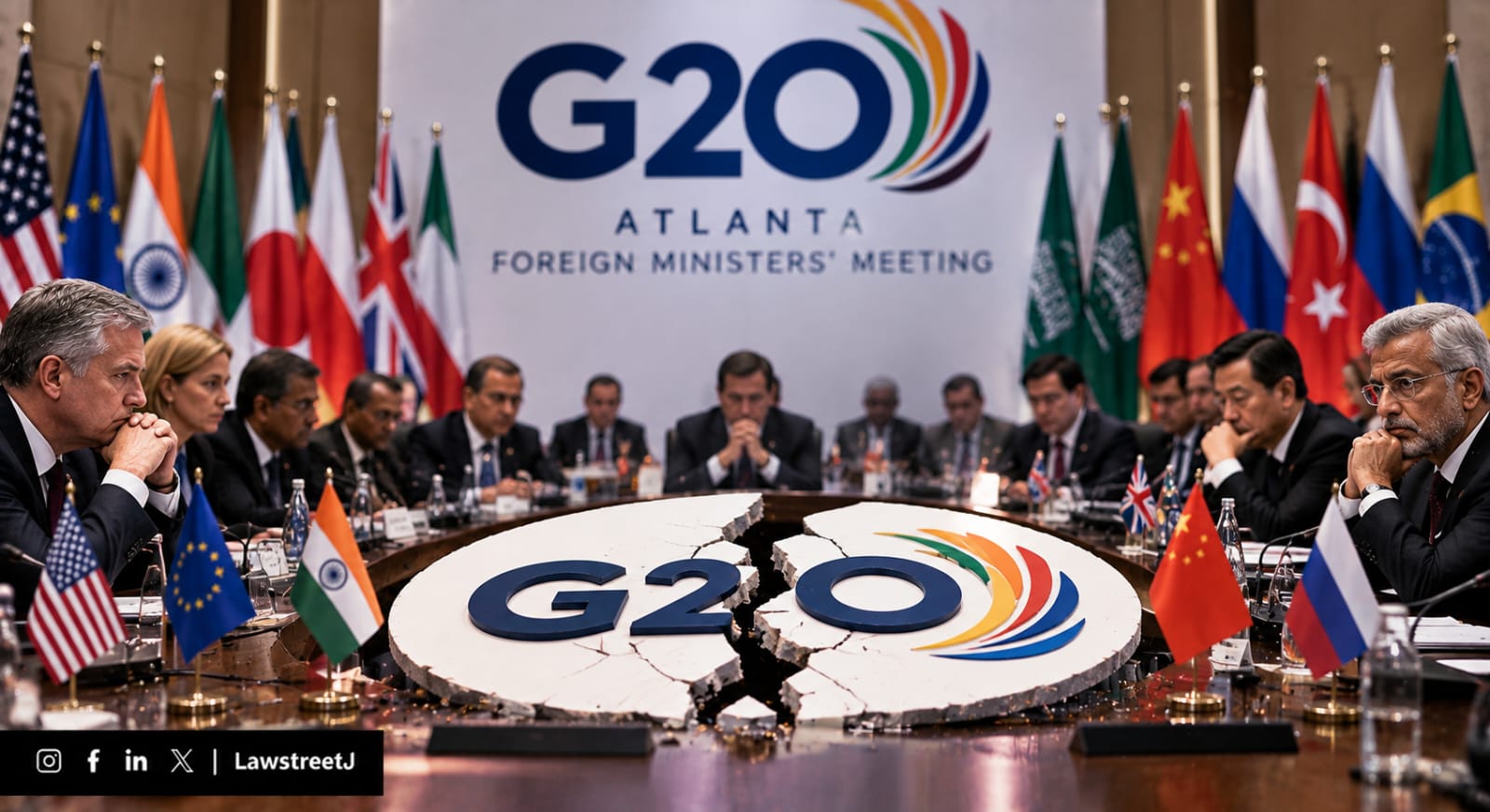
Atlanta — G20 foreign ministers concluded two days of talks in Atlanta, Georgia, on Saturday, October 31, 2026, without reaching consensus on several critical global security issues, with divisions over Russia's war with Ukraine overshadowing the meeting from its opening. In place of a joint communiqué, US Secretary of State Marco Rubio, who hosted and chaired the gathering, released a chairman's statement summarising the discussions.
The Outcome
According to diplomats who attended, a chairman's statement had long been the plan for the meeting, given deep differences among attendees on several issues. Those disputes included Russia's war with Ukraine, the US-Israeli war against Iran, US tariffs, and China's actions in the South China Sea.
Polish Foreign Minister Radosław Sikorski, who was attending a G20 meeting for the first time as a guest, said he was not surprised by the failure to reach consensus, telling reporters: "We have wars going on, and we have participants in those wars around the table, so it's very difficult to agree on a common line."
Rubio opened the talks with an appeal for unity, telling his counterparts: "We are in a critical moment." Diplomats who attended the opening session described it as cordial, but said Russia's position on Ukraine was unyielding, as was its opposition to Poland's membership in the G20.
The Cancelled "Group Photo"
The tone of the gathering was set early by a dispute over Russia's participation. Rubio cancelled the traditional group photograph of the foreign ministers after European and Australian representatives objected to the presence of Russian Foreign Minister Sergey Lavrov, who had arrived in Atlanta to attend the meeting. Sikorski told reporters: "I am not the only one who does not want to be photographed with Lavrov." British Foreign Secretary Ed Miliband separately called out Lavrov directly, saying that if countries were serious about their values and interests, they must work harder to secure what he described as a just and lasting peace in Ukraine.
European diplomats objected to Russia's participation at a time of heightened Russian attacks on Ukraine. European G20 members also back Ukraine, which has objected to recent decisions by US President Donald Trump regarding Russia, including a deal to buy Russian diesel and waive some sanctions, a development that added a further layer of tension between Washington and its European partners at the meeting.
India's Participation
India was represented by External Affairs Minister S. Jaishankar, who arrived in Atlanta on Friday, October 30, for the two-day meeting. Speaking during the first plenary session, Jaishankar said military solutions were not working and urged countries to give diplomacy a chance, while also flagging attacks affecting civilian shipping and seafarers and underscoring the importance of upholding freedom of navigation.
At the G20 meeting, Jaishankar also stated that tactical calculations should not lead countries to overlook the dangers of terrorism.
On the sidelines of the meeting, Jaishankar held a bilateral meeting with Rubio on Friday, October 30, local time, describing it afterward on social media as an opportunity to take stock of bilateral cooperation between India and the United States.
Jaishankar was also scheduled to participate in a Quad foreign ministers' meeting, bringing together his counterparts from the US, Japan and Australia, held on the sidelines of the G20 gathering. It was the second meeting of Quad foreign ministers in 2026, following an earlier one hosted by India in May. The Atlanta meeting followed closely after Rubio's official visit to India between October 20 and 22.
On the margins of the main meeting, Rubio met separately with Saudi Foreign Minister Prince Faisal bin Farhan and Turkish Foreign Minister Hakan Fidan, as part of a series of bilateral engagements held alongside the main G20 sessions.
A Familiar Pattern: Precedent from India's 2023 G20 Presidency
The failure to reach a joint communiqué is not unprecedented for G20 foreign ministers' meetings in the period following Russia's full-scale invasion of Ukraine in 2022. During India's G20 presidency in March 2023, a G20 foreign ministers' meeting in New Delhi similarly failed to produce a joint communiqué, ending instead with a "Chair's Summary and Outcome Document" after China joined Russia in refusing to support language demanding Russia's "complete and unconditional withdrawal from the territory of Ukraine."
External Affairs Minister Jaishankar said at the time that the meeting had reached consensus on a range of other issues, including strengthening multilateralism, food and energy security, climate change, global health, counterterrorism and disaster risk reduction, but had failed to agree on the Ukraine conflict specifically because of "very polarised views of some countries."
Both the 2023 and 2026 meetings therefore reflect the same structural difficulty, the G20's consensus-based decision-making model makes joint communiqués difficult to achieve when member states are directly engaged in, or directly opposed over, active armed conflicts.
The G20 is an informal intergovernmental forum rather than a treaty-based international organisation, meaning it has no permanent secretariat, charter or binding legal authority, and its communiqués and chairman's statements are political declarations rather than legally enforceable instruments under international law.
The group, which brings together the world's major economies, operates on a rotating presidency, with the host country setting the agenda and chairing the leaders' and ministerial meetings, the arrangement under which the United States holds the 2026 presidency. A joint communiqué traditionally requires the agreement of all members, whereas a chairman's statement is issued on the sole authority of the presiding host country and summarises the discussions without requiring consensus, which is why the format is typically used where agreement on shared language cannot be reached.