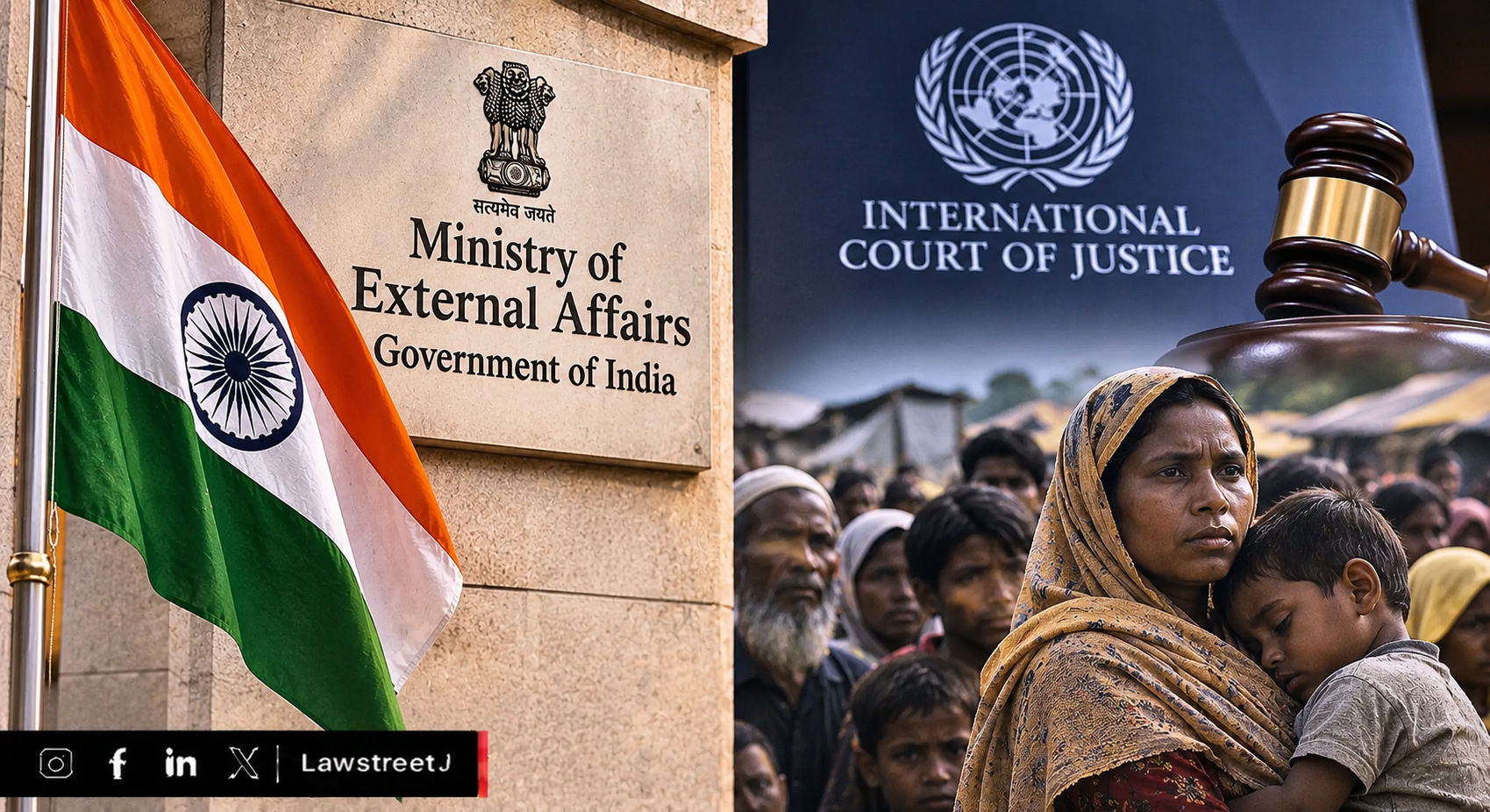
NEW DELHI: India has reiterated its support for the safe, speedy and sustainable return of displaced Rohingya refugees to Myanmar following a landmark judgment by the International Court of Justice (ICJ), which found that Myanmar committed genocide against the Rohingya population during its 2017 military operations in northern Rakhine State.
Responding to the judgment on November 20, Ministry of External Affairs (MEA) spokesperson Randhir Jaiswal said India had taken note of the verdict and maintained its longstanding position on the repatriation of displaced Rohingya people.
"India has consistently supported safe, speedy and sustainable return of the displaced Rohingya people from the Rakhine State," Jaiswal said during a media briefing. He also highlighted India's humanitarian assistance to Rohingya refugees in Bangladesh under Operation Insaniyat and its support for the Rakhine State Development Programme in Myanmar.
India's response came a day after the ICJ delivered its final judgment in the case brought by The Gambia against Myanmar under the Genocide Convention. While the court's decision marks a historic development in international law, New Delhi's statement stopped short of explicitly endorsing the genocide finding.
ICJ Finds Myanmar Responsible for Genocide Against Rohingya
On November 19, the International Court of Justice ruled by a 9–6 majority that Myanmar committed genocide against the Rohingya during the 2017 military clearance operations in northern Rakhine State. The case, formally titled The Gambia v. Myanmar, was initiated in 2019 after allegations of widespread atrocities against the Rohingya population.
The court found that Myanmar violated its obligations under the 1948 Genocide Convention through acts intended to destroy a substantial part of the Rohingya community. These included killings, causing serious bodily and mental harm, and imposing measures intended to prevent births within the group. The judges concluded that the only reasonable inference from the evidence was that Myanmar's actions demonstrated genocidal intent.
The court also found that Myanmar had failed to fulfil its obligations to prevent and punish genocide and had not adequately preserved evidence relating to the alleged atrocities. It directed Myanmar to investigate and prosecute those responsible, prevent further violations, provide guarantees of non-repetition and compensate the victims.
Importantly, the judgment also called for measures enabling the safe, voluntary and dignified return of displaced Rohingya people to their places of residence and the reunification of families.
The ruling is final and legally binding, with no provision for appeal. It is also the first time the ICJ has found a state responsible for committing genocide.
India's Operation Insaniyat and Humanitarian Assistance
Explaining India's position, Jaiswal recalled the country's humanitarian assistance to Rohingya refugees living in Bangladesh. Under Operation Insaniyat, India provided relief materials to Rohingya refugee camps in Bangladesh in five phases. The assistance included humanitarian supplies intended to support displaced families.
India has also supported the Rakhine State Development Programme in Myanmar, which New Delhi has associated with improving conditions for the eventual return of displaced people.
India's approach has traditionally emphasised repatriation rather than permanent resettlement in third countries. However, the question of returning Rohingya refugees remains complicated by security concerns, citizenship restrictions, discrimination and the continuing political instability in Myanmar.
The ICJ judgment has placed additional international legal emphasis on ensuring that any return takes place voluntarily and with dignity, rather than through forced displacement or unsafe repatriation. India's statement did not announce any new repatriation agreement or timeline following the court's decision.
Nearly 1.2 Million Rohingya Refugees in Bangladesh
The Rohingya crisis remains one of the largest displacement emergencies in Asia.
Approximately 1.2 million Rohingya refugees are currently living in Bangladesh, particularly in overcrowded camps around Cox's Bazar. Many fled Myanmar following the military crackdown in 2017. The United Nations and international humanitarian organisations have repeatedly highlighted the difficult living conditions in the camps, including limited livelihood opportunities, inadequate infrastructure and dependence on humanitarian assistance.
The situation inside Myanmar also remains concerning. Rohingya communities continue to face restrictions, insecurity and limited access to essential services.
The ICJ judgment has renewed international attention on the conditions required for safe repatriation. Human rights organisations have stressed that refugees must be able to return without fear of persecution and with guarantees of security, citizenship rights and freedom of movement.
Without these conditions, large-scale voluntary repatriation remains difficult.
A Delicate Diplomatic Position for India
India's response reflects the diplomatic complexities surrounding Myanmar.
Myanmar shares a 1,643-kilometre land border with India, making stability in the country important for India's northeastern states and broader regional security interests. New Delhi also maintains strategic interests in Myanmar through connectivity initiatives, infrastructure projects and regional cooperation.
Consequently, India has sought to balance humanitarian concerns with its diplomatic and security interests.
The distinction in India's response is noteworthy. While the ICJ explicitly found Myanmar responsible for genocide, the MEA limited its public reaction to taking note of the judgment and reiterating support for the return of displaced Rohingya people.
The verdict nevertheless represents a major development for the Rohingya community and international accountability. Whether it translates into meaningful improvements on the ground will depend largely on Myanmar's compliance with the court's directions and sustained international pressure. For India, the immediate challenge remains supporting a safe and sustainable return process while navigating its complicated relationship with Myanmar and the wider regional security environment.