New Delhi: Afghanistan has been grappling with the dual impact of severe flooding and a powerful earthquake that struck in late March and early April 2026. The disasters have caused significant loss of life, widespread displacement, and the destruction of infrastructure, leaving thousands of families without shelter or access to basic necessities. According to preliminary reports from Afghan authorities and humanitarian agencies, the combined disasters have affected multiple provinces, with rural communities bearing the brunt of the devastation. Roads, bridges, and essential services have been disrupted, complicating relief efforts and isolating vulnerable populations.
India’s Humanitarian Response
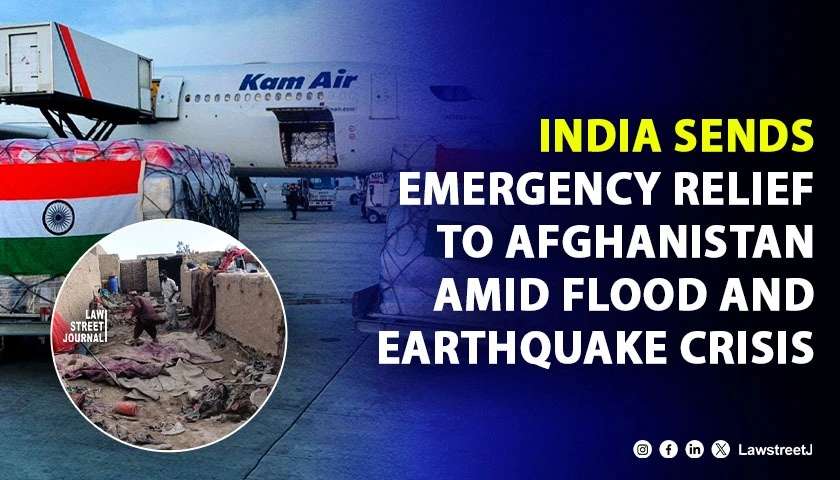
On April 5, 2026, the Ministry of External Affairs (MEA) confirmed that India had dispatched a fresh consignment of humanitarian aid to Afghanistan. The relief materials included kitchen sets, hygiene kits, sleeping bags, tarpaulins, and plastic sheets, designed to meet immediate needs related to shelter, sanitation, and daily survival. The supplies were transported via Kam Air cargo flights, with consignments prominently marked with the Indian national flag.
MEA spokesperson Randhir Jaiswal emphasized that India remains committed to extending humanitarian assistance to the Afghan people during this challenging time. He stated that the relief effort reflects India’s role as a consistent first responder in the region, providing aid to Afghanistan during crises despite the absence of formal diplomatic ties with the current administration.
This latest consignment builds on India’s long-standing humanitarian engagement with Afghanistan, which has included food aid, medical supplies, and disaster relief in previous years. India has repeatedly highlighted its policy of supporting the Afghan people directly, focusing on humanitarian needs rather than political considerations.
Legal and International Dimensions
India’s relief operation falls within the framework of Humanitarian Assistance and Disaster Relief (HADR), a recognized international mechanism that enables states to provide aid across borders in times of crisis. Such assistance is consistent with international humanitarian law, which encourages states to support populations affected by natural disasters, irrespective of political or military contexts.
The delivery of aid also aligns with India’s commitments under the UN Charter and broader global humanitarian principles. By dispatching relief materials, India reinforces its role as a responsible regional actor, contributing to stability and human security in South Asia. Importantly, the aid is being provided without conditions, ensuring adherence to the principle of neutrality in humanitarian assistance.
International observers note that India’s actions demonstrate the importance of regional cooperation in disaster response, especially in fragile states like Afghanistan, where governance structures remain strained. The relief effort is expected to complement ongoing assistance from international organizations, including the United Nations Office for the Coordination of Humanitarian Affairs (OCHA), which has been closely monitoring the situation.
India’s emergency relief supplies to Afghanistan highlight the urgency of humanitarian action in the face of natural disasters that have compounded the country’s existing vulnerabilities. The consignment of essential materials reflects both India’s commitments under international humanitarian law and its regional responsibility to support neighbouring populations in crisis. As Afghanistan continues to recover from the floods and earthquake, India’s assistance provides immediate relief to affected families and underscores the broader principle that humanitarian aid must transcend political boundaries. The operation stands as a reminder of the critical role of timely, coordinated, and legally grounded humanitarian interventions in safeguarding human lives during disasters.