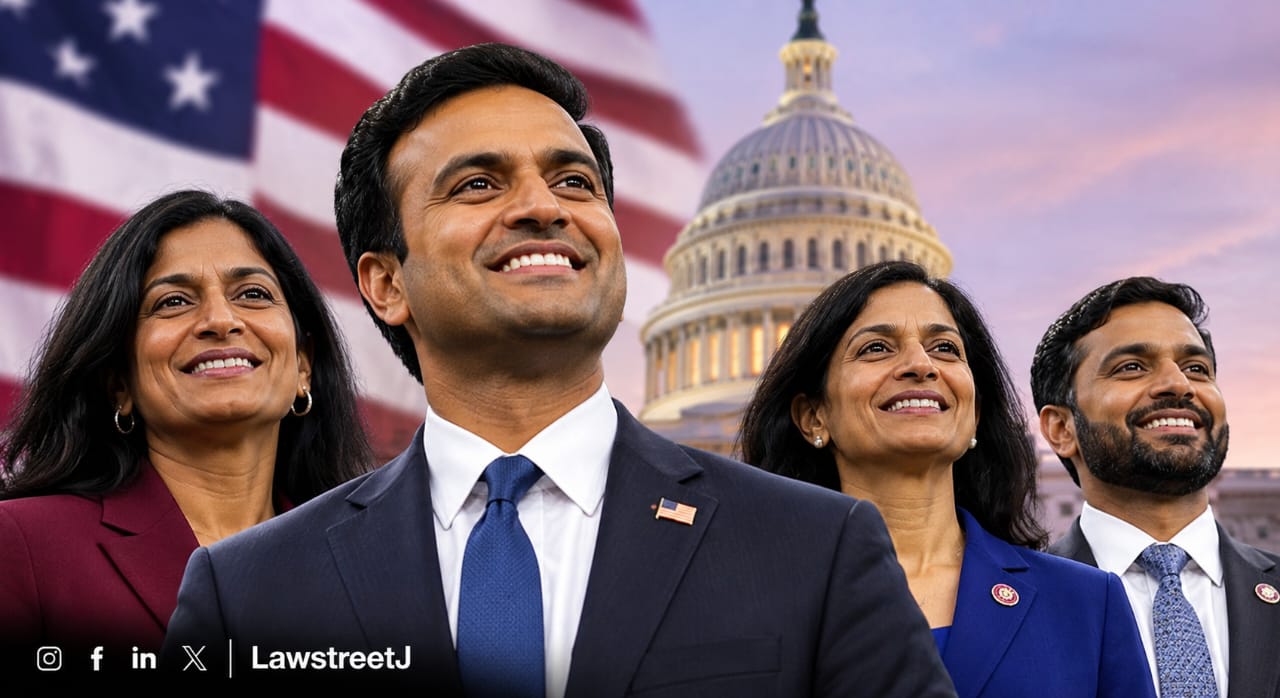
WASHINGTON : Indian-American candidates made a significant impact in the November 3, 2026, US midterm elections, securing victories in congressional and state-level races while several others faced defeats or awaited final results.
The elections featured candidates of Indian origin contesting seats in the US House of Representatives, state legislatures and local offices. Their campaigns addressed issues including healthcare, affordability, education, immigration and the economy, reflecting the broad range of priorities in American politics.
Among the prominent winners were Democrats Suhas Subramanyam in Virginia, Ro Khanna in California, Pramila Jayapal in Washington and Pia Dandiya in Florida. Maryland Lieutenant Governor Aruna Miller also secured another term alongside Governor Wes Moore.
The results showed Indian-American representation continuing to expand across different levels of government. However, the contests also highlighted the diversity of political affiliations within the community, with candidates running as Democrats, Republicans and independents.
Several races remained uncalled in the latest available reporting, including contests involving Ami Bera in California and Amish Shah in Arizona. The outcomes in those races were still developing as vote counting continued.
Indian-American Democrats Secure Key Congressional Victories
Several Indian-American Democrats won seats in the US House of Representatives, strengthening the community’s presence in Congress. In Virginia’s 10th Congressional District, Suhas Subramanyam secured a second term. Subramanyam, who previously served in the Virginia state legislature, won against Republican Dave Beckwith. His victory continued his representation of a district in Northern Virginia.
In California’s 17th Congressional District, incumbent Democrat Ro Khanna won against Republican Ritesh Tandon, another Indian-American candidate. The contest was notable because both candidates were of Indian origin but represented opposing political parties. Khanna secured a strong share of the vote in the district, according to reported election results.
Pramila Jayapal also won re-election in Washington’s 7th Congressional District. Jayapal, a prominent progressive Democrat and former chair of the Congressional Progressive Caucus, secured another term representing Seattle and surrounding areas. In Florida’s 22nd Congressional District, Democrat Pia Dandiya defeated Republican Casey Askar. Her victory marked an important gain for Indian-American representation in Florida’s congressional delegation.
The victories added to the presence of Indian-American lawmakers in the House, where members of the community have represented districts across the country. Their political positions vary, reflecting the diversity of views among Indian-American voters and candidates. Some congressional contests remained unresolved in the latest reports. Ami Bera’s race in California’s 3rd District and Amish Shah’s contest in Arizona’s 1st District were among those still awaiting final results.
State-Level and Local Races Expand Representation
Indian-American candidates also recorded victories in state and local elections. In Maryland, Aruna Miller retained her position as lieutenant governor alongside Governor Wes Moore, who won re-election. Miller, who previously served in the Maryland House of Delegates, remains one of the most prominent Indian-American officials in state government.
In Wisconsin, Democrat Josh Kaul won the attorney general’s race, while Aparna Raj secured a seat on the Washington, DC, Council representing Ward 1. In Georgia, Democrat Jyot Singh won a seat in the state House of Representatives from District 97.
These results illustrated the breadth of Indian-American participation in American public life, extending beyond Congress to state executive offices, legislatures and local government. Other candidates faced more difficult outcomes. Republican Vivek Ramaswamy lost the Ohio governor’s race to Democrat Amy Acton. The result was one of the most prominent defeats involving an Indian-American candidate in the election.
Republican Saritha Komatireddy also lost her challenge to incumbent New York Attorney General Letitia James. In California’s 17th District, Ritesh Tandon was defeated by Khanna. Other Indian-American candidates, including Nirav Sheth in Washington’s 7th District and Mahesh Ganorkar in North Carolina’s 4th District, also lost their contests.
The mixed results underscored that candidates’ electoral performance depended on their individual races, party affiliations and local political conditions rather than shared ethnic identity.
Outstanding Results and the Wider Political Significance
While several Indian-American candidates secured victories, the results of a number of races were still being counted or awaited in the latest reporting available on November 4.
Ami Bera’s contest in California’s 3rd Congressional District and Amish Shah’s race in Arizona’s 1st District remained among the unresolved contests. Nithya Raman’s challenge to Los Angeles Mayor Karen Bass was also awaiting a final outcome. Other candidates contesting state legislative and local positions were still awaiting complete results.
The continued participation of Indian-American candidates across congressional, state and local elections reflects the growing political engagement of the community in the United States. Their campaigns have increasingly addressed issues affecting broad constituencies, including the cost of living, healthcare access, education, economic opportunity and public safety.
The election results also demonstrated the range of political perspectives within the Indian-American community. Democratic candidates won several congressional and state-level races, while Republican candidates contested key statewide and congressional positions. Some races featured Indian-American candidates competing directly against one another, as in California’s 17th Congressional District.
The victories of Subramanyam, Khanna, Jayapal and Dandiya, alongside Miller’s re-election in Maryland, added to the community’s representation in elected office. At the same time, the defeats and unresolved races showed that representation continues to depend on the outcomes of individual contests.
As vote counting and race calls continue, the 2026 midterms have produced a notable set of gains for Indian-American candidates, with new and returning lawmakers preparing to take office in Congress and across state and local governments