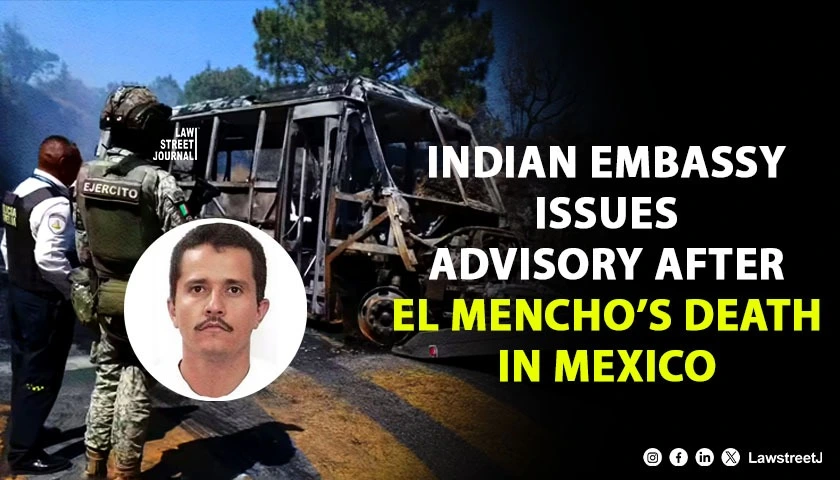
New Delhi: New Mexican authorities confirmed the death of Nemesio Rubén Oseguera Cervantes, known as El Mencho, during a military operation in Jalisco state. Oseguera Cervantes was the leader of the Jalisco New Generation Cartel (CJNG), one of Mexico’s most powerful and violent criminal organizations. The operation was carried out by the Mexican Army and National Guard, targeting cartel strongholds in western Mexico. According to official statements, Oseguera Cervantes was fatally injured during the raid, ending a years-long pursuit that had made him one of the most wanted fugitives worldwide. The United States had previously offered a $10 million reward for information leading to his capture, reflecting his significance in international law enforcement efforts.
The immediate aftermath of the operation triggered violent reprisals across Jalisco and neighbouring states. Reports documented arson attacks, burning vehicles, and roadblocks in Guadalajara, Puerto Vallarta, and Colima. Businesses were damaged, public transport was disrupted, and residents were urged to remain indoors. Mexican authorities deployed additional military units to stabilize affected regions, while the National Guard reinforced patrols in urban centres. The violence underscored the cartel’s capacity to retaliate and the risks faced by civilians during such operations.
Advisory for Indian Nationals
In response to the escalating unrest, the Embassy of India in Mexico issued a formal advisory on February 23, 2026. The advisory urged Indian nationals to avoid areas with law enforcement activity, remain vigilant, and refrain from joining crowds. Citizens were instructed to seek shelter, minimize unnecessary movement, and monitor local media for updates. The Embassy emphasized that the advisory was necessary due to the unpredictable nature of cartel-related violence and the heightened risk of collateral harm during security operations.
Indian nationals residing in Mexico were encouraged to register their presence with the Embassy and maintain contact for emergency assistance. The advisory also highlighted the importance of following official instructions from Mexican authorities and avoiding travel to high-risk regions. The Embassy reiterated its commitment to safeguarding Indian citizens abroad and assured that consular support would be available in case of emergencies.
The advisory reflects India’s legal responsibility to protect its nationals abroad under the Vienna Convention on Consular Relations. Issuing timely alerts during crises is standard diplomatic practice, ensuring that citizens are informed of risks and can take precautionary measures. The Embassy’s actions demonstrate the importance of proactive communication in safeguarding foreign nationals during periods of instability.
Legal and Diplomatic Implications
The death of Oseguera Cervantes carries significant legal and diplomatic consequences. CJNG has long been designated by U.S. authorities as a transnational criminal organization responsible for trafficking methamphetamine, fentanyl, and cocaine into North America. Mexican prosecutors had multiple outstanding warrants against him, including charges of homicide, organized crime, and drug trafficking. His removal represents a major achievement for Mexican law enforcement, but experts caution that cartel operations are unlikely to collapse immediately.
From a legal perspective, the Embassy’s advisory underscores India’s obligations under international law to protect its citizens abroad. The Vienna Convention requires states to provide consular support and issue timely alerts during crises. By advising Indian nationals to avoid high-risk areas and remain vigilant, the Embassy fulfilled its duty to safeguard citizens while respecting Mexico’s sovereignty.
Diplomatic observers note that Oseguera Cervantes’ death may create a power vacuum within CJNG, potentially leading to internal conflicts or violent competition among rival cartels. Mexican authorities are expected to intensify investigations and prosecutions against CJNG affiliates to prevent resurgence. Analysts warn that cartel fragmentation often results in localized violence, complicating stabilization efforts. The Mexican government faces the challenge of dismantling CJNG’s extensive networks while maintaining public security.
Internationally, the death of Oseguera Cervantes is likely to impact drug trafficking routes and cartel dynamics. CJNG has been a major supplier of synthetic drugs to the United States, and its operations extend into Central and South America. Law enforcement agencies in multiple countries are expected to monitor shifts in cartel activities and adjust strategies accordingly. The U.S. Department of Justice has emphasized the need for continued cooperation with Mexican authorities to combat transnational crime.
For India, the advisory highlights the importance of diplomatic preparedness in volatile regions. The Embassy’s swift response ensured that Indian nationals were informed of risks and could take precautionary measures. Legal experts note that such advisories are essential in fulfilling consular responsibilities and maintaining trust between citizens and the state. The incident also underscores the need for ongoing collaboration between India and Mexico in areas of security and law enforcement.

![J&K HC Denies Bail in Narco-Terror Case, Cites Links to Pakistan-Based Terrorist and Stringent Legal Barriers [Read Judgment]](/secure/uploads/2025/07/lj_6376_J_and_K_HC_Denies_Bail.webp)
![Delhi HC Denies Bail To Afghan National Who Smuggled 905 Grams Heroin In Stomach [Read Judgment]](/secure/uploads/2025/09/lj_9171_Delhi_HC_Denies_Bail.webp)