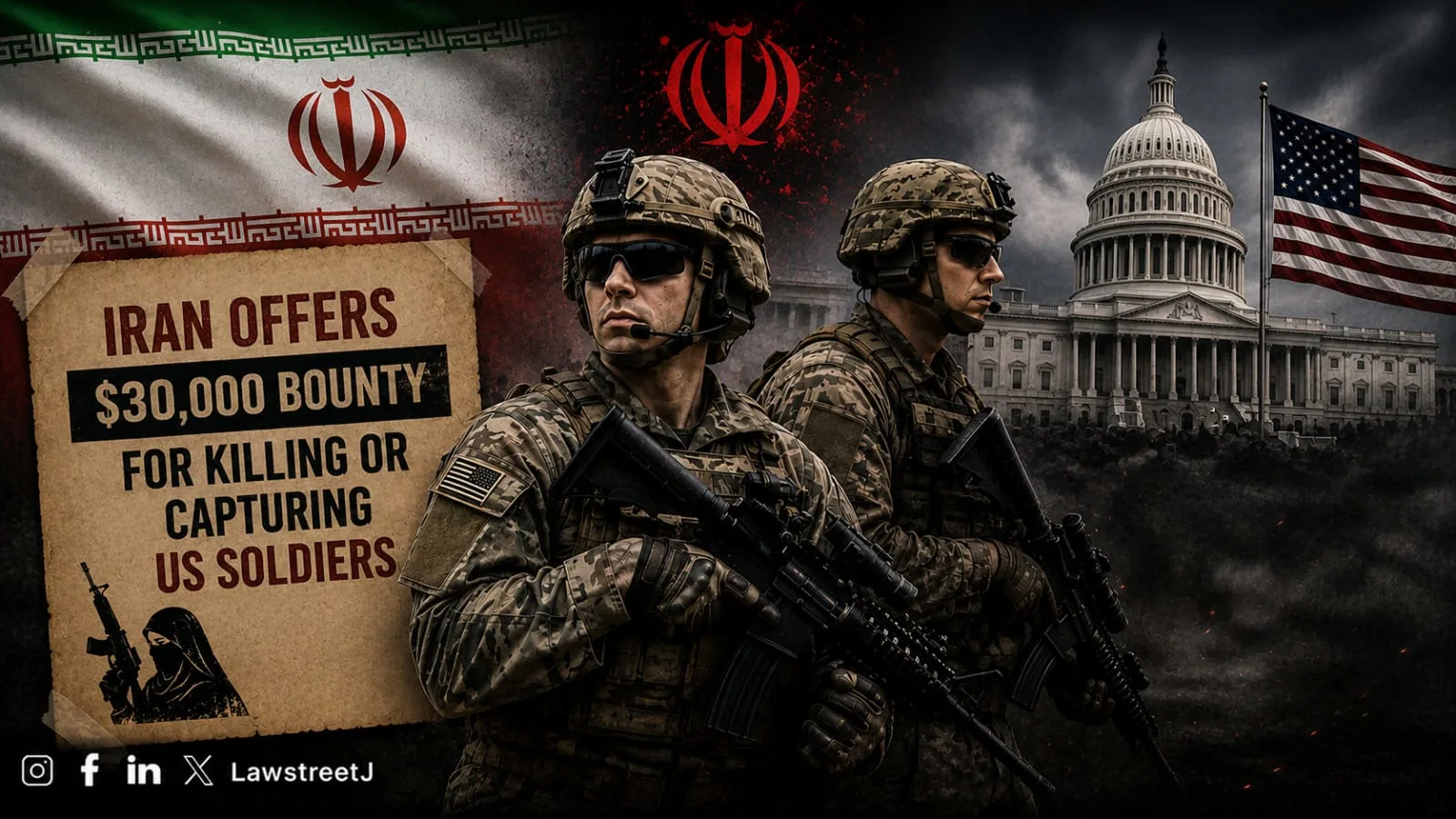
TEHRAN — Iran's military escalated its rhetoric against the United States on Sunday in a manner that crossed from strategic posturing into direct financial incitement, with Army Commander-in-Chief Amir Hatami formally announcing a bounty of $30,000 for any individual who kills or captures an American service member. The announcement, carried by Iran's state news agency IRNA and confirmed by state broadcaster IRIB, also included a provision that doubles the reward to $60,000 if the act is carried out by an Iranian woman.
Iran's military announced on Sunday that it was offering a bounty equivalent to $30,000 for killing or capturing US soldiers, with the reward doubled if carried out by a woman. Army chief Amir Hatami said the plan had been drawn up following "the large number of requests" to participate in the financial support, according to the IRNA state news agency.
There has been no known deployment of US ground forces in Iran during the West Asia war, with the exception of a rescue mission in April for a downed American airman.
The announcement was made as the broader US-Iran conflict, which began with the launch of Operation Epic Fury on February 28, 2026, continues without a formal ceasefire or peace agreement, with the Strait of Hormuz remaining blocked and diplomatic back-channels producing no publicly confirmed breakthrough.
What Hatami Said: Bounty, Bases, and the Strait
The bounty announcement was one element of a broader statement delivered by Hatami on Sunday, in which he addressed the state of the conflict, Iran's territorial claims over the Strait of Hormuz, and his assessment of American military credibility in the region.
Iranian Army Commander-in-Chief Amir Hatami said: "Everyone should know that in no way can the American bases return to their previous status, and Iran will never allow centers to be established in our neighborhood that aim to threaten Islamic Iran. The only way is for the Americans to leave the region. They have been effectively expelled and are no longer permitted to enter the Persian Gulf, the Sea of Oman, and the Strait of Hormuz."
He added: "The Americans made many claims about their military power, and through this, they had received a lot of ransoms and money, but the war with Iran broke that hegemony. America no longer has the authority it once had, and the sign of this is the movement of countries towards other paths to generate security for themselves."
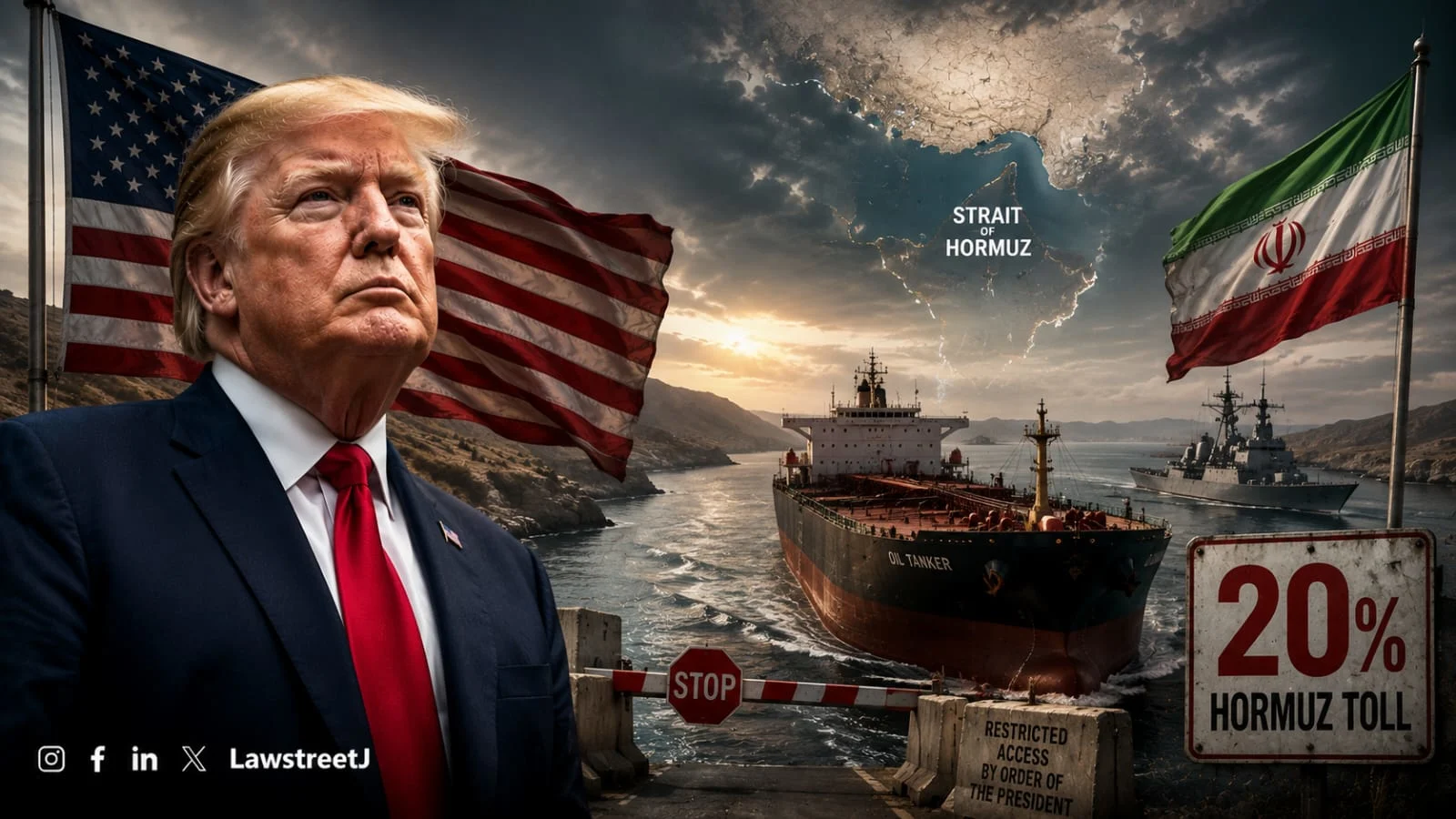
Hatami also denounced US President Donald Trump's statements that he would declare the Strait of Hormuz as "territory of the United States" after Iran is defeated, calling Trump "delusional" and saying the US president was "trying hard to create a winning image of himself."
The statement that Iran has "effectively expelled" the United States from the Persian Gulf, the Sea of Oman, and the Strait of Hormuz is a claim that does not reflect the operational reality of CENTCOM's ongoing enforcement of its naval blockade, which, as of August 8, had redirected 55 commercial vessels and continues to operate from the USS Abraham Lincoln carrier strike group in the Arabian Sea. The claim is political framing, not a statement of fact on the water.
The characterisation of the bounty as a response to citizen requests, "the large number of requests to participate in the financial support", is a framing designed to present the measure as an expression of public will rather than a military directive. Whether that framing accurately reflects grassroots Iranian public sentiment, or whether it is the standard propaganda architecture of a state institution manufacturing the appearance of popular demand, is not verifiable from the information available.
The Legal and International Dimensions
The announcement of a bounty for killing or capturing members of another nation's armed forces carries specific implications under international law that distinguish it from other forms of wartime propaganda.
The offering of financial rewards for the killing of enemy combatants is not unambiguously prohibited under international humanitarian law, which regulates the conduct of hostilities between state parties. However, a bounty offered to any individual, civilian or otherwise, for the killing or capture of service members of a specific country creates incentives for acts of targeted violence that may not respect the laws of armed conflict, including the prohibition on attacks targeting prisoners of war or wounded combatants.
The doubling of the reward for acts carried out by Iranian women is a deliberate and pointed element of the announcement. It inverts the optics of the conflict, responding to a US military that has no known female combat casualties in this war with an incentive structure that explicitly elevates female Iranian participation in violence against American forces. Whether the provision has any practical effect is secondary to its function as a propaganda instrument.
The announcement comes in the same week that Iran's parliament approved on Sunday the general principles of a bill that would criminalise interviews and other communications with media deemed hostile to the country, including US or Israeli media and outlets financed by either country. Together, the bounty announcement and the media criminalisation bill reflect an Iranian government that is, in the face of military pressure and economic blockade, tightening domestic political control while simultaneously escalating rhetorical confrontation with the United States.
The Context: Six Months of War and a Stalled Peace Process
The bounty announcement is the latest in a series of escalatory actions and statements from Tehran since the conflict began in February. Its significance is best understood against the backdrop of what has happened since Operation Epic Fury was launched.
The conflict between Washington and Tehran in the Middle East began on February 28, 2026. Both sides have traded intermittent strikes, while diplomatic efforts have largely stalled. Disagreements over the Strait of Hormuz and other provisions of an interim agreement have repeatedly complicated attempts to secure a lasting peace since full-scale hostilities first erupted on February 28.
Iran's Supreme Leader Ayatollah Ali Khamenei was killed in the initial US-Israel strikes on February 28. His son Mojtaba Khamenei was chosen to succeed him. The new leadership has faced the challenge of managing both military operations and a devastated economy, Iran's already-severe inflation and foreign currency constraints have been compounded by the naval blockade that CENTCOM has maintained in the Arabian Sea and the approaches to the Strait of Hormuz.
Iran's demands for reopening the Strait remain sweeping: the US must never threaten Iran again, end the blockade, withdraw all military assets from the region, lift sanctions, unfreeze assets, and compensate Iran for war damages. The US has described these as "highly unlikely demands" and has been engaging in indirect communications through Oman while maintaining the blockade. Trump, speaking to reporters this week, described the negotiations as being conducted in a "low-key" manner.
This is not the first time in the current conflict that Iran has offered a financial incentive tied to downed or captured American personnel. In April 2026, when Iranian media reported that a US jet had been shot down, Iran deployed troops and offered a bounty specifically for the pilot, the incident that resulted in the rescue mission referenced in the formal description of US ground force activity in Iran. The April incident produced a successful American rescue; the pilot was recovered. The broader pattern of bounty announcements is an established element of Iran's information and incentive framework during the conflict.
No Known US Ground Forces in Iran But American Targets Are Everywhere in the Region
The caveat embedded in the original report, that there has been no known deployment of US ground forces in Iran during the West Asia war, is significant context for understanding the practical target of Sunday's announcement.
There has been no known deployment of US ground forces in Iran during the Middle East war, with the exception of a rescue mission in April for a downed American airman.
What does exist in the region, however, are approximately 40,000 to 50,000 American military personnel spread across bases in Saudi Arabia, Qatar, UAE, Bahrain, Kuwait, Jordan, and Iraq, all of which have been subjects of Iranian missile and drone attacks during the conflict. The Jordan attack in mid-July that killed three US soldiers was one of several documented strikes on American military installations.
The bounty's practical target, therefore, is not US soldiers on Iranian territory, who do not exist in significant numbers, but US soldiers operating from bases across the Middle East that Iran has been attacking, and potentially American personnel who might be captured during future combat operations near or involving Iranian territory. The April rescue mission established that US airmen have been downed in or near Iran; the bounty creates an incentive for any individual in the region to detain rather than harm any such individual in the future.
Hatami specifically threatened US bases in the broader region as part of his Sunday statement, making clear that the bounty is conceptually linked to the broader targeting of American military presence in the Gulf and Middle East, not solely to operations inside Iranian territory.