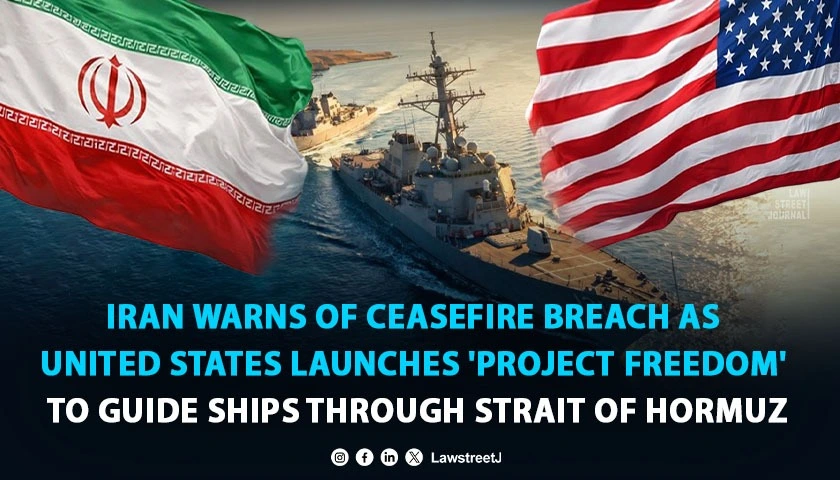
The Strait of Hormuz, one of the most consequential maritime corridors on the planet, became the centre of a new diplomatic storm on Monday after the United States announced a large-scale naval operation to guide hundreds of stranded commercial vessels out of the blocked waterway and Iran responded by declaring the move a direct violation of the existing ceasefire between the two countries.
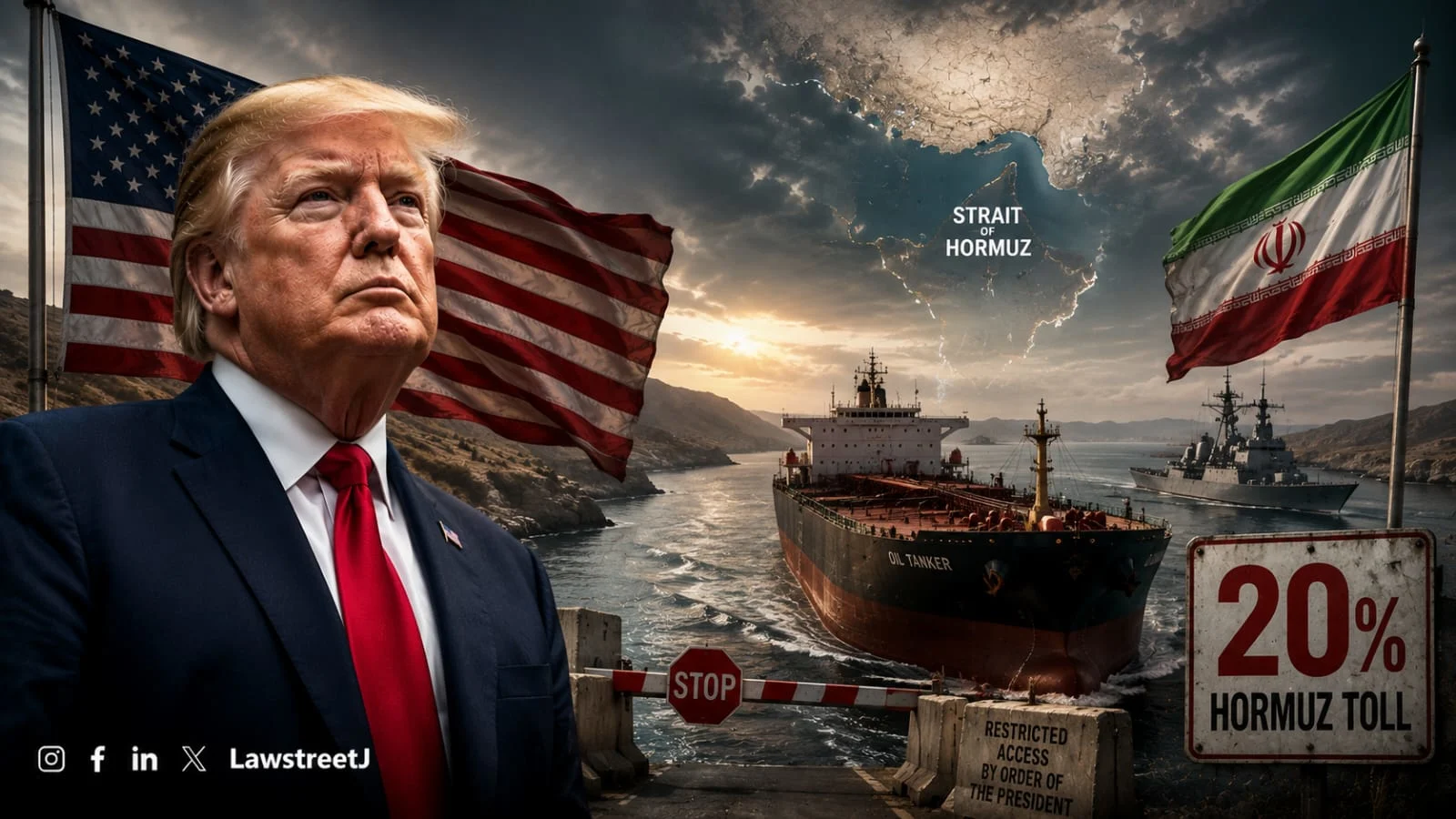
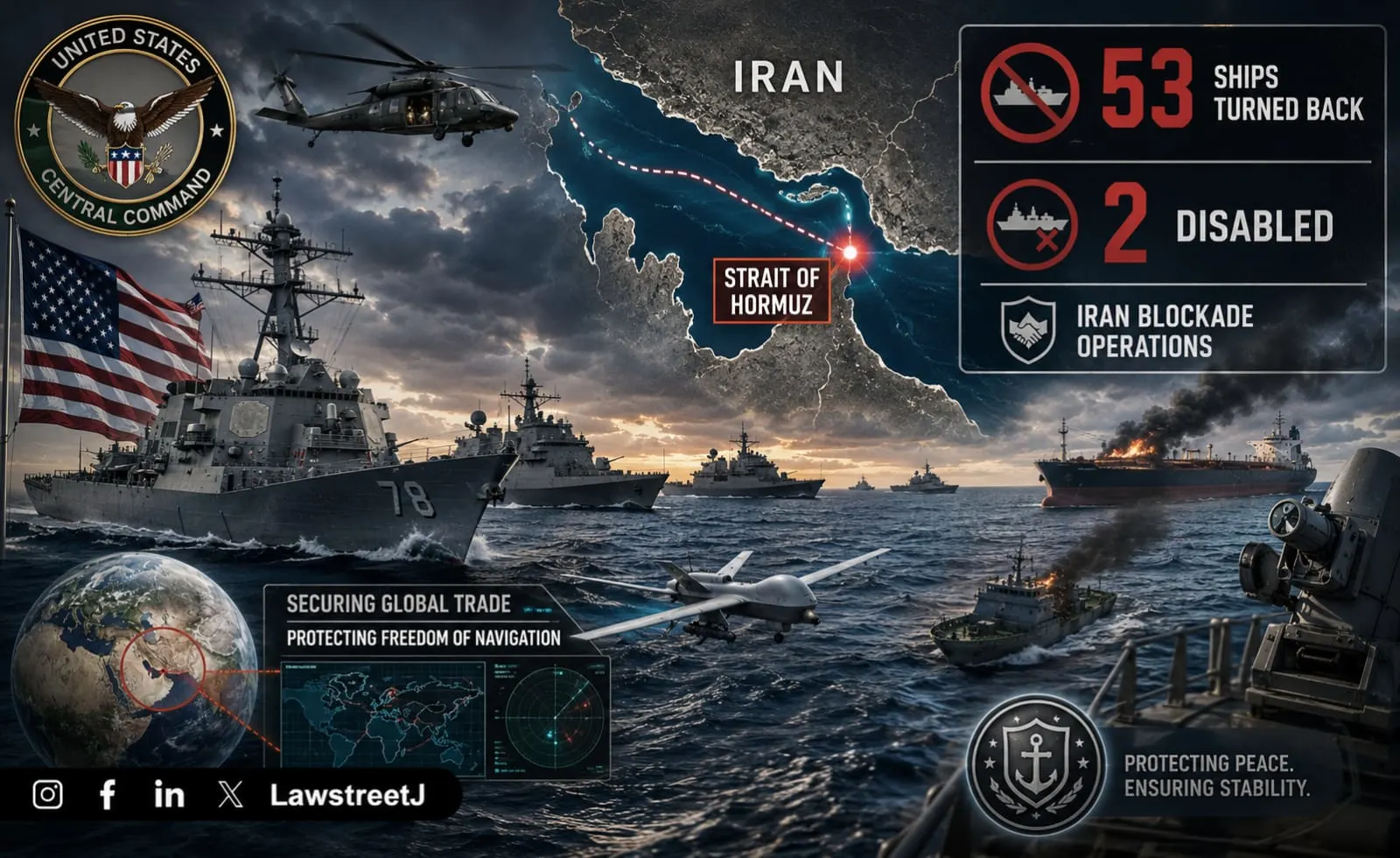
President Donald Trump announced that the United States would begin escorting ships through the blocked Strait of Hormuz, describing the operation as a "humanitarian" gesture for the crews aboard the many vessels caught up in the blockade, some of whom may be running critically low on food and other essential supplies. Trump named the operation "Project Freedom" and announced it through a post on Truth Social on Sunday, with operations set to commence on Monday. US Central Command confirmed it would deploy guided-missile destroyers, more than 100 land and sea-based aircraft, multi-domain unmanned platforms, and 15,000 service members in support of the Hormuz mission. A US official noted the initiative is not technically being characterized as an escort mission, though the scale of the military deployment leaves little ambiguity about its strategic weight.
Iran's response came swiftly and with considerable firmness. Ebrahim Azizi, head of the national security commission in Iran's parliament, posted on the platform X on Monday that any American interference in the new maritime regime of the Strait of Hormuz would be considered a violation of the ceasefire. Azizi added that the Strait of Hormuz and the Persian Gulf would not be managed by what he called Trump's posts.
The Blockade and Its Global Consequences
Shipping traffic through the Strait of Hormuz has been largely blocked by Iran since February 28, 2026, when the United States and Israel launched an air campaign against Iran. In retaliation, Iran's Revolutionary Guard issued warnings forbidding passage through the strait, boarded and attacked merchant ships, and laid sea mines in the waterway. The strait, at its narrowest point just 34 kilometres wide, forms a critical seaway between Iran and Oman. Its two unidirectional sea lanes facilitate the transit of around 20 million barrels of oil per day, representing roughly 20 percent of global seaborne oil trade, primarily from producers including Saudi Arabia, the United Arab Emirates, Iraq, and Qatar. In 2024, an estimated 84 percent of crude oil shipments through the strait were headed to Asian markets.
The human cost is significant and documented. Approximately 20,000 seafarers have been stranded in the waters of the Strait of Hormuz, according to the International Chamber of Shipping. The International Maritime Organization confirmed in April that those seafarers had spent more than a month in a tense and volatile situation, unable to leave their vessels. Oil prices are currently running approximately 50 percent above pre-conflict levels, largely due to the supply disruptions in the strait. The average cost of gas in the United States has risen to $4.45 a gallon, a near-50 percent increase since the beginning of the war.
Since April 13, the total number of Iranian ships forced to turn around by the US blockade of the Strait of Hormuz has reached 48 over a 20-day period, with three ships redirected in the past 20 hours alone, according to US Central Command. The US is not allowing any vessels into or out of ports in Iran.
The Legal Framework: What International Law Says
The dispute over the Strait of Hormuz carries substantial legal dimensions that cut across international maritime law, treaty obligations, and sovereign rights.
The Strait of Hormuz, with a width of 21 nautical miles at its narrowest point, falls under the territorial seas of both Iran and Oman. Under the 1982 United Nations Convention on the Law of the Sea, known as UNCLOS, a critical deal was struck when the convention accepted that coastal states could lawfully extend their territorial sea from three nautical miles to 12 nautical miles. In exchange, those coastal states had to accept that a special legal regime would apply to straits used for international navigation.
According to legal analysis, Iran's blocking of the strait amounts to a violation of UNCLOS, since it violates the right to transit passage through a strait used for international navigation. The placement of sea mines in the strait by Iran is also seen as a violation of international law, specifically the Hague VIII convention. However, Iran's legal standing within UNCLOS itself is contested. Iran has not ratified UNCLOS, and Part XV compulsory arbitration applies only between states that are parties to the convention, placing it beyond the reach of UNCLOS enforcement mechanisms against Iran. Despite this, the transit passage system under UNCLOS is broadly considered part of international customary law, which carries its own binding force regardless of treaty ratification.
Iran's "Strait of Hormuz Management Plan," approved by the parliamentary National Security and Foreign Policy Committee on March 31, 2026, represents one of the most direct modern attempts by a state to monetize passage through a natural international strait. Legal experts at Lexology noted that the plan appears to be among the first known instances of a toll demanded in cryptocurrency, a structural feature that does not avoid exposure under applicable sanctions regimes. UNCLOS prohibits imposing a fee on passing ships unless they receive specific services, and proposals to authorize tolls in straits during the original UNCLOS negotiations were explicitly rejected.
On the US side, the Trump administration's position has been that a 60-day time limit under war powers law is not running, because the United States and Iran have been in a ceasefire since early April. Trump told congressional leaders that hostilities with Iran have terminated, noting that there has been no exchange of fire between US forces and Iran since April 7, 2026.
Negotiations at a Standstill, Tensions Rising
On April 8, 2026, the United States and Iran agreed to a two-week ceasefire, with the White House confirming that the agreement was conditional on Iran reopening the strait without restriction, including the removal of tolls. The ceasefire has not produced a material reopening. On April 17, Iran's Foreign Minister Abbas Araghchi announced that the Strait of Hormuz was open to all shipping traffic for the duration of the Lebanon ceasefire. Shortly after, President Trump posted that the strait was completely open, but stated the US naval blockade would remain until negotiations with Iran concluded. Iran then re-imposed restrictions following the US position.
Iran's latest proposal to the United States calls for issues between the two countries to be resolved within 30 days and aims to end the war rather than extend the ceasefire. Trump told reporters he was reviewing the 14-point plan but expressed doubt it would lead to a deal. Trump's Truth Social post stated he was fully aware that his representatives were having positive discussions with Iran and that these discussions could lead to something very positive for all. He also warned that if the humanitarian ship-guiding process is interfered with, that interference will have to be dealt with forcefully. Germany has entered the diplomatic conversation as well. In a call with his Iranian counterpart Abbas Araghchi, German Foreign Minister Wadephul stressed that Germany supported a negotiated solution but that Iran must completely and verifiably renounce nuclear weapons and immediately open the Strait of Hormuz.
Meanwhile, a tanker was struck in the strait on Monday by unknown projectiles, according to the UK Maritime Trade Operations Centre. All crew members were reported safe. The incident underscored how far the situation remains from any stable resolution. The International Maritime Organization has said it is working with relevant parties to implement an appropriate mechanism to ensure safe transit of ships through the Strait of Hormuz, and that the priority is to ensure the safety of navigation to guarantee an evacuation, with an emphasis on avoiding a return to escalation.
Whether "Project Freedom" de-escalates or deepens the standoff between Washington and Tehran will likely define the next chapter of a crisis that has already reshaped global energy markets and left tens of thousands of sailors waiting in waters caught between two blockades.