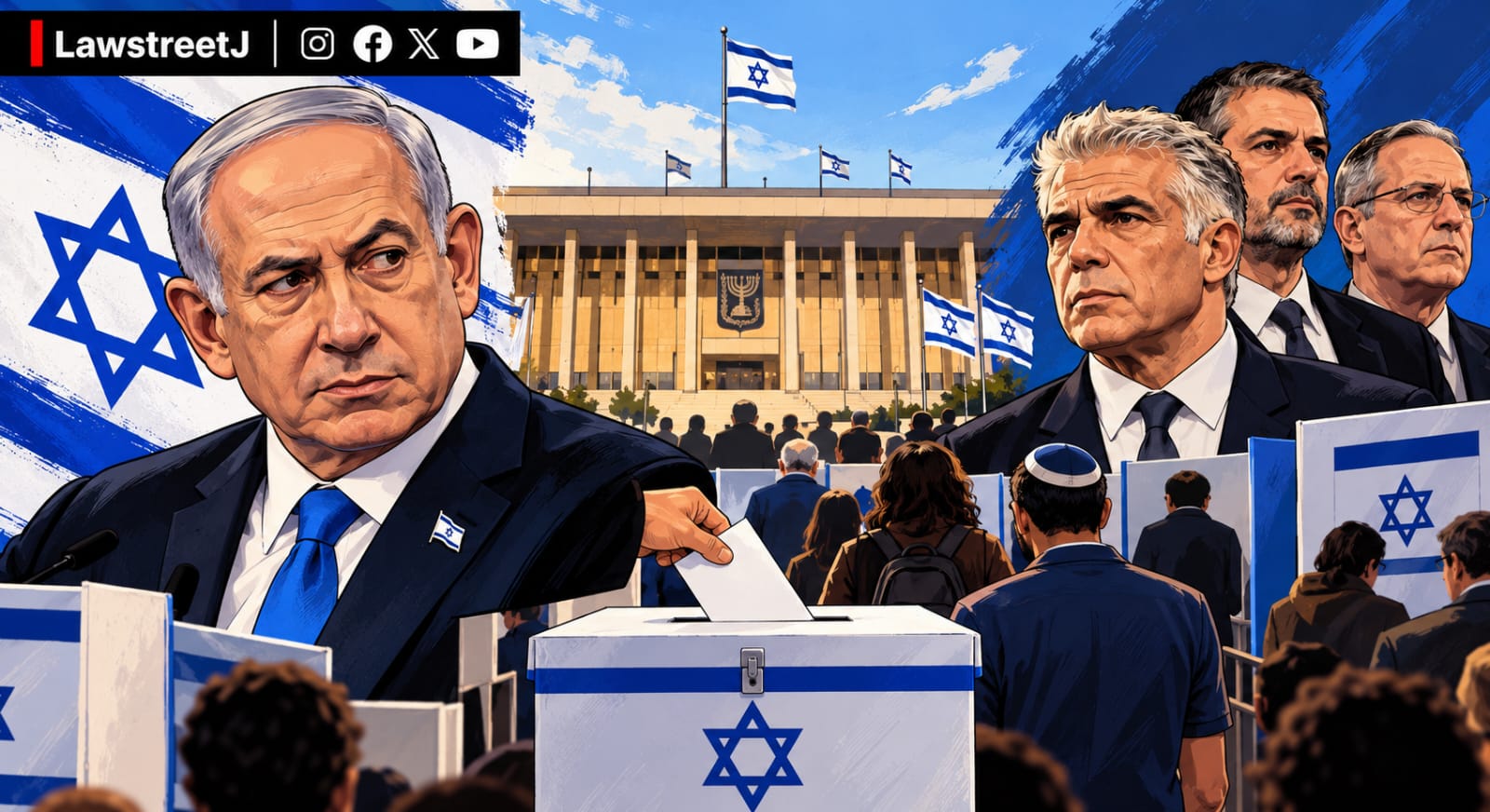
JERUSALEM : Former Israeli military chief and Yashar party leader Gadi Eisenkot faces a difficult political challenge in forming Israel’s next government after the October 27 general election produced a fragmented Knesset, leaving no political bloc with an outright majority.
President Isaac Herzog formally tasked Eisenkot with forming a government on November 8 after consultations with representatives of the parties elected to the 26th Knesset. Although Prime Minister Benjamin Netanyahu’s Likud emerged as the largest party, Eisenkot received recommendations from lawmakers representing a larger parliamentary grouping, giving him the first opportunity to assemble a coalition.
The central difficulty is that Eisenkot’s route to a parliamentary majority may depend on support from Arab-led parties, whose participation or backing presents a political challenge for his proposed government. During the election campaign, the major Zionist parties had ruled out relying on Arab parties to form a government.
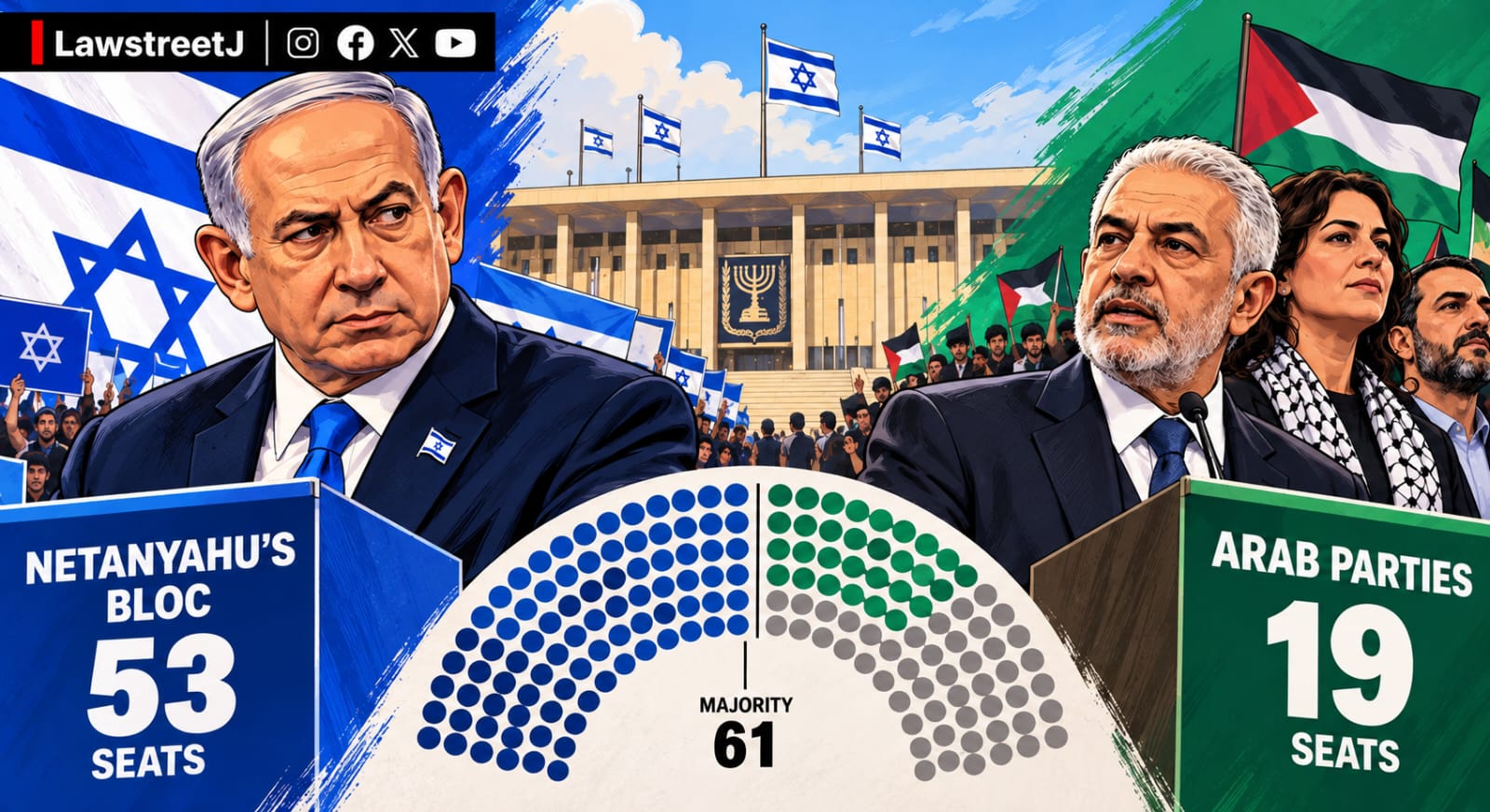
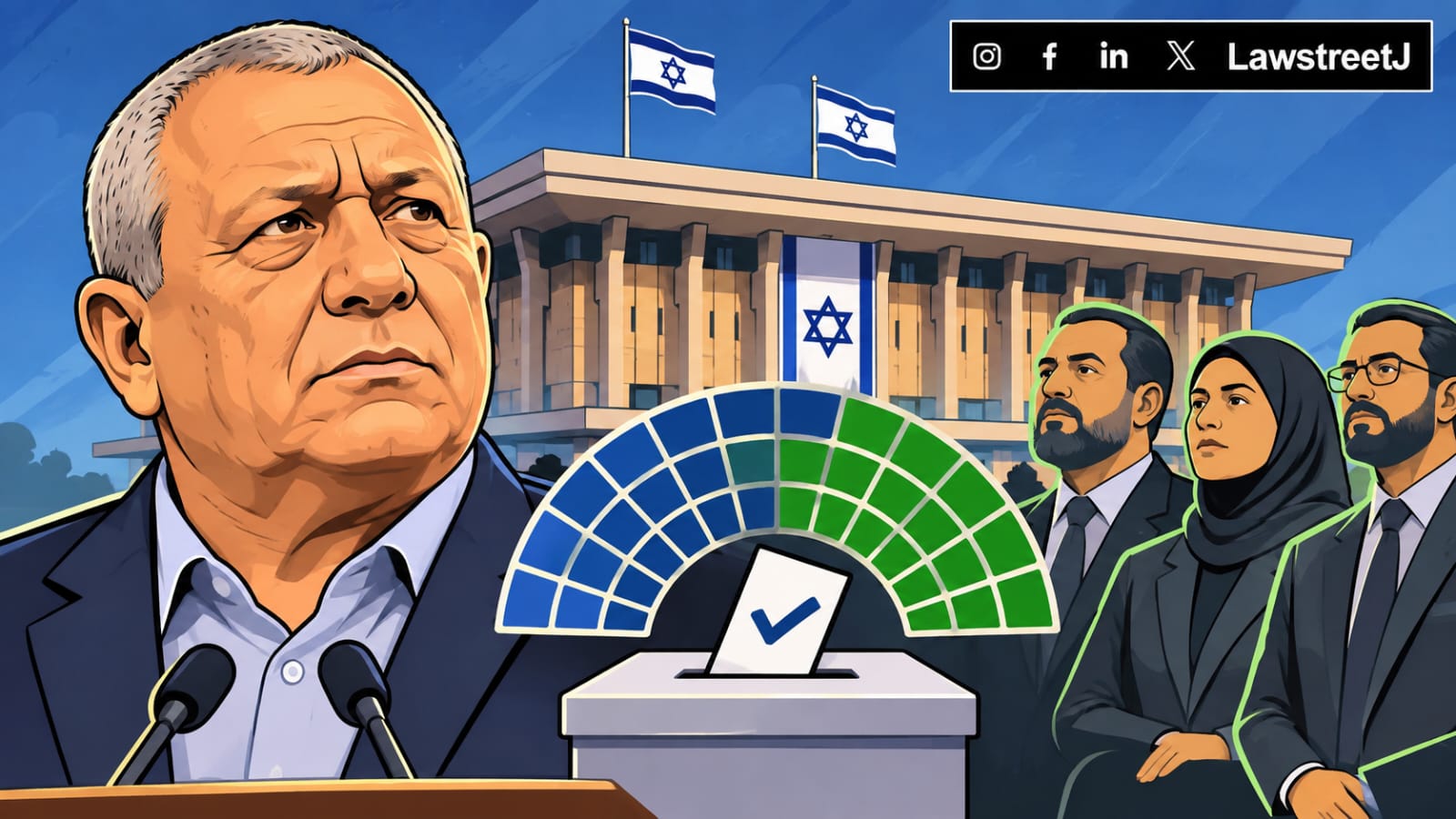
Israel’s parliament, the Knesset, has 120 members, meaning a government needs the support of at least 61 lawmakers to command a majority. The election results have therefore left coalition negotiations as the decisive next stage of the political contest.
Election Results Leave Israel Without a Clear Governing Majority
The October 27 election failed to deliver a straightforward governing majority to either of the two main political camps. Netanyahu’s Likud-led alliance secured 53 seats, while Eisenkot’s Yashar party and its political partners held 48 seats. Arab-led parties won a combined 19 seats, making their position particularly important in the coalition negotiations.
The results represented a setback for Netanyahu, who had sought to retain power after leading Israel through a prolonged period of war and political controversy. His alliance remained the largest established governing bloc but fell short of the 61 seats required to form a majority government independently. Eisenkot’s opposition grouping also lacked enough seats to govern without additional support. However, its position improved after Arab-led parties indicated their willingness to recommend him for prime minister during consultations with President Herzog.
According to the President’s Office, representatives of factions holding 67 seats recommended Eisenkot as the candidate most likely to form the next government. Representatives of factions holding 46 seats recommended Netanyahu, while a faction representing seven lawmakers declined to recommend either candidate.
The distinction between parliamentary recommendations and an actual governing coalition is important. Supporting a candidate during presidential consultations does not automatically mean that a party has agreed to join that candidate’s cabinet or support every policy of the proposed government.
The election has therefore produced an unusual political situation: Netanyahu leads the largest party, but Eisenkot has secured the backing of a larger group of lawmakers at the presidential consultation stage. This enabled Herzog to give Eisenkot the mandate to attempt government formation.
Arab Parties Become Central to Eisenkot’s Coalition Strategy
The two Arab-led political groupings, the Joint List and Ra’am, have emerged as crucial players in the negotiations. Together, they hold 19 seats in the Knesset and have indicated support for Eisenkot’s effort to replace Netanyahu. The Joint List, led by Yousef Jabareen, won 11 seats, while Mansour Abbas’s Ra’am secured eight. Both groups recommended Eisenkot during consultations with President Herzog, contributing to the 67 lawmakers who backed him for the mandate.
Their support, however, creates a political dilemma for Eisenkot. His campaign was built around bringing together Zionist parties and establishing a government based on a shared national agenda. Depending on Arab parties to secure a parliamentary majority risks undermining the campaign positions of several potential coalition partners.
There is also a distinction between receiving parliamentary support and bringing parties into the government. Eisenkot could potentially seek external backing from Arab lawmakers on confidence votes and important legislation without including their representatives in the cabinet. However, such an arrangement could remain politically fragile, particularly when dealing with contentious issues involving security, Palestinian policy and the rights of Arab citizens.
The challenge is further complicated by the positions of the other parties in Eisenkot’s potential coalition. His political partners include Naftali Bennett’s B’Yachad, Yair Golan’s Democrats and Avigdor Lieberman’s Yisrael Beiteinu. While these parties oppose Netanyahu remaining in office, their positions on cooperation with Arab political groups are not identical.
According to Reuters, Eisenkot’s allies have also considered approaching ultra-Orthodox parties to explore whether they could support a government under his leadership. However, those parties have their own political demands and ideological differences with the opposition bloc, making negotiations difficult.
The coalition arithmetic consequently leaves Eisenkot with several possible routes, but none offers an uncomplicated path to a stable majority.
Netanyahu Remains a Political Factor as Coalition Negotiations Begin
Despite losing the immediate opportunity to receive the presidential mandate, Netanyahu remains a significant force in Israeli politics. His Likud party emerged as the largest faction in the new Knesset, with 27 seats, and his alliance retains the backing of a substantial parliamentary bloc.
Netanyahu has called for a unity government, arguing that Israel faces major security and diplomatic challenges that require broad political cooperation. However, the proposal faces resistance from Eisenkot and several opposition figures who campaigned on replacing the incumbent prime minister. The newly elected Knesset was sworn in on November 10 without a new government in place. This means Netanyahu continues to serve as caretaker prime minister while negotiations proceed.
Eisenkot has been given until December 6 to form a government, with the possibility of an extension until December 20. If he fails, President Herzog could give Netanyahu another opportunity to assemble a majority. If neither leader succeeds, Israel could face another election.
Eisenkot has presented his proposed administration as a national emergency government and indicated that compromise will be necessary. His stated priorities include addressing national security, advancing universal military conscription, establishing a commission of inquiry into the October 7, 2023 Hamas attacks and changing aspects of the judicial reforms pursued under Netanyahu.
His coalition negotiations will therefore involve more than simply securing 61 votes. He must reconcile competing positions on military service, judicial reform, national security and relations between Jewish and Arab political groups.
The outcome will have implications beyond the immediate leadership contest. Israel continues to face major security and diplomatic challenges, including relations with Iran, negotiations concerning Gaza and regional diplomacy. The next government will also have to address domestic disagreements that have contributed to political instability.
For now, Eisenkot has the mandate but not yet a government. His ability to bring together parties with different ideological positions, while managing the sensitive question of Arab political support, will determine whether he can replace Netanyahu or whether Israel will remain trapped in another round of political uncertainty.