.jpeg)

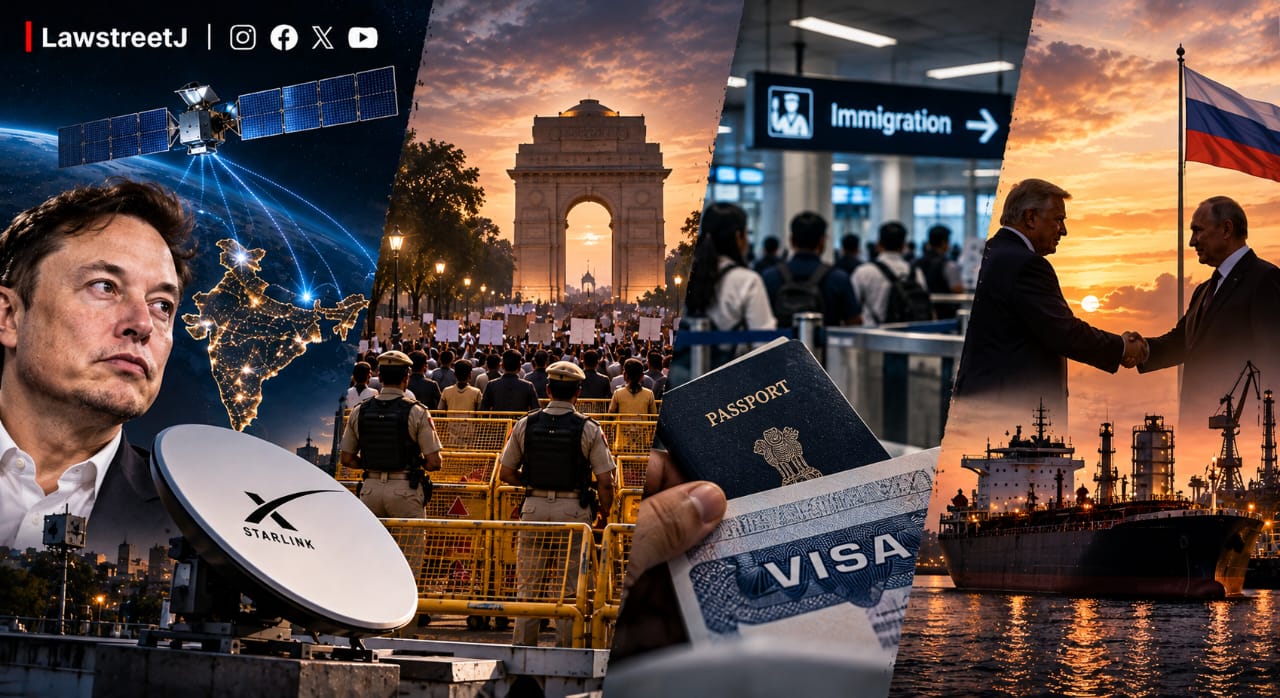
New Delhi — The Indian government has pushed back on claims made by SpaceX and Starlink chief executive Elon Musk that his satellite internet company has been denied a licence to operate in India, after Musk posted on the social media platform X questioning "why still no license?" and asking "Is Ambani the real boss of India?"
In his post, Musk wrote: "Starlink is licensed in over 165 countries and has spent five years complying with every single law and requirement of the government of India, so why still no license?" He followed this with a direct question naming Reliance Industries chairman Mukesh Ambani: "Is Ambani the real boss of India?"
The Government's Response
India's Minister of State for Communications, Chandra Sekhar Pemmasani, responded that Starlink already holds a licence in the country and that its position in the regulatory process does not differ from that of its two competitors. The Department of Telecommunications granted Starlink a Global Mobile Personal Communication by Satellite (GMPCS) licence in June 2025, making it the third operator, after Eutelsat's OneWeb and Reliance Jio, to receive one. Pemmasani said Starlink is licensed to operate in more than 165 countries and has spent five years complying with India's regulatory requirements, and that the Department of Telecom has issued licences and provisional spectrum to all satellite communication companies, not to Starlink alone.
What remains pending for Starlink is final security clearance, foreign investment approval and spectrum allocation, steps that, according to government statements, all three licensed operators are completing on the same schedule. In September 2026, India's Digital Communications Commission approved most of the telecom regulator's recommendations on satellite spectrum allocation, a step reported to move Starlink, OneWeb and Jio Satellite Communications closer to final clearance together. Starlink has separately partnered with Reliance Jio and Bharti Airtel for retail distribution of its equipment and has built 20 gateway sites across India.
Musk's reference to Ambani revives a dispute that was already settled, in Starlink's favour, two years ago. Reliance Jio had argued that satellite spectrum should be allocated through auction, a method that would have raised entry costs for new players. Starlink argued instead for administrative allocation, the method used in most countries. In October 2024, then Communications Minister Jyotiraditya Scindia announced that India would allocate satellite spectrum administratively rather than by auction, a decision widely reported as favouring Starlink's position over Jio's. Musk publicly thanked the minister on social media at the time.
Comparable Disputes in Other Countries
Starlink's experience in India is not the only case in which the company has faced delays entering a national market, and the reasons elsewhere have varied.

In South Africa, Starlink remains unlicensed. Under the country's Electronic Communications Act, telecom licence applicants must be at least 30 percent owned by historically disadvantaged groups under Black Economic Empowerment rules. SpaceX maintains a global policy of retaining full ownership of its subsidiaries and has not submitted a formal licence application, according to South African regulator ICASA. Musk has stated publicly that "Starlink is not allowed to have an Internet provider license in South Africa for the sole reason that I am not black." South African officials have responded that Starlink must comply with the same rules as more than 230 other American companies operating in the country.
In neighbouring Lesotho, Starlink received a 10-year licence in April 2025, one week after the Trump administration threatened the country with tariffs. Reports at the time said the US administration had intervened on Starlink's behalf in Lesotho and other developing nations through trade pressure.
Security-based review of satellite operators before granting full market access is not unique to India. China and Russia do not permit Starlink to operate within their territory at all, citing national security concerns, a more restrictive position than India's, where Starlink already holds a licence.
A Parallel Case: Chinese Automaker BYD in the United States
A comparable pattern exists in reverse in the United States. BYD, the world's largest electric vehicle maker, sells passenger cars in close to 100 countries but cannot sell them in the US at all.
Tariffs on Chinese-made EVs exceed 100 percent, and a US Commerce Department rule finalised in January 2025 bans "connected vehicles" using Chinese-made software, effective from the 2027 model year, and hardware, effective from 2030, citing the risk of foreign access to driver data or remote interference. National Economic Advisor Lael Brainard said at the time that such vehicles "could expose the American people to risks of misuse of their sensitive data or interference by malicious actors." BYD's only US presence is a commercial-vehicle exemption covering a bus-manufacturing plant in California, the company has filed a legal challenge to the tariffs, which remains pending before the US Court of International Trade.
Reaction in India
Musk's comments drew responses from Indian commentators. Former Telangana IT Minister K.T. Rama Rao publicly asked Musk to name the individuals he believed were blocking Starlink rather than making unspecified allegations. Former ISRO scientist Radha Krishna Kavuluru also responded to the claims, suggesting India would not treat Starlink differently from how other countries have handled the company's market entry.
As of this report, Starlink holds an active GMPCS licence in India and is undergoing the same security clearance and spectrum allocation process as OneWeb and Jio Satellite Communications, according to the Department of Telecommunications.
No public evidence has linked any named individual to a decision blocking Starlink's approval in India, and the one documented spectrum-policy dispute between Starlink and Reliance Jio was resolved in Starlink's favour in 2024. Starlink remains unlicensed in South Africa over an unresolved ownership-rule dispute, and BYD remains excluded from the US passenger-vehicle market under tariff and data-security rules that are the subject of ongoing litigation. No fixed date for Starlink's final clearance in India had been announced at the time of this report.
.jpeg)