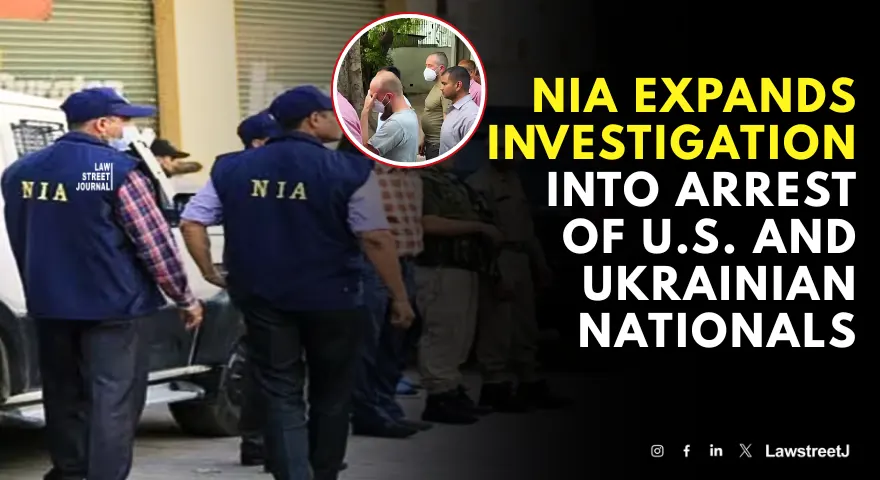
New Delhi: On March 17–18, 2026, the National Investigation Agency (NIA) detained one American citizen and six Ukrainian nationals in New Delhi. According to security sources, the group allegedly attempted to cross into Myanmar via Mizoram to train armed ethnic groups in drone warfare and weapons-handling techniques. Investigators revealed that the accused had been under surveillance for several months due to suspicious movements and digital activity.
The NIA has alleged that the group was involved in transporting large consignments of drones from Europe into Myanmar through India, raising concerns about the potential use of advanced technology in insurgent operations.
Diplomatic Reactions and Legal Proceedings:
The arrests have drawn immediate diplomatic responses. The Ukrainian Embassy in New Delhi lodged a formal protest, demanding the “immediate release” of its nationals and unimpeded consular access. Ukraine’s Ministry of Foreign Affairs stated that “no established facts” prove unlawful activities by its citizens, framing the arrests as potentially unjustified.
The United States government has reacted cautiously, acknowledging the detention of its citizen but refraining from direct criticism of India’s actions. U.S. officials have sought consular access and emphasized the importance of due process under Indian law.
Legally, the accused face charges under the Unlawful Activities (Prevention) Act (UAPA), India’s primary anti-terror legislation. The UAPA empowers authorities to detain individuals suspected of involvement in terrorism-related activities, including training, financing, or logistical support. If convicted, the accused could face long-term imprisonment.
Investigation Focus and Security Implications:
The NIA is currently examining the digital footprints of the accused, including social media posts and encrypted communications. One post allegedly linked to the American citizen claimed involvement in “covert operations against authoritarian regimes,” which investigators are treating as a potential admission of intent.
Authorities are also scrutinizing the group’s financial transactions, travel records, and seized equipment. Preliminary findings suggest that the accused may have coordinated with networks across Europe and Southeast Asia, pointing to a transnational dimension in the case.
Security experts highlight that the use of drones in insurgent warfare poses significant risks, particularly in India’s northeastern border regions, where insurgent groups have historically operated. The alleged attempt to train armed groups in Myanmar underscores concerns about cross-border militancy and technological escalation.
Indian Legal Framework:
- UAPA (1967, amended 2019): Provides the legal basis for the arrest and prosecution of individuals suspected of terrorism.
- Foreigners Act (1946): Governs the entry and stay of foreign nationals; violations can lead to deportation or prosecution.
- Extradition Treaties: India maintains agreements with several countries, including the U.S., which may influence future proceedings.
Diplomatic Fallout
- Ukraine: Strong protest, demanding release and consular access.
- United States: Guarded response, prioritizing consular rights and due process.
- India: Firm stance on national security, emphasizing adherence to domestic law.
The arrests highlight India’s increasing vigilance against foreign involvement in insurgent activities. They also underscore the legal complexities of prosecuting foreign nationals under anti-terror laws, where diplomatic sensitivities intersect with national security imperatives.
The NIA’s probe into the alleged network involving U.S. and Ukrainian nationals represents a critical test of India’s counter-terrorism framework and diplomatic balancing. While the investigation continues, the case has already strained India’s relations with Ukraine and placed the United States in a delicate position.
The outcome will depend on the evidence gathered, judicial proceedings under Indian law, and the ability of all parties to navigate the intersection of security, legality, and diplomacy.

![SC dismisses Union govt's plea against bail to Maoist financer in case of attack on police party in Jharkhand [Read Judgment]](/secure/uploads/2024/05/lj_3293_b43edf7d-73b7-4f21-b5f8-1f7b454ff1b8.webp)