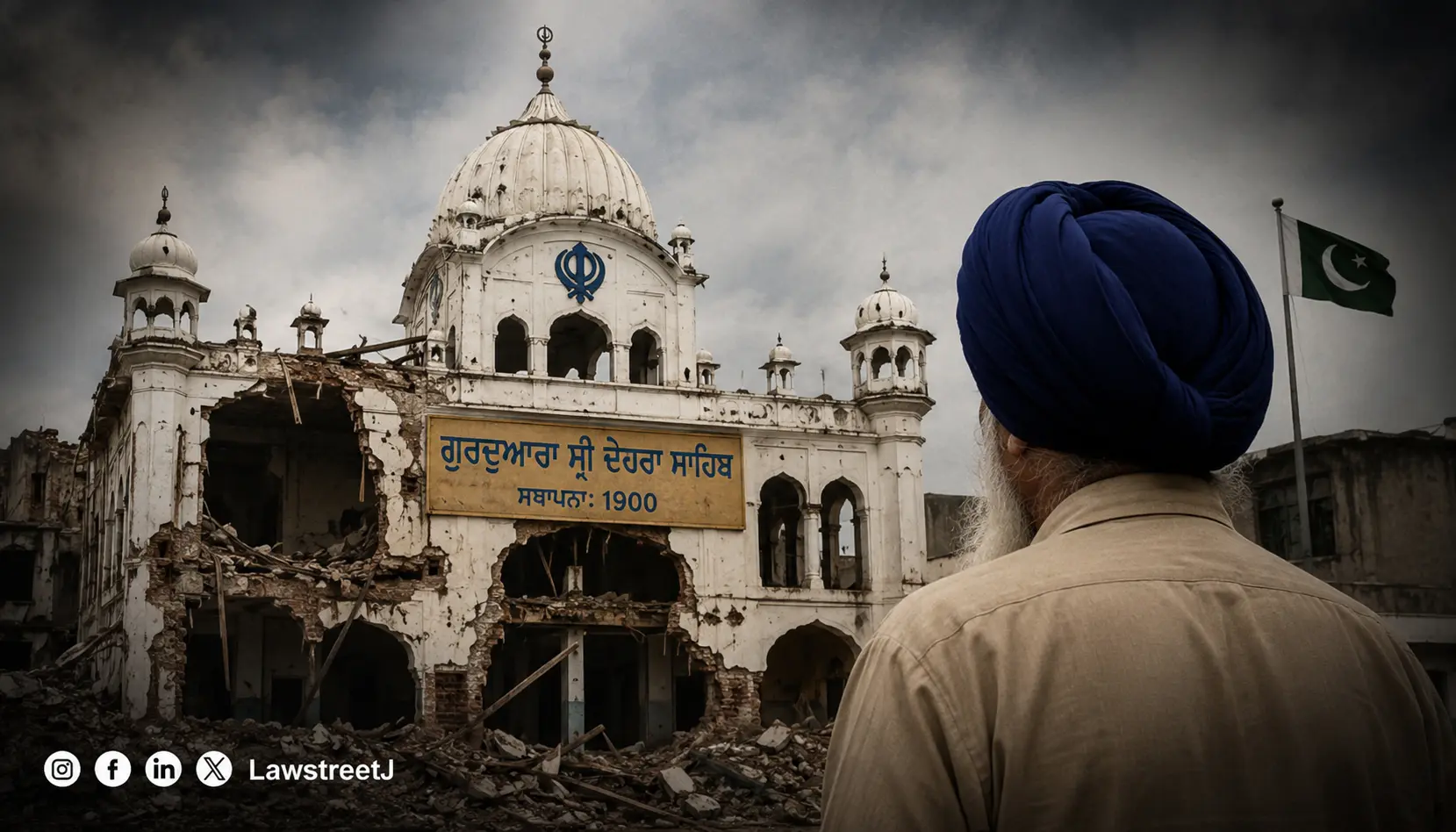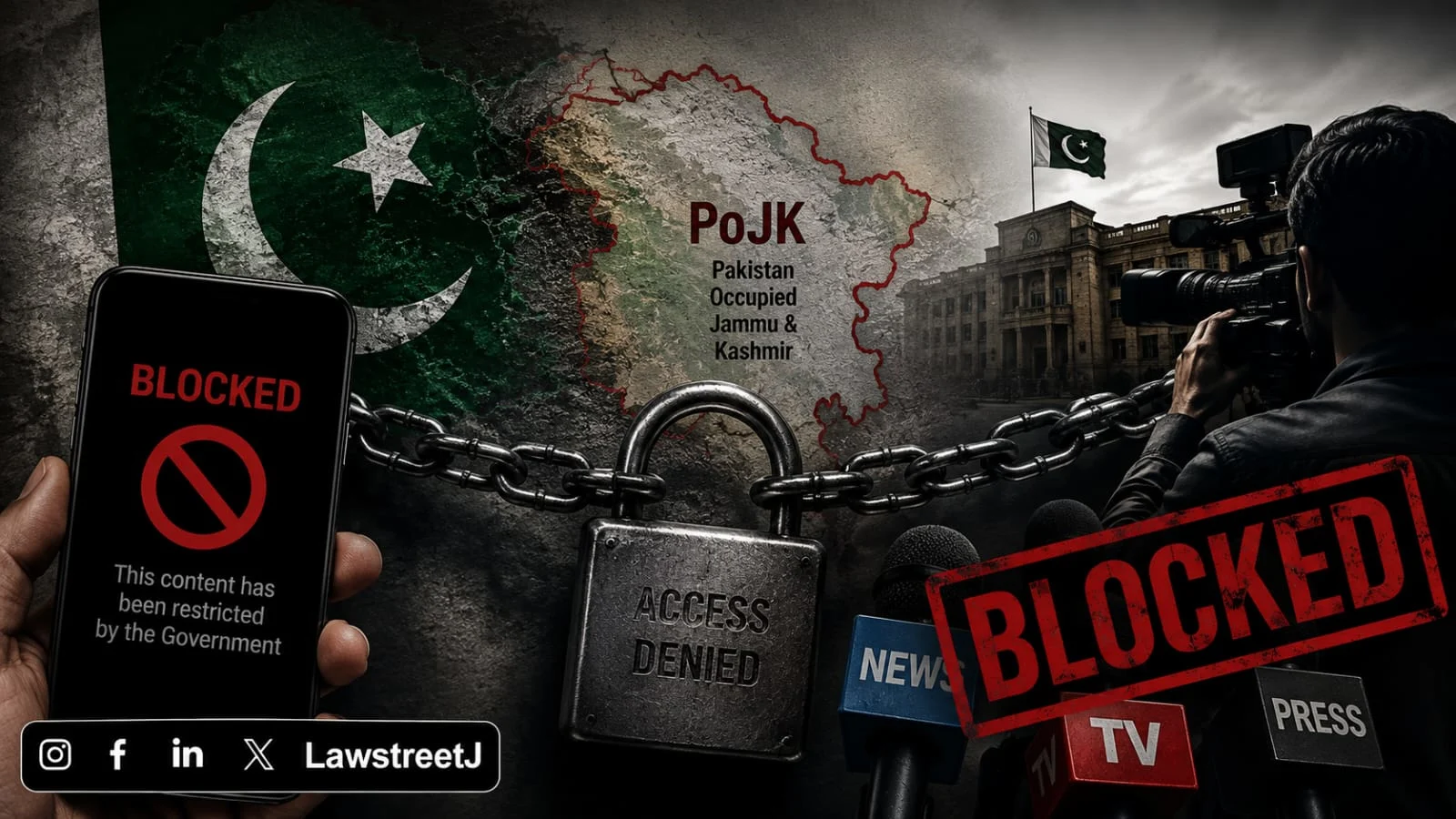
Islamabad: Pakistan has reportedly moved to restrict access to multiple digital news platforms including international broadcaster Al Jazeera English, as the country grapples with sustained and increasingly deadly unrest in Pakistan-occupied Jammu and Kashmir. Digital censorship measures have been escalated in Pakistan, with access reportedly being restricted to various news websites across Pakistan following widespread media reports and critical coverage of the ongoing unrest in Pakistan-occupied Jammu and Kashmir. In tandem with the blocking of local and regional digital news domains, international broadcasters including Al Jazeera English have also become inaccessible to users within parts of the country.
The restrictions target platforms reporting on the recent wave of protests, alleged security crackdowns, and mounting public grievances in the region. However, there has been no official confirmation from Pakistan regarding the restrictions.
The move to restrict media access comes as the situation on the ground in PoJK has deteriorated sharply over the past several weeks, with security forces firing on civilian protesters, a civil society leadership under arrest, elections held amid an active boycott call, and an international community beginning to take notice of what India's Ministry of External Affairs has described as the killing of over 40 innocent people.
What Is Being Blocked and What the Courts Ordered
Several users reported difficulties accessing Al Jazeera and raised concerns over press freedom, internet restrictions, and the public's right to access independent information. The reported restriction comes amid growing tensions in PoJK, where protests and unrest have intensified over the past several days. The controversy follows criticism from Pakistani authorities over international media's coverage of sensitive issues related to the country.
The digital crackdown extends beyond news websites. YouTube notified 27 content creators that their channels risk being removed if they fail to comply with court directives. Earlier, an Islamabad judicial magistrate court sought the ban after the National Cyber Crime Investigation Agency criticised various YouTube channels in a June 2 report for sharing what it described as highly intimidating, provocative, and derogatory content against state institutions and officials.
The channels at risk of being blocked include those belonging to the main opposition party, its leader, jailed former Prime Minister Imran Khan, and several journalists critical of the government, according to a court order dated June 24.
The situation on the ground adds further weight to what the blocked platforms were reporting. The Joint Awami Action Committee released footage purportedly showing security forces dragging and assaulting an unarmed civilian in the street in Muzaffarabad. According to the committee, an individual in civilian clothing standing alongside security forces was seen discharging a firearm toward protesters.
The Roots of the Unrest: A 38-Point Charter and a Supreme Court Ruling
The current wave of unrest in PoJK did not emerge suddenly. It has its roots in a set of political and economic grievances that have accumulated over years, and its immediate trigger was a judicial ruling that deepened an already raw political wound.
A series of ongoing demonstrations, strikes, and clashes in Pakistan-administered Azad Kashmir began on June 7, 2026. The protests are primarily organized by the Jammu Kashmir Joint Awami Action Committee, which presented a 38-point charter of demands to the government of Azad Kashmir, including opposition to the reservation of 12 seats in the Azad Kashmir Legislative Assembly for refugees from Jammu and Kashmir residing elsewhere in Pakistan. The group argues that the arrangement allows non-residents to influence the political affairs of Azad Kashmir.
The protests intensified following a ruling by the Supreme Court of Azad Kashmir on June 7, 2026, which held that the refugee seats are constitutionally protected and cannot be abolished without a constitutional amendment. Demonstrations subsequently spread across Rawalakot, Muzaffarabad, Mirpur, Kotli, Bagh, and other areas.
Beyond the political demands over legislative representation, the JAAC's charter also addressed long-standing grievances over electricity tariffs, wheat and flour prices, and governance failures, issues that have fuelled protest movements in PoJK since at least 2023.
The Pakistani administration's response to the protests was swift and restrictive. Between June 5 and 7, PoJK authorities banned the JAAC under the PoJK Anti-Terrorism Act, issued a travel advisory for June 5 to 20, deployed additional security, and sealed the JAAC's office. The banning of a civil society body under anti-terrorism legislation drew immediate condemnation from rights groups and protest organisers alike.
At least 11 people were killed on June 8 during clashes between police and protesters in Rawalakot, capital of Poonch district, before a major demonstration scheduled for June 9. Authorities in Pakistan-administered Kashmir deployed federal paramilitary troops and issued a strict travel advisory before the June 9 protest, which went ahead despite the restrictions.
Arrests, Elections, and Continued Bloodshed
The violence did not end with June. Through July and into August, the situation has continued to deteriorate, even as PoJK went to the polls.
In early July 2026, Pakistani authorities launched a crackdown, arresting JAAC leader Shaukat Nawaz Mir and over 600 civil rights activists. On July 5, massive retaliatory demonstrations erupted across all 10 districts of PoJK, with protesters demanding food, medicine, and the release of detained leaders.
There was widespread violence in Rawalakot city and adjoining areas on July 27 and July 28. Violence started as JAAC activists clashed with security forces during a long march on the day the region went to the polls. The JAAC alleged that indiscriminate firing by security personnel killed at least 14 of its members. The authorities, including the police chief of PoJK, disputed the claims and said casualties could not be verified.
Burnt-out vehicles, roads littered with rocks, and a heavy security presence marked the streets of Muzaffarabad following clashes between protesters and security forces ahead of the second phase of elections. Parts of PoJK underwent polling on August 2. The assembly polls in parts of PoJK were scheduled to be carried out in three phases. There have been repeated incidents of violence and calls for election boycott by locals.
Locals and eyewitnesses said that security personnel opened fire on civilians at multiple locations across Muzaffarabad, resulting in several casualties. In the Plate area of Muzaffarabad, the firing by security forces reportedly injured at least six to seven people.
India has formally responded to the scale of the crackdown. India's Ministry of External Affairs spokesperson Randhir Jaiswal said at a media briefing: "The Pakistani establishment continues to unleash ruthless force against peaceful civilians in Pakistan-occupied Jammu and Kashmir. This crackdown has resulted in the tragic death of over 40 innocent people, and many more have been seriously injured. It is the establishment's absolute disdain for the innocent people of Pakistan-occupied Jammu and Kashmir that was laid bare when their Defence Minister branded the protesting civilians as enemies." India called on the international community to hold Pakistan responsible for the situation.
Some factions within the protest movement have begun waving the Indian flag and appealing to India for humanitarian help, calling for the Line of Control to be opened. This represents a significant escalation in the public posture of segments of the protest movement, one that Pakistani authorities are expected to view as deeply provocative.
Press Freedom Under Strain
The media restrictions being reported on August 3 are part of a pattern that has accompanied virtually every major episode of civil unrest in Pakistan and PoJK in recent years. Internet and mobile services were suspended repeatedly during earlier rounds of protests. Social media platforms have been throttled. And now, with the blocking of domestic and international news outlets, the informational environment surrounding the PoJK crisis has been significantly narrowed for users within Pakistan.
Officials have previously accused Al Jazeera of biased reporting, while the outlet has maintained its role as an independent media organisation. The reported blocking of the channel, which has produced some of the most detailed international coverage of the PoJK protests, removes one of the primary sources of independent information available to citizens inside Pakistan seeking to understand what is happening in the country's administered territories.
The moves come amid heightened sensitivity over information flows regarding the political climate and local resistance movements in PoJK. Pakistani authorities have not confirmed the restrictions. The total number of deaths since the unrest began in early June, as stated by India's Ministry of External Affairs, has crossed 40. The protests show no signs of abating, the elections are ongoing under a security lockdown, and the media infrastructure that would normally allow the public to follow events in real time is being systematically restricted.